Want more from Front Office Sports
in your search results?
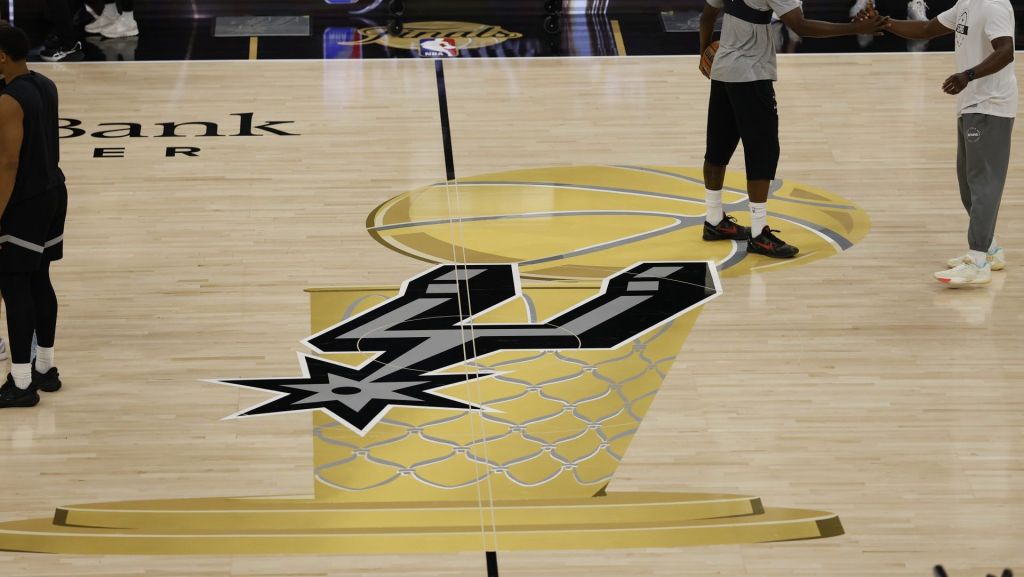
Game 1 of the NBA Finals will mark the on-court return of a 16-year absence for the league’s biggest prize, the Larry O’Brien trophy.
After the 2009 NBA Finals, in which the Lakers defeated the Magic, the league did away with the trophy decals after players found them slippery.
But this year the trophy is back and is painted on the courts, much to the early approval of fans and media, after complaints over a lack of pageantry last year.
To get the backstory, Front Office Sports spoke with Christopher Arena, the NBA’s head of on-court and brand partnerships.
Commissioner Adam Silver’s decision to create the NBA Cup, and the polarizing courts that came with it, seemed to provide the fateful assist for the trophy’s return.
This interview has been lightly edited for brevity and clarity.
Front Office Sports: What made the league go away from the Larry O’Brien trophy decals on the court after the 2009 Finals?
Christopher Arena: I think what it came down to was the players had some concerns. So I think there was a concern with, is the juice worth the squeeze, right?
Is the presence of this brand, the trophy, worth a player getting injured in sort of a high-leverage moment like that? I think over the years we had the trophy in some locations and the Finals script in other locations and you can argue if those are high-traffic areas or not, but ultimately it was player safety. So the last couple years, at least on the broadcast with virtual signage, we can add Finals branding and so forth, but it certainly isn’t a solution for having the logo on the court or the Finals script on the court.
I think over time, it took us some time to realize that was the better decision. The fans and media spoke, and we got this right.
FOS: When did the conversation start on trying to bring them back?
CA: There’s always been some discussion, but if you remove decals as an option it’s a challenge. This is going to get really technical. We have a pretty tight window between the conference finals and the Finals. If a court is made with a polyurethane finish that’s oil, it takes like seven to ten days to cure and get right. So we couldn’t really do that. Half of our teams have an oil-based polyurethane and half have a water-based that dries a little faster. So practically between the conference finals and Finals, unless you have another court, you’re sort of building courts.
Every court—meaning the actual shape, the dimensions—is different building to building. So it’s not like you can make two generic courts, and just wait for who the two Finals teams are, paint them really quick, slap a coat of polyurethane. So logistically it’s hard.
Then we talked about replacement panels. The challenge with that is those panels get exposure to the light in the arena at different times, so the wood starts to amber or stain at a different rate. They’re also sanded at different rates, so you could have another injury hazard. So it’s really just trying to solve the formula.
So ultimately, when we got in the business of having these NBA Cup courts for each of the teams, we have 30 courts that were exactly the same build length, width, cutouts, for each of the teams. And so we’re like, “O.K., maybe there’s a way we can do this.” Because really all we have to do is wait to see who is in the playoffs.
So like we painted the Cup courts for next year just based on the flow and production of our courts and how they get executed. Once a team is eliminated from the playoffs, we can start painting that court. So now we get to the final 16 teams. A team gets eliminated, we can start painting those Cup courts. We get to the final eight, that’s when we’re like, “O.K., let’s start to lay this out. Who has oil, who has water, who should we get going on now? Let’s see how the season progresses.”
And so we get to the final four, we fully painted those courts, held off on the polyurethane as long as we could, and then we get down to the two teams and obviously delivered them the last two days.
That’s a long answer, but it was sort of over a 16-year discussion, exploration, what are the different ways we can do it. Once we had these Cup courts we sort of unlocked the ability to do this.
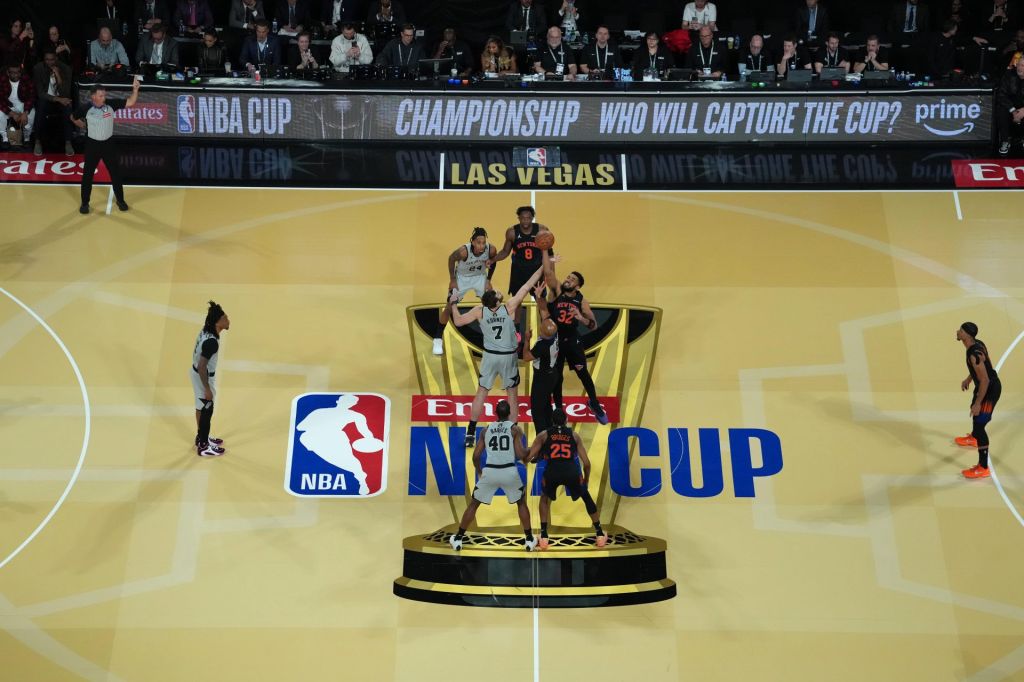
FOS: Were you surprised at how the trophy on the court was more of a conversation the past year, given that it had been absent from Finals courts for over a decade?
CA: I think it’s a combination of three things.
One, is the Cup courts and fans saying I can’t comprehend how you can do this, but you can’t do that.
Two, I would say social media. I think every year it just grows and grows and grows.
And three, part of my job here is to work on uniforms and team logo identities. So we find that the world finds a way to get a logo or a uniform out there, called a leak. I think leaks and this sensational desire to find out what’s new and figure out how things can be better, fans are obsessed with what we do with our courts and uniforms, it’s at an all-time high. It speaks to the global brand presence of the NBA, and I think we wouldn’t want it any other way. This is one where it took us a while, but we figured it out.

FOS: Was there any hesitation to continue to go through with this, given the original reason to go away from these were player-safety-related, and there were some issues with the Cup courts?
CA: We’ve had the Cup courts for a few years now. In those three seasons, there’s been a handful of issues. In some cases, those were environmental, meaning the humidity of transportation of a court and it gets to the wood and it’s inefficient. Some of those issues were some poor craftsmanship and some of those issues were an issue with the mixture of the polyurethane and how it was applied.
We’ve been able to put more protocols around how we inspect courts, how we review them, testing before it gets to the arena, and we’re at the height of all of those things. So there’s no concerns with these Finals courts; there’s no concerns going forward. It’s a human process, but I feel confident that we have so many protocols in place.
FOS: Is it safe to say the trophy is back on the courts for good?
CA: We certainly want to hear what players, fans, teams all say, but that’s our plan, is to continue with this going forward.
Download the FOS App
The business of sports, in your pocket.



Scan the QR code to get the app now.