Want more from Front Office Sports
in your search results?
When FIFA first brought the World Cup to the U.S. in 1994, it was making a long-term bet that America would eventually become a soccer country. Among FIFA’s conditions was that the U.S. would launch a professional domestic league, which led to the creation of Major League Soccer in 1996. It proved a smart wager, and three decades later, FIFA is cashing in.
Everything about this World Cup comes back to money: More teams (48) means more matches (104), which means more tickets (an estimated 6.7 million), which means more money to extract from fans and sponsors.
FIFA is confident it will hit its revenue target of $13 billion for the 2023–26 four-year cycle, compared with $7.6bn in 2019–22. It is pushing to do so in all types of ways: working both sides of the resale market, dragging its feet on allowing fans to bring their own water bottles, and trying to persuade supporters to pay $79 to put their names on the screen before the game. FIFA’s desire to monetize the game every step of the way is leaving Europeans, at least, aghast.
For better or worse, FIFA has already changed the World Cup as we know it, and as the tournament starts, fans and players will see the impact of its tournament expansion on the pitch, too.
The Group Stage Will Feel Like a Play-In Tournament
To accommodate the extra 16 teams, FIFA has settled on increasing the first phase from eight groups to four to 12, and an extra knockout round to trim 32 teams to 16. This means that the top two teams from each group will qualify, as well as eight of 12 best-performing third-place sides. The 72 group stage matches will therefore eliminate just 16 teams. Previously, 32 group stage matches reduced 32 teams to 16.
The alternative was 16 groups of three teams, with only the winners qualifying. This would have reduced teams’ margin for error and made group-stage matches more consequential. However, FIFA ruled it out because of a grubby instance from the past.
In 1982, West Germany and Austria were widely suspected of colluding in their final group game to ensure that they both qualified at the expense of the third team in the group, Algeria. Since the “Disgrace of Gujon,” FIFA has put four teams into each group to ensure that every team can play its final fixture simultaneously.
Although the risk of collusion has been mitigated, the cost will be a lot of soccer with very little jeopardy.
Statisticians have calculated that if a team wins just one of its three games, it will have a two-thirds chance of qualifying.The biggest teams will look to rest and rotate the players in their squads, giving this tournament’s unusually high number of veterans some time off.
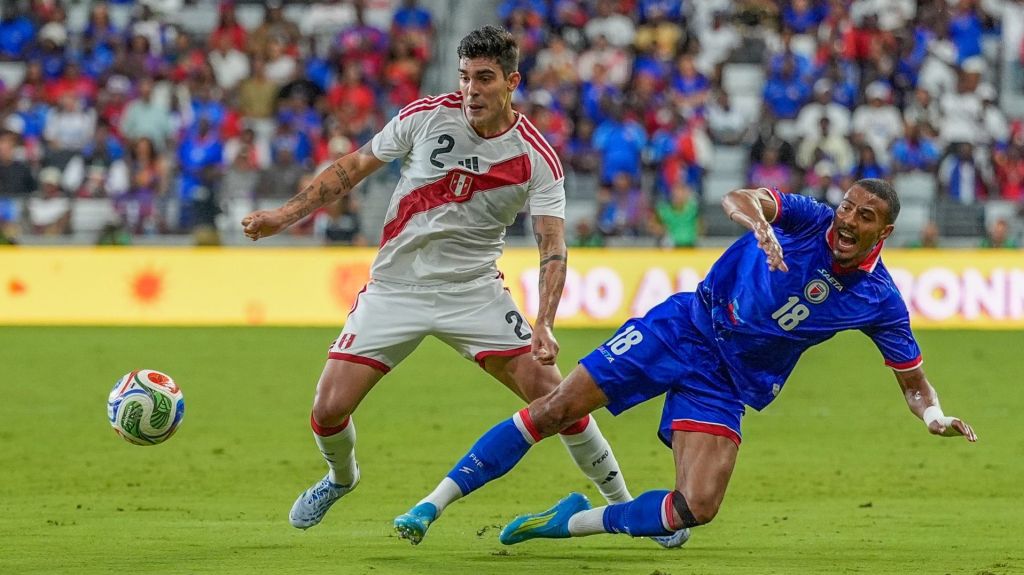
Meanwhile, the minnows have an obvious strategy. The most sensible approach for Haiti, for example, would be to play for 0–0 draws against Brazil and Morocco, then play more adventurously against the next weakest team, Scotland, in the hope of snatching the single win that ought to seal qualification.
The overall effect will be of a group stage that feels like another round of qualifying, before the main event begins at the start of the knock-out rounds.
The Style of Play Will Look Very Different From Champions League
One of the features of elite club football in recent seasons has been the ability of teams to play very sophisticated tactical plans that are often great to watch. This is why Paris Saint-Germain have been popular back-to-back winners of the Champions League.
But this quality of soccer is unlikely to be repeated at the World Cup. Coaches do not have the time to school their players on complicated systems in a week or two.
For the European teams particularly, this tournament is going to be hot and humid. Coaches will want their players to conserve their energy, keep the ball (or allow their opponents to have it unchallenged in safe areas of the pitch) and make the most of set pieces.
FIFPRO, the players’ union, has also highlighted that the hundreds of players from European clubs are also coming off the back of a long season. It pointed out that some of the biggest names at the tournament, such as English vice-captain Declan Rice, Dutch captain Virgil van Dijk, and French forward Michael Olise have played more than 60 games before the World Cup has begun.
Coaches will be aware of these demands, and will want to keep their best players as fresh as possible for the business end of the tournament.
This Will Be the Most Global Soccer Tournament in History
Stakeholders across the sport have spent decades trying to make soccer a global sport. This was FIFA’s rationale at the end of the 1980s when it first voted to send the World Cup to the U.S. The most powerful clubs have been visiting the U.S. and East Asia in their offseasons to recruit new fans for a similar length of time.
There is also a highly political element. FIFA consists of its member associations—each country’s national board—and each one has equal representation within the organization. So France gets a single vote, as does Equatorial Guinea.
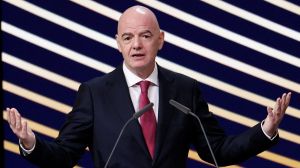
Infantino has cultivated Asian and African federations, and been rewarded with continued control of FIFA. The simple matter is that those regions have many countries and therefore are a rich source of votes.
Within months of first being elected as FIFA president in 2016, Gianni Infantino put forward a proposal for a 48-team World Cup, which was duly approved in early 2017. The number of positions for African teams rose from five to nine, and for Asia from four to eight. These members voted en masse for Infantino’s re-election as president in 2019 and 2023.
On the pitch, as Europe has pulled away financially, its teams have come to dominate the World Cup. In the five World Cups in the past 20 years, Europe has provided 15 of the 20 semi-finalists. However, only 10 of the top 20 teams in the FIFA rankings are European. A larger presence from Africa and Asia, combined with the risk factors above, means that the best of these teams, such as Senegal and Japan, have a better chance than ever of crashing the party.
Download the FOS App
The business of sports, in your pocket.



Scan the QR code to get the app now.