Want more from Front Office Sports
in your search results?
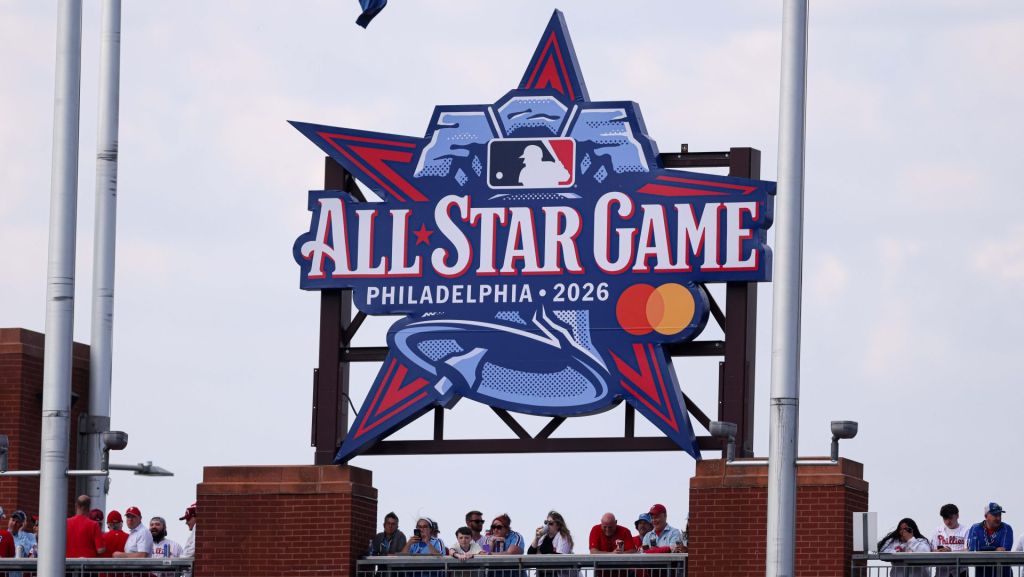
PHILADELPHIA — MLB’s All-Star Game activities in the City of Brotherly Love are in full flight, with Monday’s Home Run Derby featuring a new broadcaster and a star-filled lineup, and Tuesday’s Midsummer Classic set to happen despite the mounting player absences.
But could this be the last All-Star Game for the foreseeable future?
The league is approaching its midseason showcase in a particularly delicate position. On one hand, the game has arguably never been stronger, and key business metrics support that notion. Attendance is up again this season, entering the break with a 1.5% increase in the per-game average to 29,169, and is in line to end with a fourth straight annual boost—something that hasn’t happened since 2004–07. National TV audiences also are growing, with a new set of short-term rights deals paying significant dividends.
Most recently, NBC Sports’s Sunday Night Baseball coverage of a Yankees–Red Sox game averaged 4 million viewers, the most for MLB in that window on any network in 15 years.
All of those gains, in part, continue to benefit from the impactful introduction of the pitch clock in 2023 and the automated ball-strike (ABS) system this year. A strategy to place more games in national broadcast windows, modeled somewhat after other major sports leagues, is similarly driving wider fan awareness and appeal.
On the other hand, MLB and the MLB Players Association are in the early stages of what has already been a rocky labor negotiation—with an ownership lockout widely expected when the current collective bargaining agreement expires Dec. 1. Management is proposing a wide range of massive changes to the sport and how it operates, including a hard salary cap and floor, new limitations on how and when amateur players become professionals, and heavy restrictions on free-agent contracts.
“The perception among our fans is really strong that we have a lack of competitiveness,” said league commissioner Rob Manfred.
Not surprisingly, players have staunchly opposed all of that, and instead are attempting to increase their access to free agency and salary arbitration.
So MLB is staging this All-Star Game amid a particularly thorny problem: The game continues to grow in stature and popularity, but team owners are also seeking an overhaul of the economic model to promote better competitive balance.
Those labor issues are expected to be front and center when Manfred and MLBPA interim executive director Bruce Meyer meet separately with the Baseball Writers’ Association of America on Tuesday morning.
Wait Till Next Year?
The Cubs and Chicago’s Wrigley Field are set to host the 2027 All-Star Game. Ever since that announcement nearly a year ago, though, there have been plenty of questions about whether that event will happen. An extended labor stoppage would eliminate part or all of the 2027 season—possibly wiping out the All-Star Game.
While both sides are well aware of all the gains in fan interest that will be forfeited in such an absence from play, the current ideologies of the team owners and players could hardly be further apart.
“I think, honestly, the league has done us a favor because their proposals are, in fact, so obviously and extremely bad for players at all levels that it’s actually been a benefit for our unity,” said Meyer. “Anybody’s who’s banking on Major League Baseball players cracking: It’s never happened. It’s not going to happen.”
MLB has not missed games due to labor issues since the bruising 1994–95 round of bargaining that led to the cancellation of the 1994 World Series.
“Of course [I worry about a work stoppage]. We want to make an agreement,” Manfred said last month. “We’re open to whatever ideas people have, but we need a realistic framework that addresses the fans’ concerns about competitive balance and you just can’t ignore that financial penalties have not gotten it done for us.”
Download the FOS App
The business of sports, in your pocket.



Scan the QR code to get the app now.