By: Jay Stein, @Jstein209

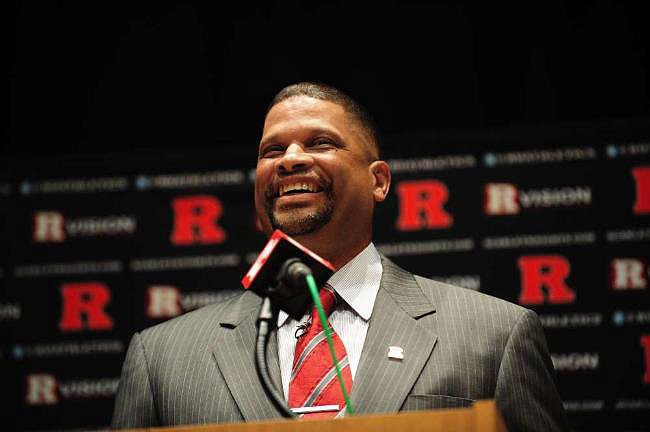
Front Office Sports is proud to have had the opportunity to talk with Eddie Jordan, current Head Coach of the Rutgers University Men’s Basketball team. Eddie started his career playing collegiate basketball at Rutgers, which included a trip to the NCAA Final Four in 1976. He then enjoyed a successful seven-year career playing professional basketball, where he led the league in steals two years in a row and was also a key piece of the Los Angeles Lakers’ 1982 World Championship team. Once he decided to retire from playing, Eddie immediately transitioned into coaching, where he was once again a part of several successful organizations. He was pleased to offer up his time and share his incredible journey in sports, both from a player’s perspective and from his view as a coach. He elaborated on the importance of building trust and chemistry in the workplace, how to deal with various challenges in professional and collegiate sports and what it takes to be successful working in sports.
After playing both collegiate and professional sports, and then moving into the coaching world at both levels, could you describe what your journey has been like and how you got to where you are today?
I played with many good teams, starting at Rutgers… in ’76 we went to the Final Four and were undefeated… so just having that notoriety and being a big part of that special team, that helped me.
When I was drafted in the NBA, I had a rough beginning… I was in Cleveland, a veteran team, and after three months there I was released and immediately picked up by the Nets that same night I was released. With the Nets… I led the league in steals for two years, so that was a special niche for me… becoming known as a guy who was special in stealing the ball and being defensive minded.
Then I got traded to the Lakers and that was a good four years there. We won the championship in ’82, so that was another sort of feather in my professional portfolio. After seven years, I decided to retire… I didn’t want to wait around to keep bouncing around from team to team year after year.
I always wanted to coach in my career, so I wrote my letter of resignation… and I went to Rutgers as a volunteer assistant. I moved around until I got hired full time at Boston College, and there was always a lot of movement and upward mobility. I coached two years at Boston College and was able to come back to my alma mater at Rutgers.
Then, after four years, I was able to interview with the Sacramento Kings, and again I started at the bottom, as a video coordinator, and each year I worked up eventually to be a full time coach. They had a change in ownership and… they decided to change direction and get a new coach… I then went and worked for the Nets, where the first year we had a tough year, but the next two years we went to the NBA Finals… So again another special two years going to the finals… and then I got hired as a head coach in Washington. The first year was a transition year with Michael Jordan there and we changed the culture; and then the following four years we made it to the NBA playoffs and, at the time, the Wizards had not gone to the NBA playoffs in 20 years!”
You mentioned a lot of transitions going from one opportunity to the next; how did you deal with the constant movement, the ups and downs and dealing with new surroundings?
There are a lot of sacrifices you make. You’re not at home, you’re on the road a lot…. not having your summer vacation, it’s hard to schedule something because a lot of things come up in this business where you have to break your personal engagements… So it’s hard on your family, but if you want to get to where you want to be, you got to keep the nose to the grindstone and keep grinding, and you have to enjoy working hard and making progress.
[That said] I enjoy the camaraderie of the coaching staff, the camaraderie with your team and how they interact with each other… then when you’re losing you have to learn how to coach less talented teams that lose games… and how to get through some of these crisis situations…. You might not come out with a great record but you keep your composure and stay with it with discipline.
So it boils down to harmony, effort and how you get along with people. How hard you work, no matter what situation is, or the win loss record that you have… and I believe in behavior and how you keep poised through difficult times.
How important is it to develop strong relationships with the team, your staff or front office, and how have those relationships helped you throughout your career?
As a player, you always want to be a good teammate; you work hard, you compete, but you always want to help your teammates first, and that’s one of our mantras.
[As a coach] You’ve got eight or nine coaches on your staff, and that’s the foxhole, when you’re in the office every day, and we grind through tough times… We may finally come up with a decision and we make it work, and then we have to make adjustments if we think that it’s going the wrong way… and everybody has faith in each other.
Also as head coach, I make sure that the working environment is respectful, we give great effort, and we believe in each other, we help each other first. So that’s the big thing and that’s what you miss most when you’re out of the business, you miss the camaraderie of your staffs, the games and the teaching.
Taking it a step further, what value do you place on having mentors, both at the peer level and with those above you, that are going to be there to help, support and guide you to get you where you want to be?
Looking at teams and talking about the players … every championship team has a solid group of leaders and strong leadership where they do things right.
They believe in the direction of the team, doing things the right way, helping their teammates and giving great effort and leading by example. They know what to say, when to say it and how to say it. I would say that’s a very rare commodity… so pure leadership is huge and you just can’t say enough about that.
What traits or qualities in people do you feel are going to contribute to someone’s success working in professional or collegiate sports?
You have to love what you do… You have to want to work with other people and respect your working relationship, that’s important, and you have to study your craft.
You have to have a talent to be in professional sports… but you have to have a great work ethic and you have to learn how to get along with people… Those behaviors lead into trust and chemistry, and exercising good behavior leads to people trusting each other.
[In coaching] I have to make sure that the guys I hire are good workers and trustworthy employees, and I learned that [over time].
For those who don’t necessarily have the ability to play professional sports, how could those aspiring professionals position themselves to get an opportunity in coaching?
You have to study! You can learn a lot through video and some books… You don’t have to be a good player to be a coach; a lot of great players want good coaches [teaching them].
You look at who [coaches] pretty well, and you learn from them… copy it; but create it to be your own… put your own fingerprint on it and try to be creative with it. Don’t just take something that somebody does and do it like them; look at the people, look at the good teams, good organizations and follow that formula, but put your hand print on it in your own way.
If you had to define your experience working in sports in one word, what would that word be and why?
Fortunate! I was fortunate to be raised by great parents in a solid family environment; and I was fortunate to play with great teammates. I was fortunate to be associated with successful teams, a championship team, a Final Four team! I was fortunate to have people who believed in me, to hire me and to give me an opportunity to be a head coach. I was truly fortunate that people were willing to help me along the way and believe in me!
We would like to thank Eddie for his time and insight and we wish him nothing but the best going forward!
You can follow him on Twitter here!