Want more from Front Office Sports
in your search results?
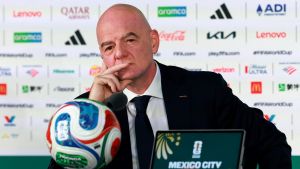
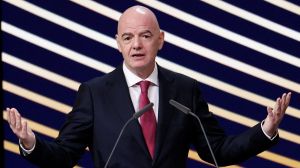
For three weeks, it appeared that Gianni Infantino had pulled it off.
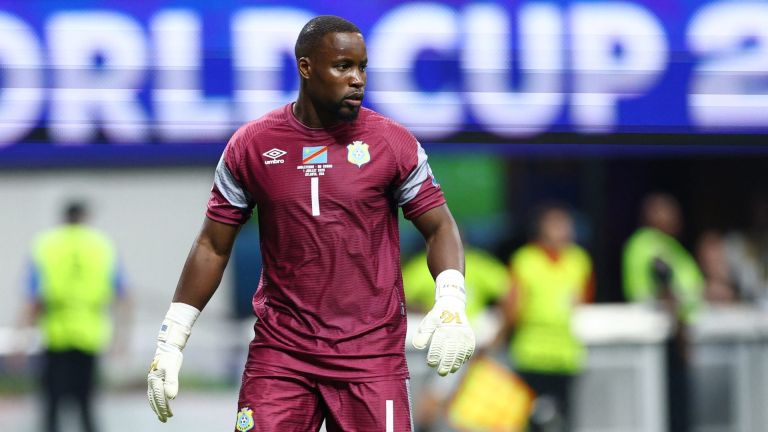
All of the pre-tournament naysaying—about the format, the climate, the ticketing, and the visas—had faded. Lionel Messi, Erling Haaland, and Kylian Mbappe brought their A-games. Cape Verde’s Vozinha was a sensation. Broadcast ratings were stellar. The hosts all proved competent. Maybe those empty seats actually did belong to fans on the concourses.
Then Andrew Giuilani appealed to FIFA’s disciplinary committee, Folarin Balogun was reprieved of his red-card suspension, and the vibes shifted. The USMNT were no longer a likable team that had proved surprisingly good at soccer; they were a conduit for corruption. Belgium’s thrashing of the U.S. in the round of 16 meant that there was no prospect of Belgium contesting the result of the game and throwing the tournament into a sporting crisis. Add to that a flurry of officiating decisions—particularly around Argentina—that have sent coaches, players, and fans into a frenzy.
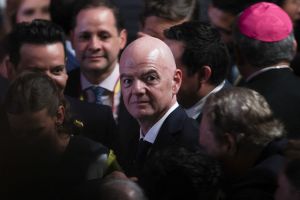
It has all combined to flare a reputational crisis for Infantino and FIFA—one that is still spreading rapidly.
All for Argentina
Immediately after the Balogun affair, the mood of the tournament changed. FIFA’s willingness to make exceptions to some rules for some people has created space for suspicion, paranoia, and distrust—and not just from fans, but also from players and coaches.
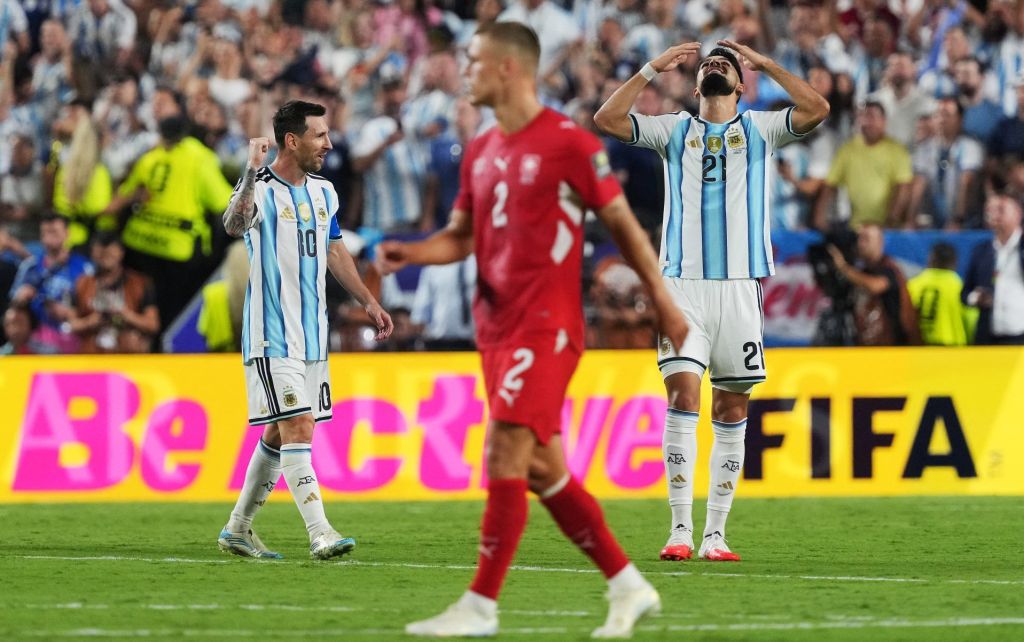
Egyptian forward Mostafa Ziko suggested the World Cup is “directed towards Argentina,” while his coach, Hossam Hassan, said that his opponents “benefited from support at every level,” following Egypt’s round-of-16 defeat in which two debatable refereeing decisions went against his side. The Swiss manager, Murat Yakin, claimed his team “weren’t just playing against Argentina, but 70,000 fans, the referee, and VAR as well.”
The online discourse has become more frenzied by the game. A fan-produced compilation video purporting to show refereeing decisions favoring Argentina over Switzerland in their quarterfinal has morphed into a bizarre cat-and-mouse affair. Fans post the video on social media, FIFA orders it to be taken down on copyright-infringement grounds, which fuels fans’ ire that the governing body is hiding something more profound.
Suddenly, conspiracy theories are everywhere. What did Infantino mean when he said he “suffered” with world champions Argentina in their match against the minnows of Cape Verde? Why did the Paraguayan president of CONMEBOL sit impassively when Paraguay scored against Turkey, but celebrate wildly when Argentina completed its comeback against Egypt?
Most of the conspiracy theories and officiating complaints have been directed at Argentina, which fans have decided is FIFA’s favorite, perhaps because of the presence of Lionel Messi. Not all of it, though.
Norway’s coach, Stale Solbakken, believed his team had been the victim of an officiating injustice against England, after the ball appeared to hit the Spidercam before England scored their equalizer. “I can’t say anything about that because FIFA,” Solbakken lamented. “If there’s no been no sound or there has been no [reading] in the chip, what can I say against that?”
Officials vs. Everyone
Teams and their fans are overwhelmingly directing their suspicion toward match officials. This is to be expected, as it is the one area where the sport’s governing body and its powerbrokers can exert some influence over the outcome of the game.
It is unfortunate for FIFA that even before the Balogun affair, the rules around officiating were already proving unclear and controversial.
FIFA’s chief refereeing officer, Pierliugi Collina, issued a directive before the tournament to encourage referees to allow “normal football contact” to increase the pace of matches. On its own, this would be a popular move. But it sits uncomfortably next to FIFA’s support for VAR, which encourages such contact to be scrutinised in frame-by-frame detail.
This has left the tournament with two-tier officiating. Some robust challenges have been ignored—Paraguay’s approach against France is the most egregious example of this trend—but other more marginal clashes have been harshly punished through VAR.
After Norway’s extra-time defeat to England—a game that featured two high-profile VAR interventions—striker Erling Haaland noted that it is normal for the “bigger” team in a match to receive small beneficial decisions from referees. As a starter for Manchester City, the dominant team in the Premier League for a decade, he is well qualified to comment.
A study published earlier this year of 7,000 refereeing decisions in European football found systemic bias in favor of stronger teams. This preference was clearest when the consequences of the decisions were the most profound. This is a more prosaic—and a more likely—explanation for the possible leniency towards Lionel Messi’s Argentina than a FIFA-wide conspiracy to keep the trophy in Buenos Aires.
However, the virality of corruption claims is still important. Fans have tolerated FIFA executives milking the sport for their personal gain for decades, because they believed once the games began, the sport was clean.
Infantino has not addressed any of this, save for insisting that his organisation’s branches remained “independent” during the Balogun affair.
He has, however, begun to talk up the possibility of expanding the 2030 World Cup to 64 teams. “If you don’t give smaller countries a chance to participate in the World Cup, they’ll lack the incentive to keep improving,” he told reporters.
Increasing the number of qualifying spots for FIFA members from Africa and Asia was his signature policy in his bid for the FIFA presidency and so far it has won him unstinting loyalty. The next FIFA presidential election is in March.
Download the FOS App
The business of sports, in your pocket.



Scan the QR code to get the app now.