
Max Kellerman, LeSean McCoy Off DAZN Boxing Show As Mario Lopez Joins
Want more from Front Office Sports
in your search results?
Not so long ago, a favorite joke among investment bankers was to ask: What is the fastest way to become a millionaire? The response: Have a billionaire buy a sports team.
But soaring franchise values, plus the booming ecosystem of technology, betting, and media companies that has followed, has sparked private equity—and other professional managers of large pools of money—to invest in a sports industry increasingly on Wall Street’s radar. And this transformation of sports from an occasional pitstop for investors into one that business media outlets are rushing to feature has been lightning quick.
“When I started Bruin Capital in 2015, there might have been one or two other people who really kind of focused on sports, but not a lot. “Today, there’s like 25 or 30 different organizations investing in sport,” says George Pyne, founder of PE fund Bruin, which invests and buys companies (not teams) in the sports sector, like sports documentary maker Box to Box Films, and FairPlay Sports Media. “When you take a step back and say today, ‘Sports really is an asset class’ … it’s amazing, really, that it hadn’t been really looked at that way.”
According to stats from CNBC, seen by Front Office Sports, annual global investment in the professional sports industry rose from below $10 billion in 2008 to more than $30 billion last year, while the number of deals lept from only a handful to nearly 160.
A confluence of trends in the past five to 10 years has turbocharged the sports business, propelling it as a golden opportunity for PE firms. “There is an appetite among investors for a more tribal kind of technology, things that bring people together that are unifying,” says Michael Proman, managing director of Scrum Ventures, which invests in sports-adjacent companies. “We’re moving towards this experience economy.”
For all the hype, private equity, while previously uncommon, is not a wholly new entrant in sports. Providence Equity Partners was an initial investor in the YES Network in 2002; Forstmann Little acquired sports agency powerhouse IMG in 2004 (Pyne ran the agency during this period), selling it nine years later; and CVC Capital Partners acquired Formula One in 2006, unloading it a decade later.
The St. Louis Blues were owned for six years by TowerBrook Capital Partners, the first known example of a PE fund acquiring a major sports team. But the ownership became an example of why institutional capital during the 2000s largely avoided sports in most cases.
TowerBrook lost a lot of money on the Blues acquisition. Many teams, then operated like the proverbial mom-and-pop store, were in the red, turning billionaires into millionaires as the banker punchline quipped (the Blues bled on the order of $40 million a year). There were even a handful of NFL teams that struggled financially—as hard as that is to imagine today—and received handouts from their wealthier peers (supplemental revenue sharing was a big issue in the NFL in the 2000s). Most leagues also did not allow PE investments. Today the NHL, MLB, and NBA allow PE firms to buy minority team stakes, with the NFL expected to follow shortly.
In 2006 when it bought the Blues, TowerBrook viewed the money-losing Blues as a distressed asset, the typical company in the sights of private equity firms. Meanwhile, the diverse array of businesses surrounding professional sports were only just budding.
Sports today are on a far securer financial footing, and that’s not the only thing to change from two decades ago. Today’s private equity firms are not your father’s version from the Barbarians at the Gate days, ravenous capitalists seeking to buy up underperforming companies, loading them with debt, and stripping them down and selling off the pieces, says Michael Rueda, head of U.S. sports and entertainment at law firm Withers. Instead, he adds, private equity firms are willing to invest for longer and not heap acquisition debt on their new companies.
Several key developments are behind the surge of the sports business. The most dramatic is the cord-cutting-fueled decline of the cable bundle, which has transformed sports into the glue holding the creaky consumer package together. That makes sports more valuable to media companies, but leagues and teams get to essentially double dip by selling game rights to streamers like Netflix and Amazon Prime. It’s part of the reason the NBA may triple its rights fees in the new TV deals the league is negotiating.
This media trend has helped send franchise prices skyward. According to JPMorgan Chase, since 2004 average team values rose 1,176% to $3.8 billion in the NBA, 523% to $5.1 billion in the NFL, 631% to $2.4 billion in MLB, and 714% to $1.3 billion in the NHL. And much of that growth occurred in the last decade as sports evolved into must-have content for media distributors.
The impact of technology—a key factor for PE firm investment—cannot be overstated. As sports modernized through tech and began to resemble the tech companies that PE was traditionally interested in, tech elevated their potential as a coveted asset class.
Beyond plush media rights fees, the rise of technology not only is attracting private equity, but also leading to the creation of new tech companies working with the rich leagues and teams. The infusion of technologies, from paperless tickets to advances in broadcast equipment to sophisticated data analysis, have made sports a petri dish for experimentation, and for companies to show off new products.
But 10 years ago, the revolution in sports tech, which now boasts publications dedicated to the subject, was only just beginning.
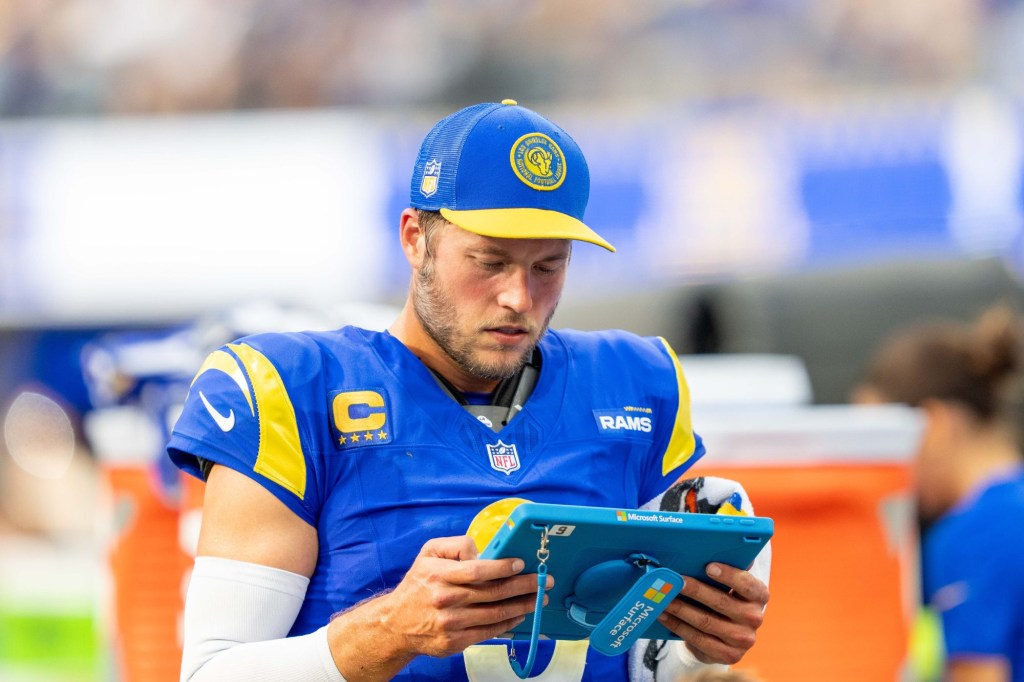
“There wasn’t as much interest in allowing tech on the fields or on the sidelines,” says Wayne Kimmel, founder of sports venture fund SeventySix Capital, which among its investments is the company that makes the pylon cam. “And then all of a sudden, [the NFL] had the Microsoft tablets on the field.”
The NFL introduced Surface tablets on the sidelines in 2014 to replace the in-game photographs players pored over from previous drives. Later, the NFL embraced large-scale data analytics for player performance and health, while high-tech stadiums offered digital signs, in-seat ordering, and high-speed Internet. And recently the league deployed AI to help develop schedules.
“About eight years ago, we said, ‘What industry had not been disrupted by tech, data, and analytics,’” Kimmel said of why he formed his fund. “And it was like, staring straight in our face: the sports industry, this trillion-dollar industry that really hadn’t embraced the opportunities.”
A trillion dollars may seem like a liberal estimate from Kimmel, but it’s not so far-fetched on closer examination. If the average NFL team is worth $5.1 billion, that’s $163.2 billion from club values in just one league. Add in the businesses surrounding those teams, and the media feasting on football content, and the number is obviously far higher. If one’s definition of the sports industry expands to youth sports, or overseas, then a trillion dollars is a conservative estimate.
Still, there are doubts whether the private equity firms, which usually aim for 20% annual rates of return, are prepared for an industry smaller than typical. As an asset class, sports remains in the shadows of, say, medicine or technology.
“It’s not fully investable because generally speaking, it’s a very small industry,” Proman tells Front Office Sports. “When you look at other asset classes—real estate, biotech, fintech, mobility, etc., etc.—these are massive TAMs [Total Addressable Market], massive SAMs [Serviceable Addressable Market]. And I think generally speaking, it’s very challenging for organizations to grow at kind of an outpaced trajectory, when you just fundamentally don’t have the customer base that some of these other industries offer.”
One private equity investor who requested anonymity tells FOS he explicitly does not think that there is anything special about the pace of professional money coming into sports. “It’s more just media outlets are paying attention to it,” he says. “These are more firms. I mean, as the asset class has gotten bigger, there are more firms that are saying, ‘Hey, let’s go do something.’ That’s a specialty that happens in all industries.”
Proman looks at PE firms snapping up illiquid stakes of professional sports teams and questions if this is a case of moths simply flying toward the bright flame of rising team values. “When you look at the franchise appreciation right now taking place in NWSL that gets a lot of people’s attention, and private equity does not want to miss those opportunities. I think there is this kind of FOMO [fear of missing out] that takes place.”
There may be some of that, but there is no denying sports only keeps growing as an asset class, especially after the Supreme Court lifted the ban on sports gambling in 2018. And as teams and leagues try going global, whether through expansion, staging games, or marketing, that’s more possible growth.
“There’s a limited supply [of teams]. That’s true, but there’s 120 teams in the U.S., and it’s a big world out there,” Pyne says when asked if the sports industry is capped because of the finite number of teams.
And in the past year, the explosion of women’s sports has drawn PE firms eager to capitalize on the nascent boom. These leagues and teams have fewer barriers to entry for PE than their more established male counterparts, evidenced by fund Sixth Street buying the NWSL expansion franchise for the Bay Area. And college athletics may be the next big thing for PE as that space goes through its dramatic changes.
The joke about how to create a millionaire once elicited knowing smiles; now, it should be inverted. Stratospheric franchise values have made many millionaire owners billionaires, and PE wants its piece.
Download the FOS App
The business of sports, in your pocket.



Scan the QR code to get the app now.










![[Subscription Customers Only] Jul 13, 2025; East Rutherford, New Jersey, USA; Chelsea FC midfielder Cole Palmer (10) celebrates winning the final of the 2025 FIFA Club World Cup at MetLife Stadium](https://frontofficesports.com/wp-content/uploads/2026/02/USATSI_26636703-scaled-e1770932227605.jpg?quality=80&w=300)