Want more from Front Office Sports
in your search results?
The stakes have never been higher for Red Bull Racing.
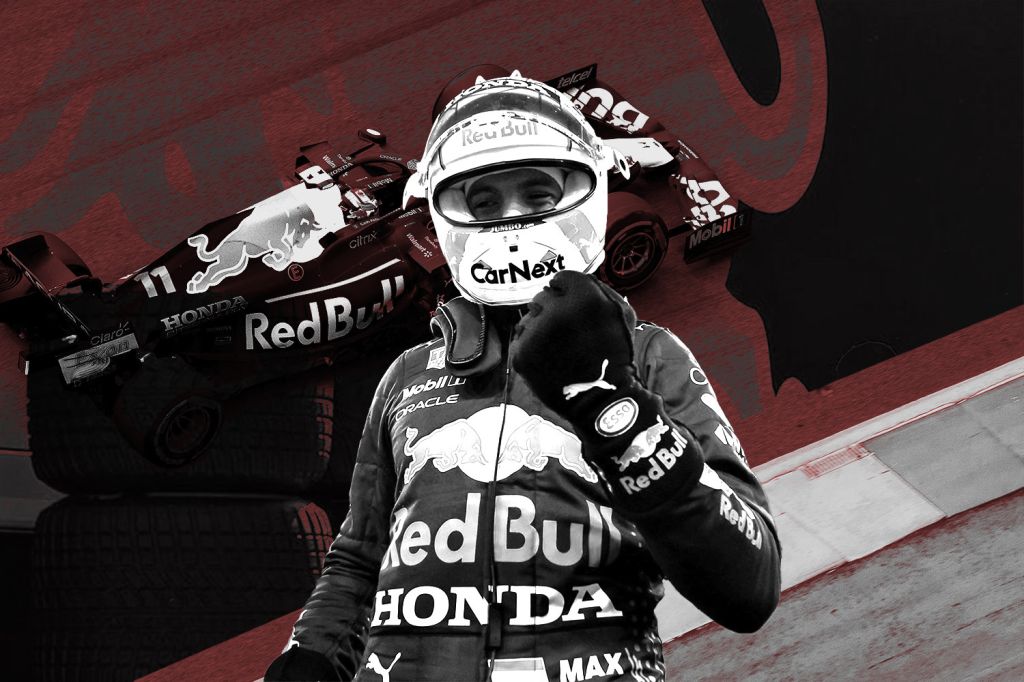
After last year’s championship-winning campaign, Max Verstappen takes to the track today for the inaugural race of the 2022 Formula 1 season in Bahrain, where the young Dutchman and his team will be put to the test more than ever before.
The stakes have been raised for the entire sport, too. In 2021, F1 had one of its strongest years to date — from both a financial and consumer adoption standpoint — and sponsorship dollars immediately started pouring in for 2022.
The numbers are only getting more impressive:
- F1 brought in $787 million in Q4 2021 revenue and $2.14 billion total for the full year.
- U.S. viewership has grown to 36 million viewers.
- Globally, the company said 445 million people watched at least one race in 2021, a 3% uptick year-over-year.
- The championship is reportedly close to inking a reported five-year, $150 million bumper sponsorship deal with U.S. software behemoth Salesforce.
As seen on Netflix’s megahit F1 docuseries “Drive to Survive,” the sport is filled with innumerable characters. The businesses behind many of the teams are equally compelling — and Red Bull is no exception. In February, the team formally changed its name to Oracle Red Bull Racing after a reported $500 million naming rights deal with the tech giant.
Beyond F1, Red Bull has extended its reach into several other sports properties ranging from Bundesliga soccer and extreme sports to motosport, esports, and ice hockey. But how did an energy drink company become such an iconic figure in sports?
Red Bull’s Marketing Engine
You might be surprised — just as I was — to find that Red Bull is essentially a company that makes nothing. Its famed energy drink has long been the staple product in the company’s portfolio, but Red Bull has no hand in manufacturing it.
This dates back to the company’s inception, when Austrian businessman Dietrich Maesteshictz first became enamored with a Thai energy drink, Kratig Daeng, the antidote to jet lag incurred by Bangkok travelers.
Upon finding the secret formula for the energy drink, Maesteschitz early-partnered with Kratig Daeng founder Chaleo Yoovidhya with one goal in mind — grow the product in Europe.
Rather than manufacturing its core product — carbonated energy drinks which had yet to see any market traction — Red Bull outsourced the process, relying on partners like juice producer Rausch to create the product.
With that taken care of, Red Bull and Mateschitz were left to deploy capital in the only way they knew how: marketing.
Fast-forward nearly three decades, and the company has transformed into a global marketing behemoth with its hands squarely in what feels like several industries — namely sports.
- Soccer: RB Leipzig, NY Red Bulls, Red Bull Salzburg, Red Bull Ghana, and Red Bull Brazil
- Formula 1: Oracle Red Bull Racing and Scuderia AlphaTauri
- Esports: OG Dota 2 and Red Bulls
- Ice Hockey: EHC Red Bull München
- Nascar: Team Red Bull
- Apparel: AlphaTauri
- Travel Agency: Destination Red Bull
- Media: Red Bull Media House
The story is similar throughout these ventures. Just like Red Bull’s drinks are made by Rausch, their travel agency is run by The Travel Birds, their apparel is made by Schoeller Switzerland, and the engines that power their F1 race cars are built by Honda.
So, What Does Red Bull Do?
The short answer is marketing. Although Red Bull is a private company, there’s a way to back into their marketing spend.
It was reported that Red Bull’s revenues reached $6.37 billion in 2020. It’s also assumed that the company spends roughly 30% of its revenues on marketing, amounting to $1.91 billion. By comparison, PepsiCo spent $1.74 billion on marketing in 2020, representing only 2.5% of the company’s $70.37 billion in revenue during the period.
But in many ways, what Red Bull does is bigger than marketing. The operation is more akin to a narrative-building machine whose main goal is to buy distribution and reduce customer acquisition costs.
In order to sell their outsourced products — primarily the Red Bull beverage — the company attaches itself to a variety of properties where their large budgets and high-level creative assets are welcome.
A traditional company like PepsiCo will utilize its marketing budget to sponsor an event or produce a commercial. The investment shows up as an expense on their income statement with hopes of a future return on ad spend through exposure.
Instead of simply paying for sponsorship expenses, Red Bull invests in the distribution it receives by buying sports teams, building media companies, and hosting events.
F1’s Return on Investment for Red Bull
The purchase of Red Bull Racing from Jaguar in 2004 represented an investment of $1. That’s right — $1. But the agreement also stipulated that Red Bull would be required to invest $400 million over the subsequent three years.
The investment in F1 was a bet that a Red Bull car would reach enough eyeballs to earn a strong return on investment. From the look of F1’s most recent financials, it was a well-placed bet.
Then there’s the truly innovative part: Red Bull has ostensibly turned an expense into a revenue stream. The company is able to charge other sponsors like Tag Heuer, Puma, and Tezos for distribution. The ultimate flywheel.
As for reducing customer acquisition costs? Take for example the famed Stratos project, where an Austrian skydiver jumped from 24 miles above the Earth’s surface — the first-ever instance of a human breaking the sound barrier without the assistance of an engine.
The stunt cost Red Bull seven years of R&D and $50 million. The result? In the six months following the stunt, Red Bull saw its sales increase 7%, resulting in $1.6 billion in sales in the U.S. alone. The original video still provides the company with earned media to this day.
In a sense, the same strategy is being employed with Red Bull Racing. So when you see their cars on the track this weekend, remember that they’re more than just extraordinary feats of engineering — they’re integral cogs in the distribution machine Red Bull has built.
Download the FOS App
The business of sports, in your pocket.



Scan the QR code to get the app now.