Want more from Front Office Sports
in your search results?
Penalty flags are flying early in this NFL season.
But the details of exactly what’s occurring and the reasons behind it may not be exactly what you think.
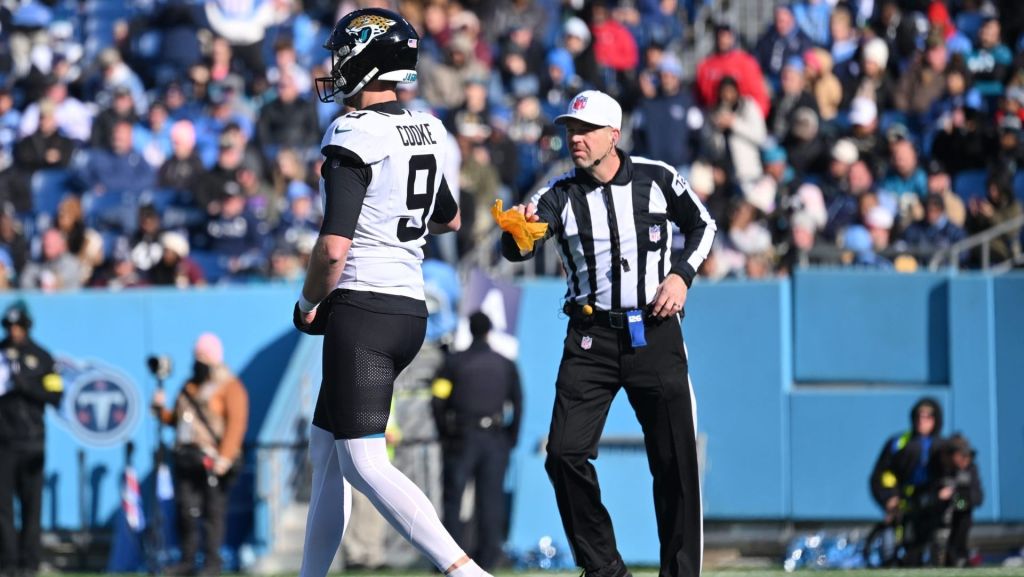
There has been plenty of attention this week on NFL officiating and the volume of penalties. According to ESPN, the 963 accepted penalties league-wide through the Week 4 games are the most through four weeks of a season since play-by-play data became available in 1978. The 271 accepted penalties in the just-completed Week 4 games were the second most in any week of play over that same span, according to the network.
“Refs are impacting the most important moments of games unlike we’ve ever seen before in the NFL, and even some of the coaches are speaking up,” NFL analytics expert Warren Sharp wrote on X/Twitter.
The penalties have major implications for the aesthetics of NFL games and potentially could impact viewership if they ultimately affect scoring and game lengths. Games that drag on endlessly with officiating-related pauses and that have big plays and touchdowns nullified by penalties could be less appealing to viewers, after all.
The public conversation about the penalties mostly seems to suggest the NFL has an officiating issue, with games supposedly being officiated too tightly.
In reality, however, it may be slightly more nuanced.
The NFL officially tracks only total penalties called, not just penalties that are accepted. By that metric, penalties are actually down from last season. There have been 16.86 penalties per game this season, compared to 17.44 last season.
The most interesting and relevant discussion may involve live-ball and dead-ball penalties. Live-ball penalties are down, from 11 per game last season to 10.17 per game this season. It’s dead-ball penalties that are up, from 6.44 per game last season to 6.69 per game this season.
That includes penalties such as false starts, in which an offense can’t manage to line up and get the ball snapped properly.
“That’s sloppy play,” one source familiar with the league-wide rule-making process told Front Office Sports on Wednesday.
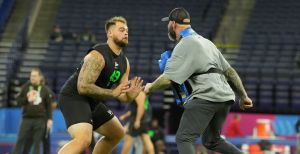
League data shows players in teams’ Week 1 starting lineups this season played an average of only 14 snaps each throughout the entire preseason; 37% of Week 1 starters played zero preseason snaps.
It has also become a common scene during an NFL game for an offensive player to flinch, followed by a defensive player pointing in that direction or reaching out to touch the offensive player.
Others around the league predicted fewer penalties as the season progresses.
“Every coach on every practice field and in every meeting room in the entire league is going to be talking about that this week,” a front office executive with one team told FOS.
Commanders coach Dan Quinn opened his news conference Wednesday by telling reporters about his conversations with his assistant coaches to address his team’s pre-snap penalties.
“So much is about us, and even more so than the opponents … new schemes, new play-callers, but really just trying to get our football right,” Quinn said. “And we’ve definitely had some moving parts, for sure … but this week, I wanted to make sure our emphasis was on our mental discipline, our pre-snap penalties. And we have got to get that right. And [we] added some officials for practice. I wanted definitely our focus on that, for sure.”
Quinn said his team needs to play “cleaner” and eliminate its mistakes on the basics.
“That’s not opponent-driven,” Quinn said. “That’s us-driven.”
Download the FOS App
The business of sports, in your pocket.



Scan the QR code to get the app now.