Want more from Front Office Sports
in your search results?
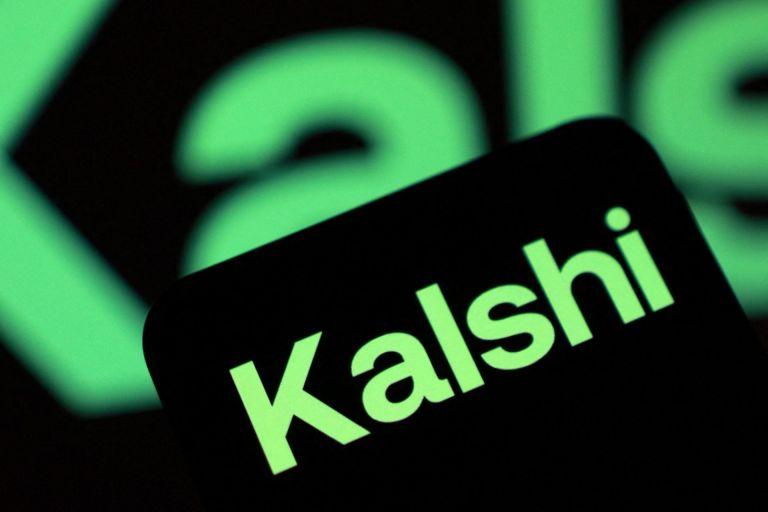
Thursday was a tale of two nights for Kalshi.
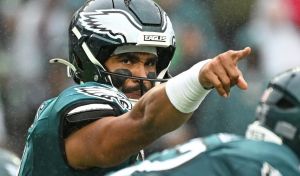
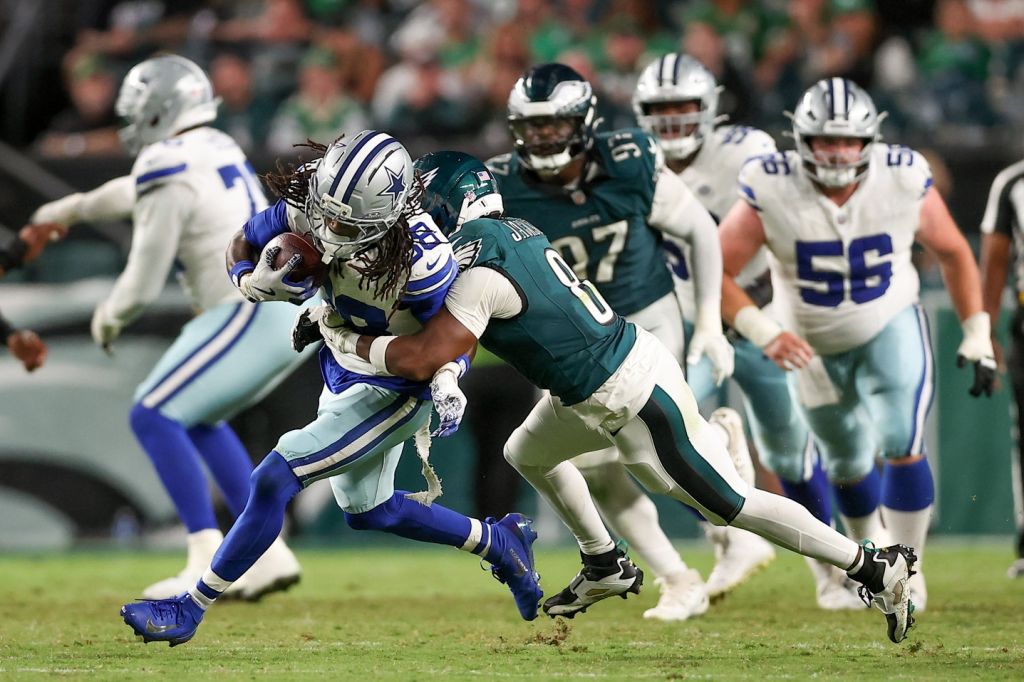
The prediction-market platform says it saw $27 million in trading volume on the Eagles’ victory over the Cowboys to start the NFL season. But in California, three Native American tribes asked a federal judge to prohibit Kalshi from offering those contracts on tribal lands in the state.
If granted, that would mean Kalshi has to implement geofencing to block users in specific locations, something Kalshi has argued—in a separate lawsuit in Maryland—would be overly burdensome and cost millions of dollars. The tribes’ argument is that they have the exclusive right to operate gaming in California.
The tribes are also seeking a court ruling barring Kalshi from offering “false and misleading” advertisements, such as those that state the company’s sports event contracts are “legal in all 50 states.” Kalshi has been making such claims to promote its football event contracts.
In July, the Blue Lake Rancheria, the Chicken Ranch Rancheria of Me-Wuk Indians, and the Picayune Rancheria of the Chukchansi Indians sued Kalshi and Robinhood (which runs trading markets from Kalshi’s exchange), seeking a preliminary injunction. The suit claims the sports markets offered violate the Indian Gaming Regulatory Act (IGRA) and the tribes’ Tribal-State Gaming Compacts with California. The Thursday filing was aimed at only Kalshi, although Robinhood is still a defendant in the case.
The sports event contracts offered by Kalshi and other prediction-market platforms have generated controversy because they appear so similar to sports betting. Kalshi maintains there’s a key distinction: Traditional wagers see users betting against “the house”—casinos or sportsbooks that set the odds and profit when bettors lose—while sports-prediction markets offer nationwide marketplaces where users trade against one another.
The tribes aren’t having it, stating in their motion that “Kalshi is wrong.”
“Enjoining Kalshi’s unregulated sports betting on Indian lands is manifestly in the public interest,” the filing said. “Gambling has always been a subject of concern in the United States. In every other context, gambling has been either prohibited as a public nuisance or strictly regulated because of the potential harms associated with unregulated gaming.”
Kalshi declined to comment Friday.
Attorney Dan Wallach, a U.S. gaming law expert, tells Front Office Sports “this could be a major turning point,” because—unlike in Kalshi’s other lawsuits, which are against state regulators—the tribes are invoking a federal law, the IGRA. That law permits federally recognized Native tribes to operate gaming facilities on tribal lands, but only under certain conditions.
That point could turn either way, however. If the court rules in the tribes’ favor, it strengthens the case that Kalshi’s sports event contracts are subject to the IGRA and other federal gaming laws, and therefore the company would not be allowed to operate in California because sports betting is illegal in the state. If it rules in Kalshi’s favor, it would boost the company’s case that its offerings are legal because Kalshi self-certified with the Commodity Futures Trading Commission, a federal regulator.
In Wallach’s view, the availability of sports event contracts in California on tribal lands “falls squarely within the scope” of the IGRA.
He also noted, on the claims of false advertising by the tribes, that Kalshi has been “talking out of both sides of its mouth.”
“They’ve gotten a little over their skis with their marketing, which undercuts their legal claims,” he says.
Melinda Roth, a professor at Washington and Lee University School of Law, tells FOS it’s still up in the air how the court will come down on this. The controversy boils down to whether sports event contracts should be legally considered gaming.
“The issue is whether or not the tribes can successfully argue these are under the gaming umbrella, or whether Kalshi can argue they should be considered derivatives,” she says.
Unlike pulling a slot machine, where chance entirely dictates the outcome, trading on a prediction market requires research and judgment, she says. That’s the same distinction that allowed daily fantasy sports to gain legal acceptance nationwide—although that too has faced controversy, most recently in California—and it’s why Kalshi could have a case that its products should be treated more like financial derivatives than gaming.
James Angel, a professor at Georgetown University who specializes in regulation of global financial markets, tells FOS: “We are running into a collision between gaming regulation and financial regulation.”
“There are undoubtedly public policy concerns over how to deal with problem gamblers,” he says, and financial regulators are grappling with the issue of “complex products” like the sports event contracts offered by Kalshi and others.
Noting that he’s not a lawyer and therefore would not seriously opine on which side might win the case, Angel did make a prediction of his own. “I would guess the probability is 60% that the judge will find for the tribes on some technicality, and a 98% probability that the case will wind through the court system for years,” he tells FOS.
Download the FOS App
The business of sports, in your pocket.



Scan the QR code to get the app now.