Max Kellerman, LeSean McCoy Off DAZN Boxing Show As Mario Lopez Joins
Want more from Front Office Sports
in your search results?
Cody Worsham has an Emmy on his desk. It’s an unusual accolade for someone with his job: senior associate athletic director for strategic communications and brand advancement at the University of Southern California.
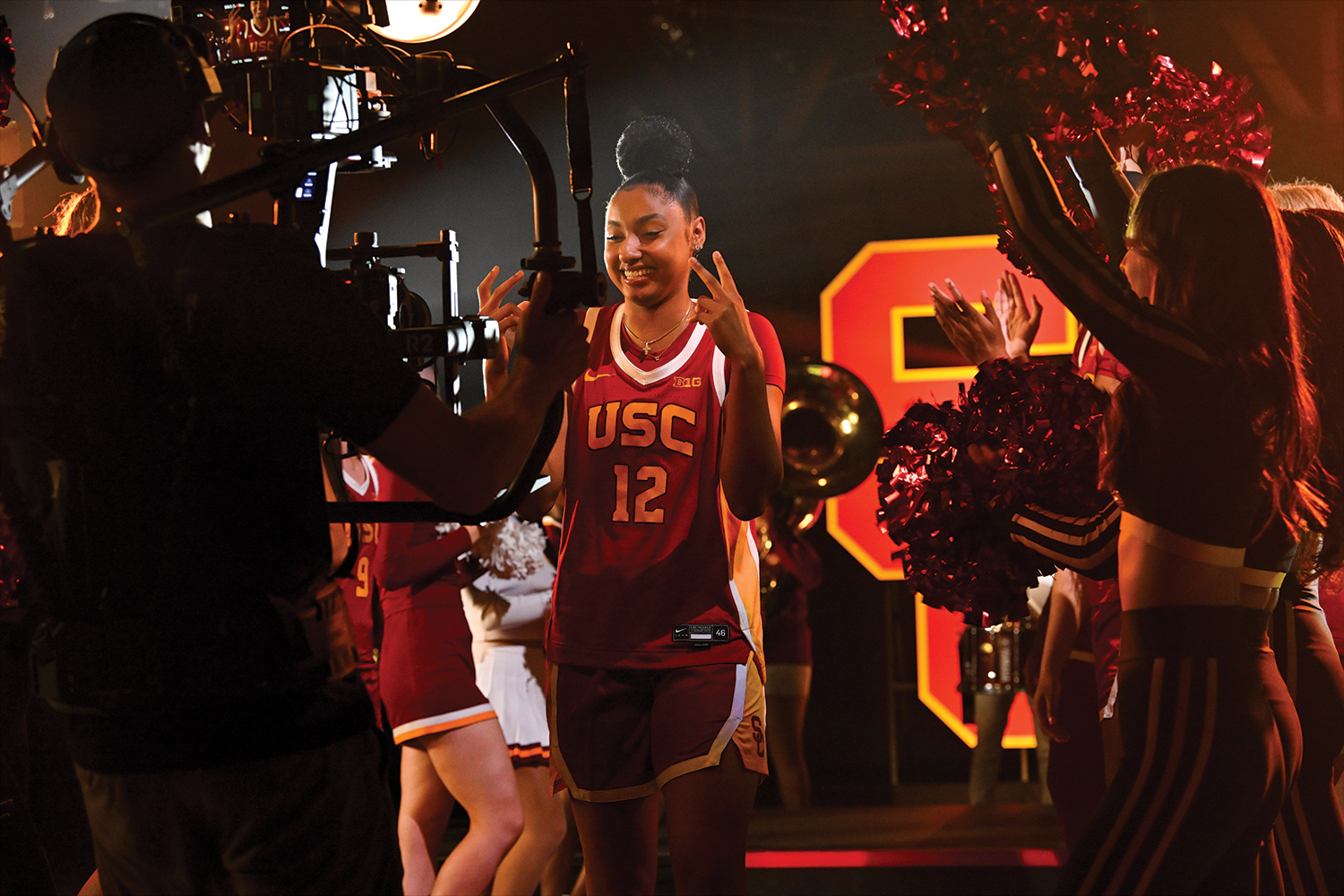
The team he oversees—approximately 20 full-time staffers alongside a “small army” of student interns—won the gold statuette last year for a hype video they produced ahead of the Trojans’ 2024 football season.
His department operates on a “close to eight-figure” budget and is tasked with telling the story of the university’s athletic programs through several creative mediums, including social media content and long-form video.
It’s a full-blown production studio operating within an athletic department infrastructure—and the setup is becoming increasingly common. Since the NCAA’s NIL rules went into effect in 2021, Division I schools have been radically rethinking the role of content in college athletics.
Creative work was once largely an afterthought for collegiate athletic departments—maybe a lone social media coordinator tucked into a sports information office. But for many schools, multimedia has become a well-staffed strategic function resembling a Fortune 500 marketing team, complete with specialists including photographers, videographers, graphic designers, and social creators—plus suites of analytics dashboards and performance-tracking tools.
On any day, schools may need to share a schedule graphic, a fan edit announcing a new recruit, a lo-fi day-in-the-life video of a current star player, a glossy donor profile, a meme, and several score updates. (The job is much easier when their teams are winning.)
Leaders of these teams also tell Front Office Sports that they’re pouring money into creative operations with four major goals in mind: recruiting and retaining top athletes, attracting deep-pocketed brand sponsors, engaging donors and fans, and raising the general profile of their respective universities.
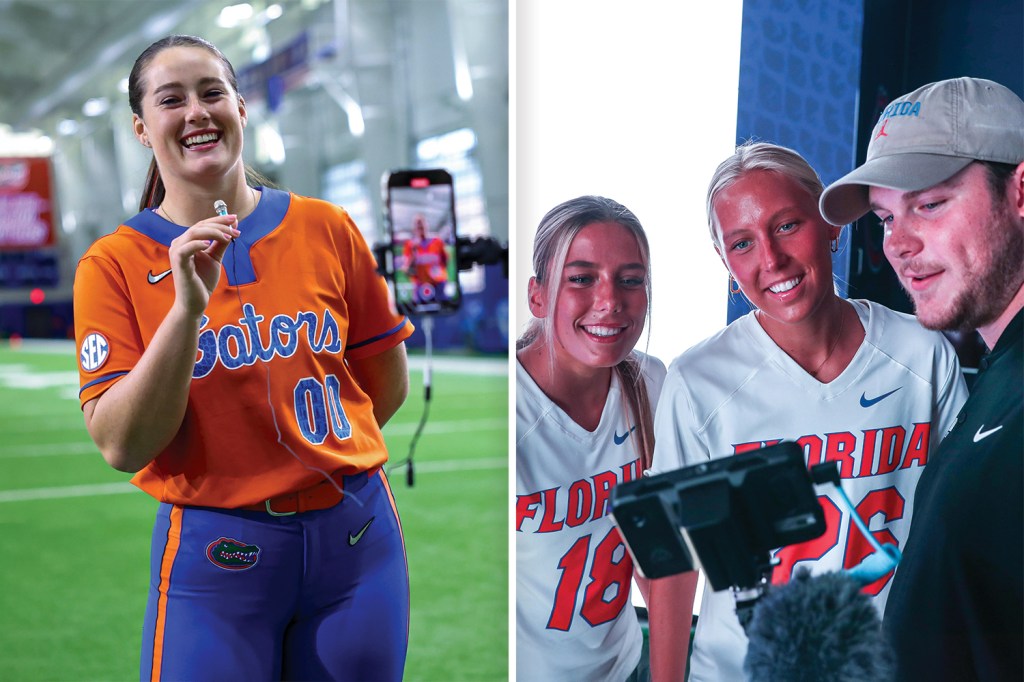
Kevin Camps, the University of Florida’s assistant athletic director for creative media and branding, says his team has roughly tripled in size and, like USC, now sits at approximately 20 full-time employees, including six who solely support the football program. These staffers have seen their salaries rise “about 50%” since 2021, Camps says, putting Florida’s total creative investment, including equipment, “well into the seven figures.”
This growth is tied into skyrocketing output: With an almost-year-round playing schedule across all sports, plus an audience of athletes, students, and fans who live on their phones, athletic department content creation is “essentially now a 24/7 business,” Worsham says.
In December 2025, USC produced 1,688 posts across all platforms. Meanwhile, Florida created more than 18,000 posts over a seven-month span in 2025. (Those figures don’t include the non-social-media assets for which these teams are also responsible, like in-arena video board programs and website content.)
And even at much smaller schools, production is still extremely scaled.
Hunter DuBois, Florida International University’s assistant athletic director for creative content, tells FOS that his team—which has also roughly quadrupled in size since 2022 and employs 16 student interns—is “all hands on deck” to put out “tens of thousands” of social posts each year.
“We aim to have at least three bodies capturing, editing, and tagging content in real time at every single athletic event,” DuBois says, “no matter the sport or time of day.”
This consistency has paid off, particularly for FIU’s football program; DuBois says in the past year, its Instagram growth rate was the 10th biggest in the nation among all college football programs. It’s a level of exposure he calls “invaluable” for the institution that is less than 60 years old.
This could boost the profile of schools of all sizes for potential recruits—which in the age of transfer-portal chaos and name, image, and likeness is one of the biggest priorities for these in-school content studios.
“[Creative teams] are really, first and foremost, all about talent acquisition,” says Florida’s Camps. “I’m always asking myself, ‘How do we get our brand in front of the next top quarterback, the next best point guard, the next high-end pitcher?’”
Smaller, younger programs often have more leeway to be experimental with this objective, says Jason MacBain, FIU’s senior associate athletic director for brand advancement. “Schools that don’t have a lot of tradition-laden items are really ripe for virality,” he says, “because they can make things that are a bit more loose and lively.”
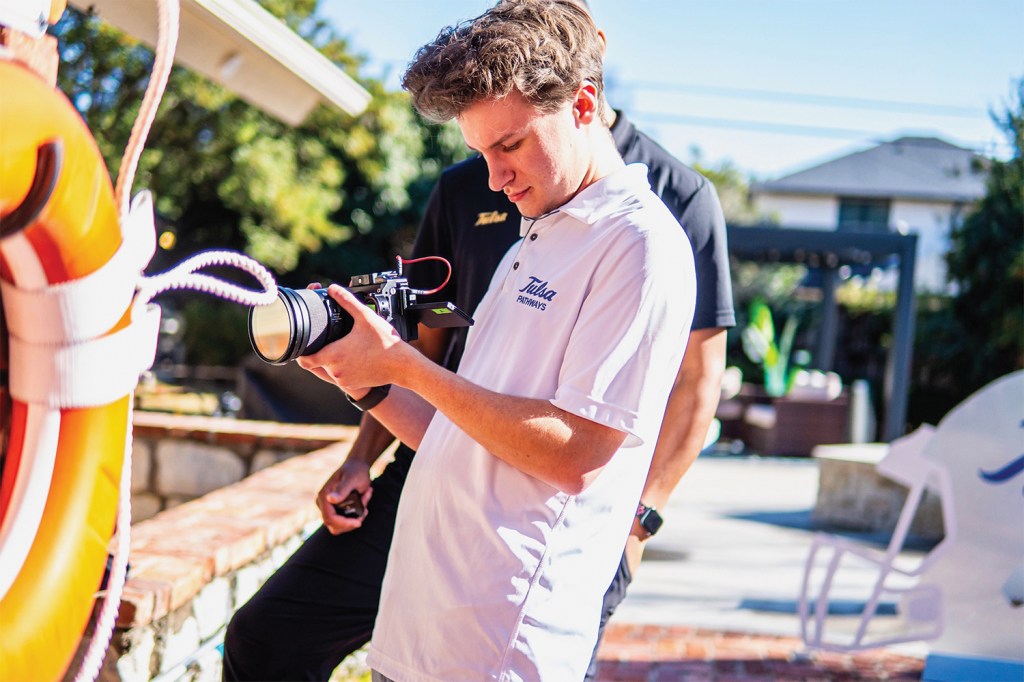
Earlier in January, the University of Tulsa—one of the smallest schools in the FBS—found itself reaping dividends from one social-media play: their “Portal House.” The Golden Hurricane, who play in The American conference, extended an invitation for potential transfers to join the program’s coaches at a huge, amenity-filled rental home during the 2026 transfer-portal window. They documented each day of the two-week window with humorous episodic videos.
KJ Reid, Tulsa football’s director of creative media, says the team’s first post about the Portal House generated 2.5 million impressions across platforms in a single day. “We expected it to blow up,” he says, “but not that much.”
More importantly, it worked. Tulsa landed 22 commitments from about 30 visits tied to the campaign. “Players that may not have even looked at Tulsa saw something on social media that sparked their interest,” Reid tells FOS. “It totally helped us.”
Athletic department content teams are also looking for outside money, which can help with the recruiting push.
“We’re very much in competition for sponsorships now as well,” says Camps. “Even the biggest brands only have so much that they can spend on sports marketing, and they want to put that money where they know they’re going to get the most exposure, so we’re always thinking about how we can grow the value of our [athletic program] social accounts.”
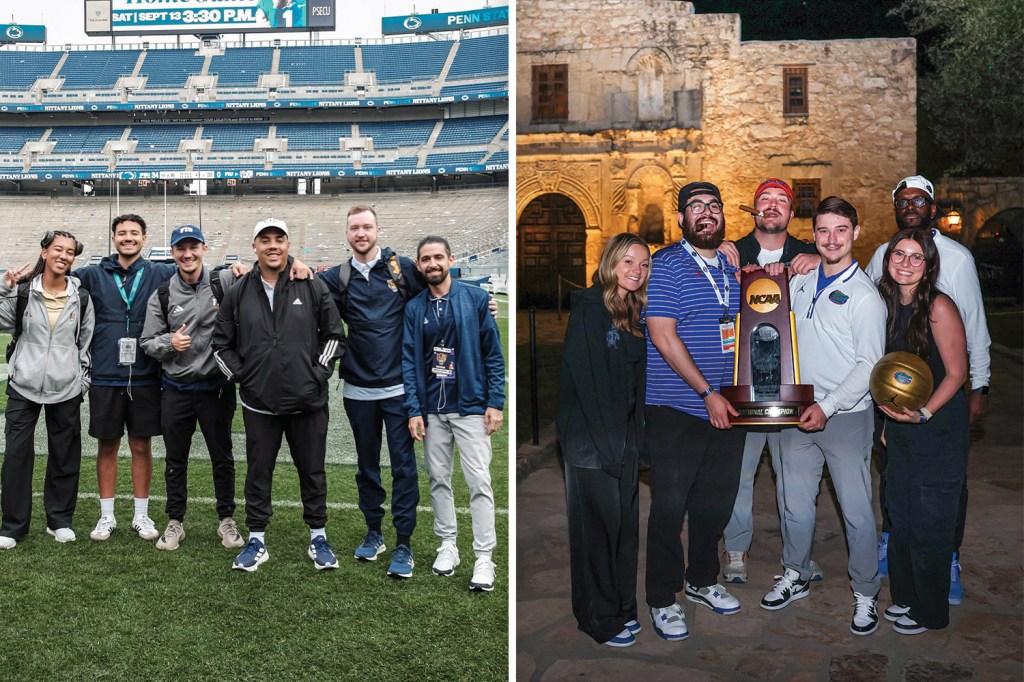
Camps says Florida’s NIL partnerships with consumer brands such as Chipotle have been integral in landing athletes of all kinds, including Alijah Martin, who transferred from Florida Atlantic University in 2024 and helped lead the Gators to the 2025 NCAA men’s basketball championship.
The market for creative talent itself is increasingly competitive, too. At USC, Worsham says candidates now arrive on campus equipped to shoot, edit, write, and publish all types of content on their own; just a few years ago, someone with this kind of comprehensive skill set would have been a unicorn.
At Florida, Camps says the Gators’ former head football coach got “personally involved” to seal the deal on a creative director that the program was courting last year. He also says that coaches are increasingly asking to be part of the creative process: “We just hired a new soccer coach. We had a meeting with him, and he talked about wanting cameras around at everything possible. [Coaches] are really just understanding the value of this kind of storytelling more and more, and they’re giving us more access because of it.”
There’s more growth ahead. Camps believes that it’s only a “matter of time” before nearly all Division I programs build in-house creative agencies dedicated solely to producing NIL-related work as a niche within the content divisions.
As college sports become an incubator for both athletic and media talent, the Emmy on Worsham’s desk may be less a novelty and instead a signal of what’s to come.
Download the FOS App
The business of sports, in your pocket.



Scan the QR code to get the app now.