The 2026 WNBA regular season is over. In addition to being marred by culture wars, it marked the first year of a transformational CBA that has exponentially increased player salaries and improved working conditions across the league.
It will also be another year when the league showed continued growth with record-setting attendance and viewership numbers. And while the jumps are not as high as the unprecedented jumps from two years ago, they show the league continues to trend upward.
Attendance
The league drew a record 3.79 million fans across 330 games, a 20.5% increase from last season, according to Across the Timeline. The total attendance figure was boosted by the addition of two new expansion teams, though the number still saw a marginal 3% growth net of the Toronto Tempo and Portland Fire.
The league averaged 11,474 fans this year, also a record, and a 5% increase from last season.
The Atlanta Dream saw the biggest one-year increase, averaging nearly 7,000 fans this year after just 4,480 last season, a 55% bump. They averaged significantly more than the capacity of their home arena, the Gateway Center, which normally fits about 4,000, the smallest of any WNBA home venue.
The team moved six games to the State Farm Arena, home of the NBA’s Hawks, which fits about 17,000 fans, after moving just one game last season. They have also confirmed they will play their first- and second-round playoff home games at State Farm Arena.
The Golden State Valkyries did not see their attendance number change—because they couldn’t. The 2025 expansion franchise sold out all 22 home games (18,064 fans per game) for the second consecutive season, leading the league in total and average attendance as well.
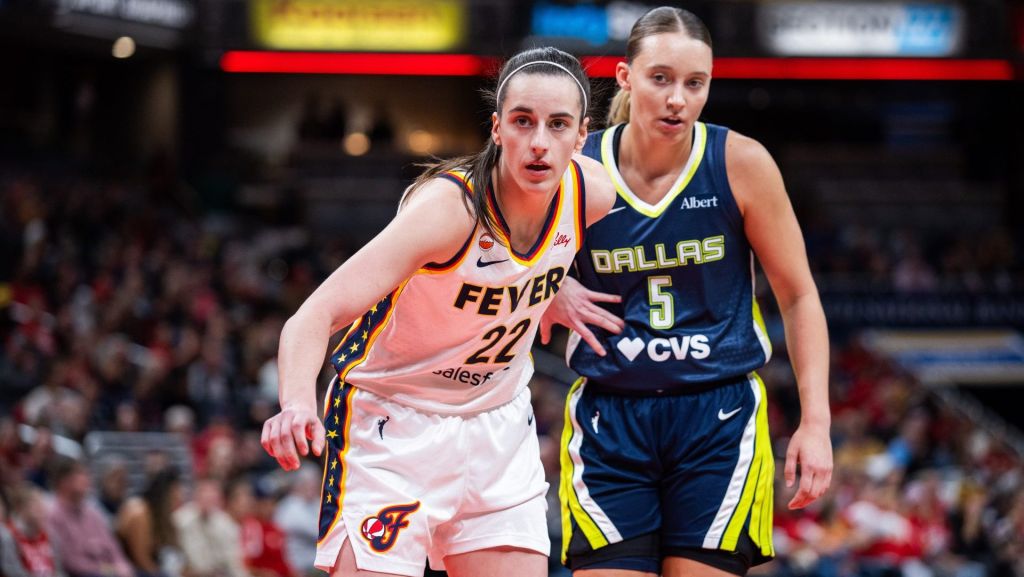
The Caitlin Clark–led Indiana Fever remained the league’s biggest draw for opposing fans, as the team averaged 15,116 fans on the road. Paige Bueckers and the Dallas Wings were second, averaging about 13,200 fans during their road games.
But the attendance growth wasn’t consistent across all markets. A handful of teams did see a slight decline, with the biggest drops in Chicago and D.C.
The Washington Mystics’ attendance fell by 16%, driven by a drop in the number of games moved out of CareFirst Arena, their home arena that holds only about 4,200 fans. Last season, the Mystics played four games in arenas larger than CareFirst, but played just one this year, their season finale Thursday.
There was still clearly more demand to see Washington this season, which is considered one of the league’s biggest surprises after finishing with the fifth seed. Its average get-in ticket price doubled from about $50 to more than $100 this year, according to TicketData.
According to TicketData founder Keith Pagello, attendance numbers and ticket prices tell a similar story: “Demand grew, but the price increases were mostly concentrated in a handful of markets rather than across the whole league.”
Viewership
This was the first season under the league’s new media-rights structure, a deal north of $3 billion that was the catalyst for players’ significant pay increases. The WNBA has more than a half dozen TV partners under this new deal.
That has led to some confusion and frustration among viewers. Even the 2026 WNBA Finals will be broadcast across two different networks.
However, most broadcasters have still reported viewership growth to FOS for the 2026 season. (There has yet to be an all-encompassing viewership number, with the season ending only Thursday.)
Unsurprisingly, ratings have been helped by the availability of Caitlin Clark, who continues to be the league’s biggest draw. Clark played 40 of 44 games this year, compared to just 13 last season, and Fever games continued to be the most viewed across all WNBA partners.
Viewership numbers for WNBA partners:
- ESPN: The league’s longest-running broadcast partner averaged 1.4 million viewers this year, up 17% from last year. This was driven by a 32% increase in ESPN’s average viewership (1.2 million), while ABC was up 9% (1.6 million). ESPN tells FOS that games that did not feature the Fever averaged 984,000 viewers, up 24% from last year.
- CBS: CBS averaged 1.28 million viewers for 20 games this year, up 9% from last year when it aired nine games. The network agreed to a new deal in March to broadcast a maximum of 20 games on CBS, while its previous deal split the WNBA package by airing games on CBS Sports Network, a cable channel.
- NBC: The network had a similar effect on WNBA viewership as it did for the NBA during the 2025–26 season. NBC averaged 1.75 million viewers across a modest seven-game WNBA schedule to lead all broadcasters. It was topped by 3.31 million viewers for the infamous Chicago Sky–Fever game on Aug. 23, the league’s most-watched regular-season game since 1997.
- USA: The network is another of the league’s new partners, and it will air a part of the WNBA Finals alongside ESPN. Its latest numbers came before the final week of the season, and it was averaging 543,000 viewers, which it says is a 29% increase compared with last year’s regular-season cable average (which would include viewership on ESPN, ESPN2, and NBA TV).
- Ion: The broadcaster drew 617,000 fans this season, a 2% dip from last year and a drop of 8.5% from two years ago. The network broadcasts the most games among all WNBA partners, airing 51 games across 34 windows this season.
- Amazon Prime Video: The league drew 437,000 viewers on the streamer, the lowest among all networks. (It was the first time Prime Video had Nielsen WNBA data.) Sports that are exclusively streamed tend to draw the lowest ratings for any league, as their advantage has been the ability to attract younger audiences. Prime Video WNBA viewers are five years younger than those on linear TV.
The WNBA playoffs begin Sunday.
With Clark back with the Fever in the playoffs, expect another boost in playoff viewership. Their first-round match against A’ja Wilson and the defending champion Las Vegas Aces may turn into one of the most-watched first-round series in league history, though it will face stiff competition against the NFL Week 3 Sunday slate.