Last month, the bipartisan Protect College Sports Act passed its first test when the Senate Commerce Committee voted to recommend it to the Senate floor for a full vote.
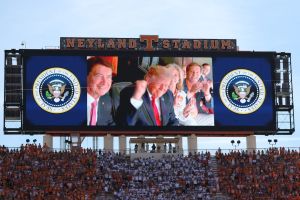
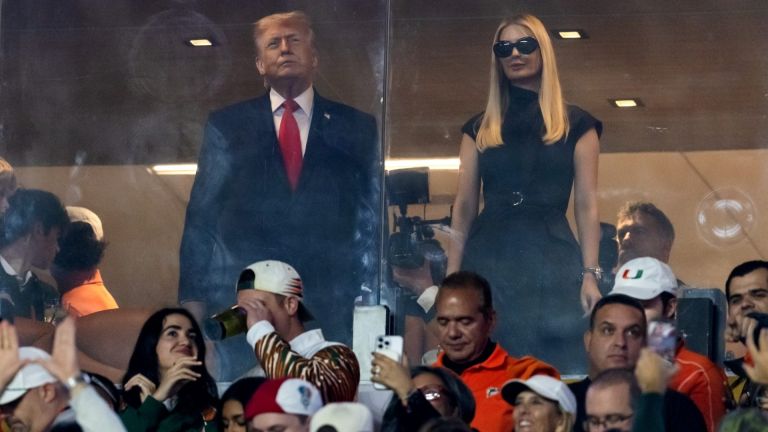
The legislation certainly had momentum. Since being introduced by Sens. Ted Cruz (R., Texas) and Maria Cantwell (D., Wash.), and co-sponsored by Eric Schmitt (R., Mo.) and Chris Coons (D., Del.), it has gained two more co-sponsors in Shelley Moore Capito (R., W.Va.) and Peter Welch (D., Vt.). It also won endorsements from several FBS leagues and the NCAA, and even got a vote of confidence from U.S. President Donald Trump.
But it remains unclear whether the bill will reach the Senate floor before Aug. 7, when the chamber goes into its monthlong August recess. Hurdles span from external critiques to legislative priorities. Bill sponsors have been embroiled in negotiations to placate the Big Ten and SEC, who came out against the bill and still stand against it, and to secure 60 votes. Meanwhile, several other Senate to-do list items are competing for airtime.
On Thursday afternoon, Sen. Majority Leader John Thune (R., S.D.) said he didn’t believe the Protect College Sports Act (and the CLARITY Act, another bill related to cryptocurrency) would be brought to a vote before the August recess. “I don’t think we’ll be able to get them done … We’ll see where the votes are.”
If senators can’t pass the bill by Aug. 7, the legislation is considered dead—at least until it could be reintroduced before the next Congress in 2027. The college sports industry will go another school year without legislative assistance.
SEC, Big Ten Opposition
The conferences, alongside the Big 12, ACC, and NCAA, have spent several years and millions of dollars lobbying in Congress for a law that would allow the NCAA to reimpose restrictions on college athlete compensation, transfers, and eligibility rules—and stop the flood of lawsuits challenging these rules. Cruz has been involved in bipartisan talks to put together a bill for the past three years.
Despite asking for legislation in general, this particular bill is not palatable to the Big Ten and SEC.
The two leagues have criticized what they saw as antitrust protections and state law preemptions that didn’t go far enough. They also raised concerns with the way the bill would codify the House v. NCAA settlement, imposing restrictions on player compensation that may have gone too far.
But their biggest opposition is regarding the second part of the bill, which paves the way for schools to pool and sell their media rights as one entity, and that prevents conferences reporting more than $1 billion in annual revenue (aka the Big Ten and SEC) from merging or engaging in further conference realignment. (The bill has since been amended to prohibit mergers or expansions for all power conferences, but it wasn’t enough to placate the Big Ten and SEC.)
Bill co-sponsors Cruz, Cantwell, and Schmitt have held multiple conversations with conference and school officials from both leagues in an effort to reach a compromise, as well as other stakeholders.
Now, lawmakers are considering another amendment to the expansion portion of the bill that would allow power conferences the ability to add Group of 6 programs, one source familiar with the matter confirmed to FOS. However, it would also cap conference membership at 19 schools—hamstringing the Big Ten in particular, given the league already has 18 programs.
Separately, lawmakers are reportedly working on amendments to expand the revenue-sharing pool to ensure players will retain a pathway for earnings similar to the numbers they’re making now, even if the bill imposes stricter prohibitions on certain NIL deals.
Sources in and around Capitol Hill differed on whether they thought the Big Ten and SEC would capitulate. One said they believe a deal is “close.” But another suggested they would put the likelihood of the bill passing before the recess at just 15% given where things stand now.
This week, both leagues confirmed they still did not favor the bill. A Big Ten spokesperson told FOS they had nothing new to share since their last public statement against the bill. The SEC released a statement during its football media days saying: “We are eager to see refined bill language as time to a vote draws near, and are hopeful updated language will address these important issues.” The statement added that the bill “is important to all of us.”
Whipping Votes
To reach 60 votes in this Congress, senators need at least seven Democrats to sign on even if all Republicans voted yes (eight if the absence of Kentucky Republican Sen. Mitch McConnell continues).
Three of the bill sponsors are Democrats, and five other Democrats on the Commerce Committee voted to advance the bill—suggesting there could be eight total Democrats on board.
But that may not be enough. Sens. Roger Wicker (R., Miss.), Todd Young (R., Ind.) voted against advancing the bill out of the Senate Commerce Committee. In addition, two Republican senators in SEC jurisdictions, for example, have come out against the bill: Bill Cassidy of Louisiana and Tommy Tuberville of Alabama.
Tuberville’s office sent a letter to senators urging them to vote no—citing his own proposed legislation that would address two narrow issues in college sports: transfers and eligibility.
“The bill is framed as a path to stability and legal certainty in college sports.” Tuberville wrote in the letter, a copy of which was obtained by FOS. “In reality, its core provisions would expand exceptions, invite litigation, increase uncertainty, and deepen federal involvement in college athletics. College sports do not need a federal takeover. They need clear rules governing transfers and eligibility.”
Cassidy shared a letter written by LSU opposing the bill, posting on X: “LSU is right to oppose the Protect College Sports Act as written. Issues such as insufficient Title IX protections and letting student-athletes become employees need to be addressed.”
Finally, there’s the small issue of competing agenda items.
The Protect College Sports Act is a priority for multiple senators—and Trump has made it clear he’d like to see it reach his desk. But that doesn’t mean it won’t get edged out, one of the aforementioned sources said. That source provided a list: a bill regarding sanctions over Russia, a cryptocurrency bill called the CLARITY Act, and two nominations for the attorney general (Todd Blanche) and the Office of the Director of National Intelligence (Jay Clayton).