Want more from Front Office Sports
in your search results?
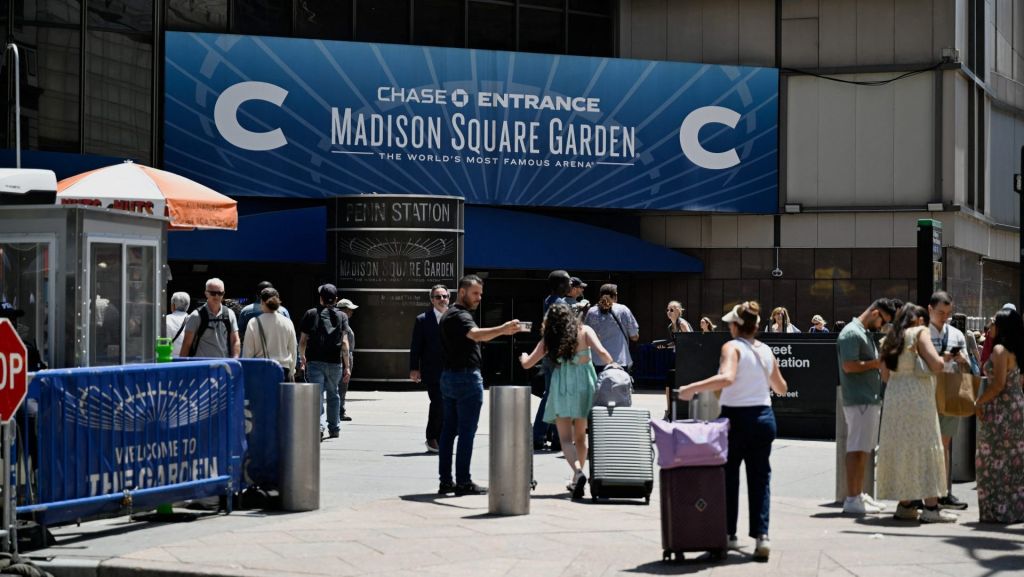
Madison Square Garden has escaped multiple recent lawsuits tied to a reported data breach, although the attorney behind one dropped suit tells Front Office Sports that another case could be in the cards because of “deeply disturbing systemic privacy violations.”
The hack reportedly accessed sensitive visitor data from up to 26 million people collected through controversial surveillance and facial-recognition systems used at the Knicks home arena. A few days after the Knicks beat the Spurs in Game 5 of the NBA Finals to take home their first championship in 53 years, Madison Square Garden Entertainment Corp. was hit with a proposed class action lawsuit stemming from the breach.
Four additional, separate suits were soon filed, totaling five against either MSG Entertainment, MSG Sports, or both (MSG Entertainment owns and operates the arena while MSG sports owns the Knicks and Rangers). Each suit alleged that MSG hasn’t adequately addressed the hack, and claimed the company collects more personal identifying information about event attendees than necessary.
Over the last two weeks, four of the suits have been voluntarily dropped, according to the court dockets. Each dismissal was entered without prejudice, which means the plaintiffs can refile the same claims again if they want. No details were provided in court filings for why the four suits were dropped. In the fifth suit, the judge recently scheduled an initial pretrial conference for Oct. 22.
“These lawsuits were based on unsupported speculation and false assumptions and therefore were voluntarily dropped,” an MSG spokesperson said in an emailed statement.
‘There’s a bigger picture here.’
Blake Hunter Yagman of Yagman PLLC, the attorney who filed the first of the five suits, declined to comment on why he voluntarily dropped his case. But he tells FOS the battle over MSG’s data collection techniques is only just beginning.
“There’s a bigger picture here,” he says. “I think we’re only hitting the tip of the iceberg. The data breach is one example of what the overarching issues are with MSG. We’re talking about deeply disturbing, systematic privacy violations, the categorization of people, and potentially even civil rights concerns.”
MSG has reportedly been using facial recognition technology since 2018, and this spate of lawsuits did not represent the first time the company has come under fire. In 2023, MSG Entertainment drew scrutiny, including from New York attorney general Letitia James, for using the technology to find and remove lawyers from Knicks and Rangers games solely because they worked at a firm that was involved in active litigation with the company.
More recently, the reported hack revealed that MSG tracks the risk level of celebrities who attend events like Knicks games; for example, actor and well-known Knicks fan Ben Stiller is considered “low risk” by MSG, while rapper A Boogie Wit da Hoodie is considered “high risk.” And on July 9, Wired reported that MSG goes a step further with how it tracks celebrities, claiming its database categorizes some celebrities with an “LGBTQIA” tag, including 93 celebrity guests who recently attended Taylor Swift and Travis Kelce’s wedding at the arena.
The MSG spokesperson told FOSvia email that “Wired’s reporting is inaccurate and false. MSG is pursuing legal remedies.”
Still, Yagman says he “would be concerned for anyone that goes into the arena who has articulated opinions about the Knicks, the Rangers, MSG Network, the Sphere—anything related to MSG.”
“Anything related to MSG, they are collecting all of that data, scraping accounts, and creating these profiles on people, which is deeply concerning.”
Meanwhile, Yagman notes that MSG has yet to deny any of this reported data collection. “They’ve never released a statement saying ‘all the allegations of facial recognition use are untrue,’ or ‘it’s false that we put together dossiers on people.’”
Although Yagman dropped this particular suit, he is keeping a close eye on a proposed law that would make it illegal for New York City-based providers of “public accommodation” spaces to use biometric recognition technology to identify customers. The law, introduced by the New York City Council in January, would also require places like MSG to both inform customers if biometric information is collected and obtain their consent before doing so. A public accommodation is a place open to the general public, such as a stadium, restaurant, or hotel, that must comply with certain public access and anti-discrimination laws, even if it is privately owned, such as MSG.
Multiple hearings on the proposed law have been held, although there remain multiple steps before it could go into effect, including a full 51-member Council vote and ultimately a signature from Mayor Zohran Mamdani.
If the law is passed and Yagman determines MSG is in violation of it, “I will sue them,” he tells FOS.
Representatives for MSG and attorneys in the other four lawsuits did not immediately respond to requests for comment.
Download the FOS App
The business of sports, in your pocket.



Scan the QR code to get the app now.