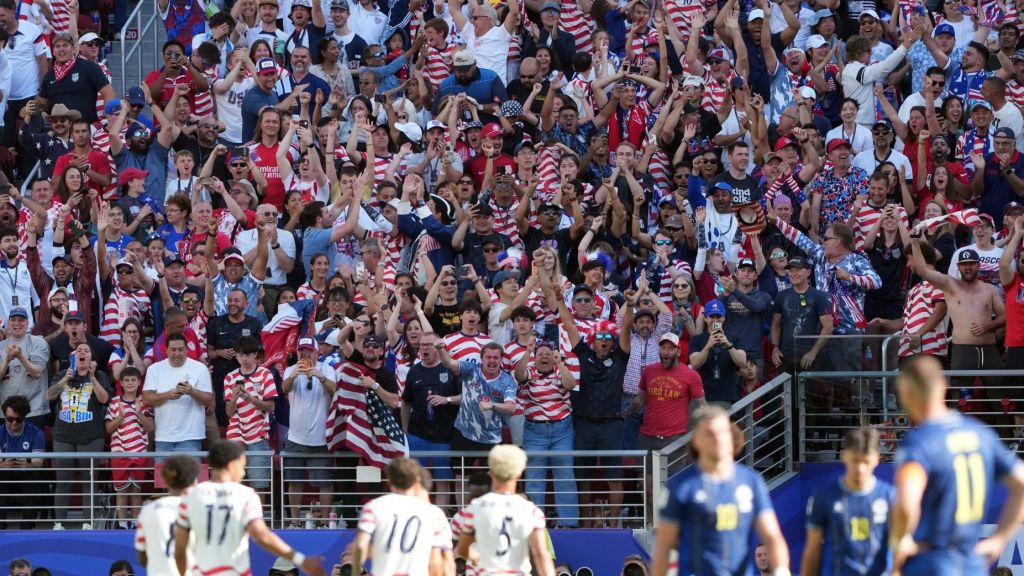
John Denver’s “Take Me Home, Country Roads” has become an unofficial anthem for the U.S. men’s national team at the 2026 World Cup, with thousands of fans singing along after victories. FIFA has called the classic one of the tournament’s “defining musical moments.”
But even more than creating viral moments of stadium-wide singalongs, the song’s use in the tournament is showing how music can continue to generate interest—and revenue—even decades after it was originally released.
After the USMNT’s June 19 victory over Australia, “Country Roads” generated nearly 1.7 million official on-demand US streams over the next three days, according to Billboard. That was a 20% increase from the song’s 1.4 million streams during the same three-day period one week earlier.
“We’re thrilled at this latest resurgence of John Denver’s timeless song,” a representative for Denver’s estate told Front Office Sports. “We’ve been having fun with the World Cup coverage as much as everyone else.”
“Country Roads,” like all pieces of recorded music, has two separate sets of rights. Denver, Bill Danoff, and Taffy Nivert are credited as the songwriters, meaning they created the lyrics and melody. Denver’s 1971 recording of the song is a separate asset controlled by RCA Records, now part of Sony Music Entertainment.
Stephen Vanyo, an entertainment and sports attorney at the Law Offices of Lloyd Z. Remick, told FOS that each set of rights is licensed and monetized differently depending on how the song is used.
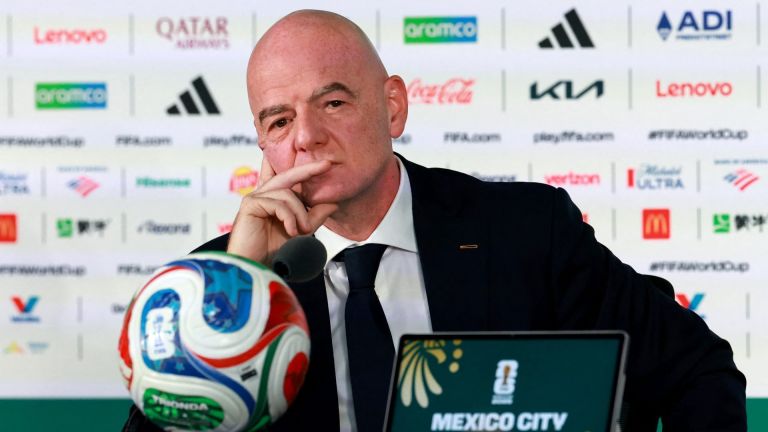
At a typical US sporting event, Vanyo said that the stadium secures licenses that allow it to play a catalog of music. For the World Cup, he said FIFA would likely handle those agreements. FIFA representatives can identify the publishers that control a song through performing rights organizations such as ASCAP and BMI, then negotiate terms based on how the music will be used.
The exact terms covering “Country Roads” at the World Cup are not publicly available, but Vanyo said licensing prices generally depend on “the type of use, where it’s used, and how much of it is being used.” He estimated that 1 million Spotify streams generate about $3,000 for the owner of the sound recording, assuming that party owns it outright. Actual payouts vary by platform and agreement.
“It’s far more lucrative to have your song played at a stadium than it is if each person in that stadium were to go home, put their AirPods in, and stream your music one time,” Vanyo said.
Because there is no fixed market price for a song license, new attention can also give rights holders more leverage in future negotiations. Associating a song with a major sporting event can increase demand for its use in television, advertising, films, and other projects that offer higher licensing fees sometimes amounting to hundreds of thousands of dollars.
Bad Bunny’s U.S. catalog streams jumped 175% the day after his 2026 Super Bowl halftime performance, rising to 99.6 million from 36.2 million the previous Monday. A few months later, his song “EoO,” from the 2025 album Debí Tirar Más Fotos, was featured in a trailer for “Minions & Monsters.” After Argentina won the 2022 World Cup, Spotify streams of Queen’s “We Are the Champions” increased by 320% in the country.
Thanks to this World Cup, “Country Roads” has climbed higher in the ranks of universal sports anthems like Queen’s “We Will Rock You” and The White Stripes’ “Seven Nation Army.” Denver’s estate said “Country Roads” has endured at sporting events because its lyrics are simple, recognizable, and not limited to one place. It is a staple at West Virginia University games, has been adapted by Manchester United supporters, and has grown popular at the NFL’s annual game in Munich.
“Everyone knows what ‘take me home to the place I belong’ is about,” the estate said. “This week we’re seeing fans from around the world singing along to a song with lyrics that resonate regardless of where they’re from.”
The USMNT will face Belgium next in the round of 16 at 8 p.m. ET on July 6.