The NHL’s once-derided Sun Belt expansion wave, now the center of the league’s competitive power, is set to grow once again.
The league’s Board of Governors has endorsed a plan to explore expansion in Texas to either Houston or Austin. The plan is in partnership with billionaire Dan Friedkin, who has actively pursued an NHL franchise for several years, and his family.
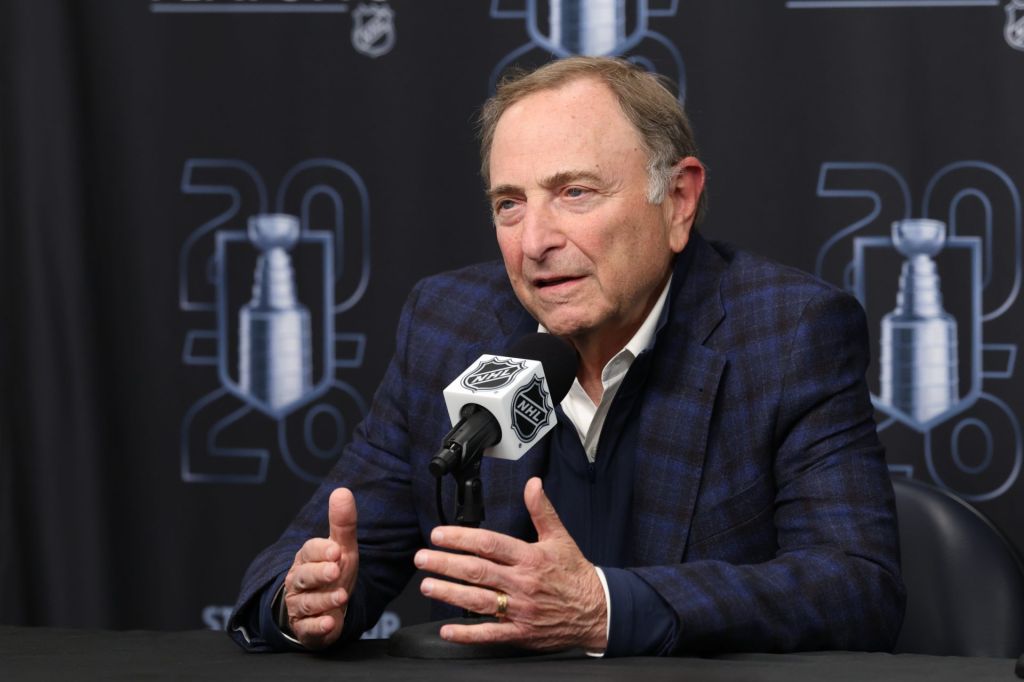
A specific timetable to place a team has not been set, nor has a target expansion franchise fee, though this initial exploration will run for six months. NHL commissioner Gary Bettman, however, said the arrival of the league’s 33rd team would require at least $3.5 billion between the expansion fee and a new arena.
“That’s part of the process to determine what would be best, both for the league and Dan Friedkin and family,” Bettman said of the ongoing deliberation between Houston and Austin. “Both cities will require a new arena. It may be more feasible in one place than the other. And as we dig a little deeper and do the due diligence, we’ll figure out which makes the most sense.”
Friedkin, carrying an estimated net worth of $11.5 billion, has amassed a sizable portion of his wealth as a major distributor of Toyota vehicles and parts. He also controls several other sports teams, including the Premier League’s Everton and Serie A’s AS Roma.
“Selecting a new market for an NHL franchise is a special and important responsibility, and we are grateful to the league for their faith in us and their support,” the Friedkin family said in a statement. “We will undertake a principled, disciplined, and methodical process to ensure we find the right long-term home for this new franchise.”
Competitive Considerations
The league’s latest move on expansion definitively places the Texas consideration ahead of competing efforts in Atlanta and Phoenix.
“Neither Arizona nor Atlanta are quite as far along in the process as the Friedkin opportunities,” Bettman said.
A second NHL team in Texas to join the existing Stars, meanwhile, would further expand the league’s already-powerful presence across the U.S. Sun Belt. Teams from that region have claimed the last four Stanley Cup titles, and six of the last seven, including the Hurricanes this past season.
Texas is now the second-most populous state, and Houston in particular is the No. 6 media market, making it by far the largest in the U.S. without an NHL franchise. Houston has never had an NHL team, and the World Hockey League’s Aeros of the 1970s were not included in that league’s 1979 merger with the NHL and ultimately folded. A second, minor-league franchise with the Aeros name ran from 1994 to 2013 in the International Hockey League and then the American Hockey League.
“As we’ve talked about all along, expansion depends on ownership, market, arena, and what does it do to make the league stronger,” Bettman said. “If you’re sitting in the room and the first three are checked, those first three boxes, you’ll then say to yourself, ‘What does it do to make the league stronger?’ Houston, South Texas, is a major market nationally.”
Another Texas-based NHL team would also likely exacerbate already-rising financial and competitive pressure on teams outside of the Sun Belt, and particularly the seven located in Canada. Texas does not have a state income tax, and part of the rise of the Sun Belt teams over the past decade owes to much lower tax rates players pay there compared to Canada and most northern American states.
That’s fueled a growing concentration of top talent among the southern teams, most recently seen with this week’s trade of Senators star Brady Tkachuk to the Panthers.
Elsewhere in Texas, the Stars are advancing plans to build a $3 billion arena and mixed-use development in Plano.
The NBA has a similar expansion consideration unfolding, approving a plan earlier this year to explore Las Vegas and Seattle as new markets. Golden Knights owner Bill Foley has formally started his bid to get an NBA team in Las Vegas.