Want more from Front Office Sports
in your search results?
Last week, the Senate Commerce Committee voted 19-9 to send the bipartisan Protect College Sports Act to the Senate floor for a full vote.
It’s the furthest a bill has gotten in the Senate in the six years since the NCAA and power conferences started lobbying for a bill to regulate college sports. But a group of current athletes and recent graduates are trying to stop it from ever reaching President Donald Trump’s desk.
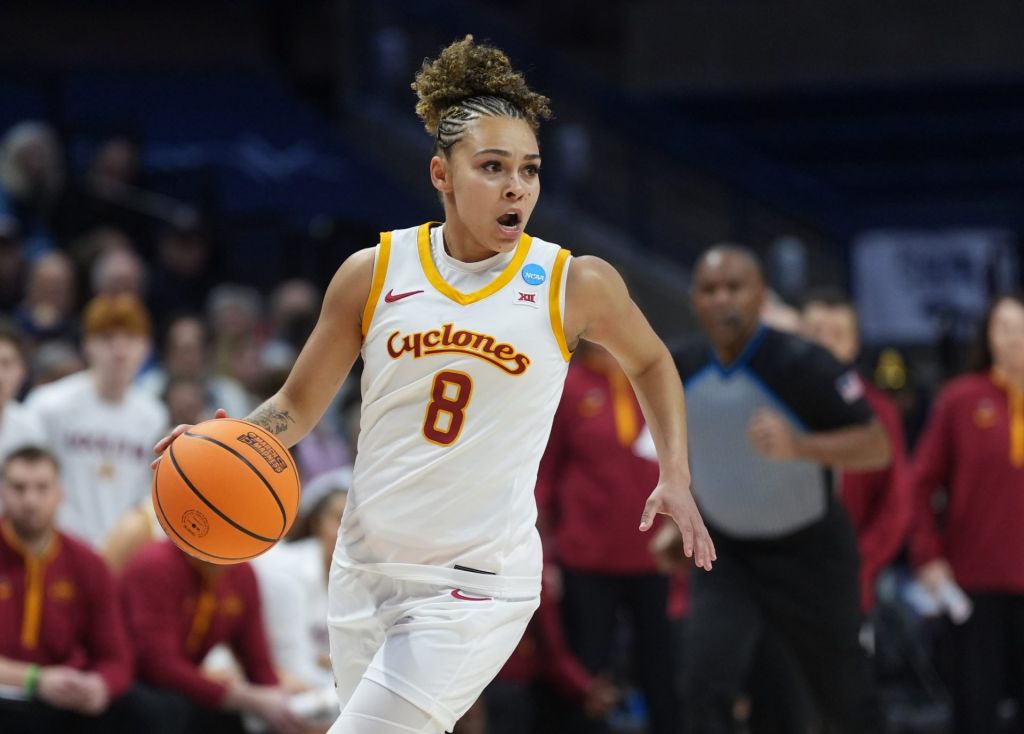
LSU women’s basketball player Jada Williams, Maryland women’s basketball player Oluchi Okananwa, and former Michigan women’s basketball player Brooke Daniels (who completed her senior season this past year), spoke with FOS to explain why they believe the Protect College Sports Act is an assault on player rights.
Instead of a Congressional bill that sets rules for them—and gives existing college sports governing bodies the power to enforce them—these players endorse collective bargaining. They want to form a union for all college athletes with branches for different sports.
“Student-athletes should be at the center of trying to figure out a system that works for all parties,” Okananwa told FOS. “Which is why, with collective bargaining, we are asking for a model that follows professional athletes. We are asking for something that is already set in place, that has already come to pass, and been successful.”
The three women’s basketball players are part of the United College Athletes Association, an athlete advocacy group founded in 2024. The organization says it counts hundreds of athletes among its members, and has been organizing women’s college basketball players specifically on a public level.
“We all agree that we need structure,” Williams said. “Where we disagree is—Congress shouldn’t be deciding who makes those rules.”
Favoring a CBA
The Protect College Sports Act would codify athlete NIL and revenue-sharing rights, as well as academic and health and safety standards, and protections for women’s and Olympic sports. But the bill would also allow the NCAA to unilaterally implement a salary cap; put restrictions on third-party deals, implement a one-time transfer limit, and give the NCAA or conferences the legal right to set eligibility restrictions. Though the bill preserves players’ ability to sue in some cases, it would override conflicting state laws and grant antitrust protectionists to enforce these rules.
The bill was introduced by Sens. Ted Cruz (R., Texas,) and Maria Cantwell (D., Wash) and co-sponsored by Eric Schmitt (R., Mo.) and Chris Coons (D., Del.). While two dozen conferences—including the ACC and Big 12—have supported the bill, it’s faced opposition from the Big Ten and SEC as well as athlete advocacy groups and 10 professional sports unions.
Players argue the bill codifies the same rules that are collectively bargained in the pros every few years—from minimum salaries, spending caps and luxury taxes to free agency restrictions. They worry that once these restrictions are codified into federal law, it would be much harder to change them than to change an NCAA rule or renegotiate a CBA.
Players voiced concerns about restricting the transfer portal, from which they all benefited.
Williams hit the transfer portal after two years at Arizona, for example. She spent a year at Iowa State, and then transferred to LSU. “I am so grateful that I was able to get out of those situations,” Williams said. “Because if I wasn’t, I probably would’ve quit basketball.”
Pay restrictions are another point of contention. Though the bill wouldn’t unilaterally impose a specific number for a salary cap, it would allow stricter enforcement of the revenue-sharing cap put in place by the House v. NCAA settlement.
Daniels said college sports officials—and lawmakers—apeared more interested in legislating player compensation than they did player safety. “I think the headline should be: If you cared about student-athletes, you wouldn’t just step in when it comes to regulating money and finances,” she said.
Williams pointed out that the bill doesn’t restrict coaching compensation or movement (though one provision would prevent coaches from leaving their programs mid-season). “It just doesn’t make sense at the end of the day why athletic directors… can leave. Coaches don’t have a salary cap.”
Ultimately, players say they’re open to restrictions like those that exist in the pros—as long as they have input.
Existing Complications
All the players FOS spoke with say they’re already treated like professionals, from the 40+ hours a week they spend training and playing to the high standards and fear of losing playing time or roster spots based on performance—not to mention the billion-dollar industry they help power.
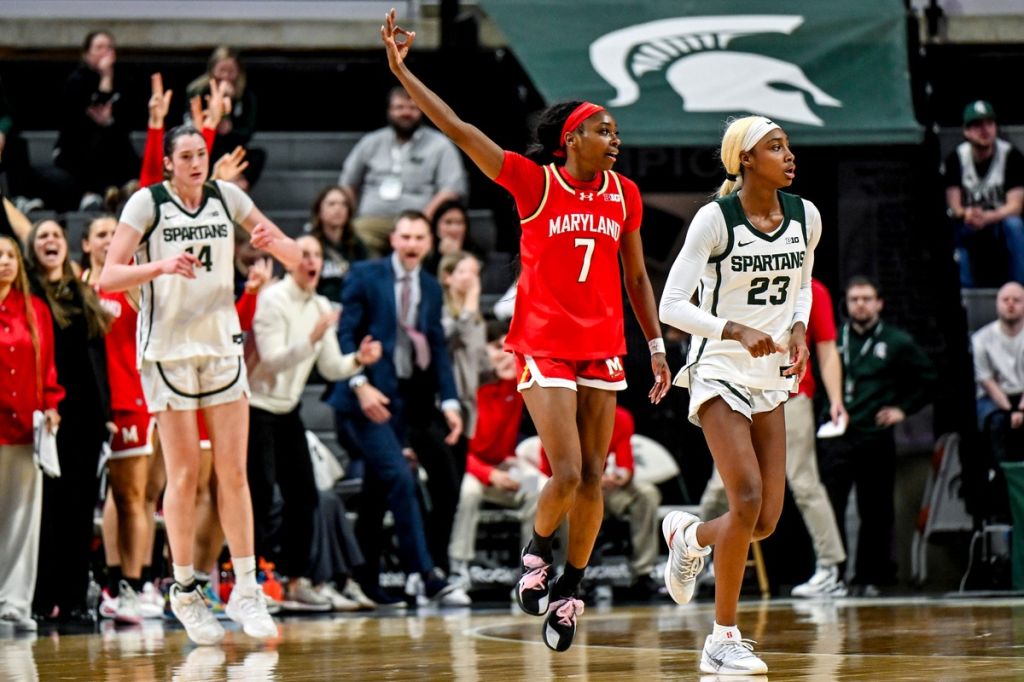
“It almost feels insulting when we’re being pushed in a box that is deeming us as just student-athletes,” Okananwa said.
All three athletes agreed that fear of retribution has played a role in why more athletes haven’t come out in favor of collective bargaining. “I do not feel like collective bargaining is that many years off,” Daniels said.
But because college athletes haven’t been legally deemed employees, they can’t form a union yet.
Proponents of the bill point out that the National Labor Relations Act—which governs collective bargaining—only applies to private-sector employees. Public-sector employees, which would include athletes at public universities, aren’t subject to the same provisions, preventing a large swath of players from joining a union. They say the NLRA would have to be amended to include public employees, and that a workaround called the “joint employer doctrine” wouldn’t be feasible in college sports.
New York Yankees president Randy Levine, who Trump installed as co-chair of his roundtable on the future of college sports, called collective bargaining a “red herring” during a call with reporters last week. “People who are continuing to say that there is a path to collective bargaining are just not being honest. Maybe if you could amend the NLRA—but I don’t think that’s doable, or it’s going to happen.” (Other labor experts like former National Labor Relations Board general counsel Jennifer Abruzzo, however, do believe it’s possible.)
Coons gave a different reason for arguing why the bill was better than waiting for a CBA: time. He previously told FOS players should take the protections the bill offers now.
The players say they have time on their side. “I don’t see why we settle,” Williams said.
Download the FOS App
The business of sports, in your pocket.



Scan the QR code to get the app now.