Want more from Front Office Sports
in your search results?
On Thursday, the Senate Commerce Committee voted 19-9 to send an amended version of the Protect College Sports Act—a sweeping bipartisan college sports bill—to the Senate floor for a full vote.
It’s the first time that a college sports bill has passed a committee vote in the Senate in the six years that college sports stakeholders have been lobbying in Congress.
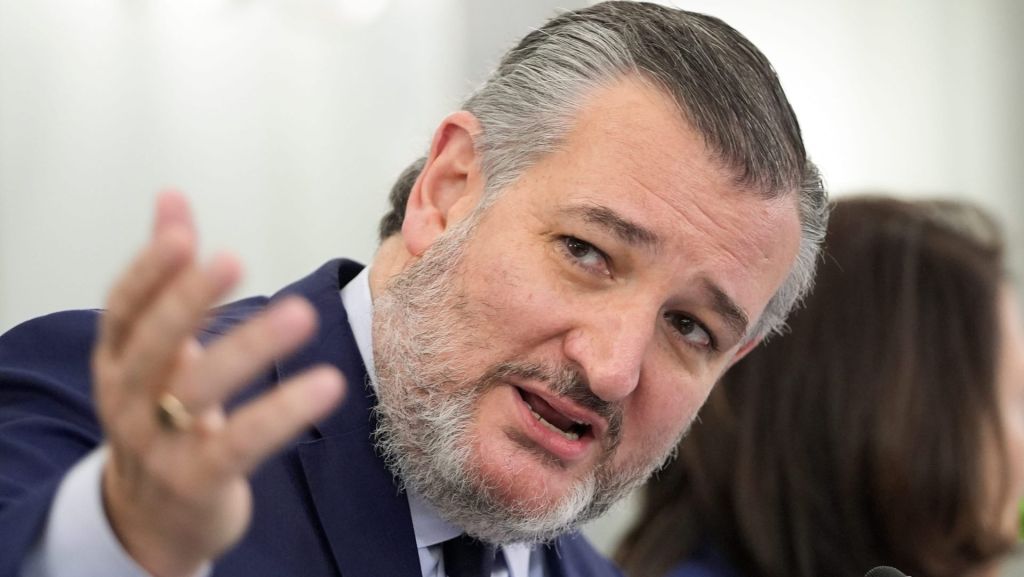
“No one got everything they wanted,” Cruz said at the outset of the hearing. “But we did create a framework that stabilizes college athletics.”
The bill, introduced by Sens. Ted Cruz (R., Texas) and Maria Cantwell (D., Wash) and co-sponsored by Sens. Eric Schmitt (R., Mo.) and Chris Coons (D., Del.) would codify academic and health and safety standards, athlete revenue-sharing and NIL rights, and implement minimum requirements for Olympic sports participation. It would also establish limits on player compensation, transfers, and eligibility, give the NCAA and conferences antitrust protections to enforce these rules, and prevent state legislatures from passing laws to conflict with these rules. Additionally, it would prevent a power conference super league and allow for FBS conferences to pool media rights.
Dozens of conferences, including the Big 12 and ACC, have come out in favor of the bill, as has the NCAA.
But it continues to have opposition from the Big Ten and SEC, the conferences said in a joint statement on Thursday morning. The opposition comes even though the newest version of the bill ameliorates their concern about the super league provision. The original version effectively prevented a Big Ten-SEC merger only, while the new version sent to the Senate floor prevents this for all four power conferences.
An amended version of the bill also strengthens protections for Olympic and women’s sports by setting minimum roster and scholarships numbers regardless of whether schools decide to share media rights revenue in the future. A previous version of the bill only implemented these protections if media rights were pooled.
A vote on the Senate floor has not yet been scheduled, and the bill is expected to face headwinds in the House of Representatives, as Republican leadership has critiqued the bill. President Donald Trump, however, has publicly endorsed it.