Want more from Front Office Sports
in your search results?
DESTIN, Fla. — At SEC Spring meetings this week, coaches and administrators have exuded a palpable air of frustration. Coaches and athletic directors across the board lamented the slow and uneven enforcement of rules, the system of unrestricted free agency, and the lack of clarity over simple rules like eligibility.
But Congress may now provide its most viable solution yet.
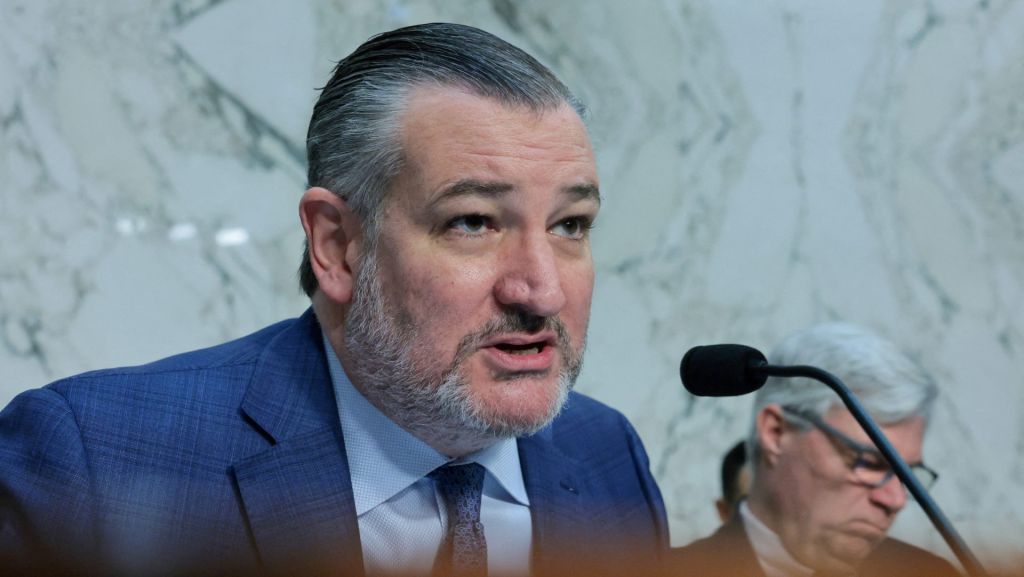
On Wednesday, Senate Commerce Committee Chairman Ted Cruz (R., Texas) and Sen. Maria Cantwell (D., Wash), the ranking member of the Senate Commerce Committee, introduced a college sports bill called the Protect College Sports Act, the senators announced. Sens. Eric Schmitt (R., Mo.) and Chris Coons (D., Del.) also joined in sponsoring the bill.
The 111-page bill addresses multiple issues and includes antitrust protections, nationwide NIL standards, a revenue-sharing cap, a five-year eligibility rule, agent regulations, a one-time transfer rule, a ban on coaches leaving their team for another job before the season ends, and a provision allowing schools to pool television rights. It does not, however, ban college athlete employment status.
“The Act does not go back to the old model,” a Senate Commerce Committee aide said. But it provides a “national rulebook that restores order to the system.”
The bill is years in the making, as Cruz, has been leading bipartisan negotiations on sweeping college sports legislation since at least 2023. Discussions have progressed significantly over the past several weeks, with Cantwell leading the charge for Democrats.
The legislation comes just one week after the House of Representatives canceled yet another floor vote on the SCORE Act, which was supported by the NCAA and power conferences. But this bill arguably has a better chance of passing given its bipartisan nature in the Senate. There is a time limit, though: the bill will need to be fast-tracked to make it through both houses of Congress before the Senate’s August recess, SEC Commissioner Greg Sankey said Tuesday.
Cantwell and Schmitt both told Front Office Sports Wednesday that they expect the Commerce Committee to hold a hearing on the bill as soon as next week. “We’re on a condensed timeframe,” Schmitt said. “If we got something out of the Senate before August, that would give us the best plan possible.” Then, the House could vote and send the bill to President Trump.
What’s in the Bill?
The bill codifies regulations of the House v. NCAA settlement: It provides a national NIL standard and allows (and extends) revenue-sharing, but prohibits third-party deals from being used as pay-for-play, potentially providing some cover for the College Sports Commission to scrutinize and enforce NIL deals. It would also create a publicly available NIL market database.
The bill amends the Sports Agent Responsibility and Trust Act to create agent regulations, including requiring agent certification, standardizing NIL contracts between agents and athletes, and capping agent commission fees at 5%.
The Protect College Sports Act offers versions of two wishlist items the NCAA and conferences have been asking for: It pre-empts any state laws around compensation, eligibility, and transfers, and provides limited antitrust protections for the NCAA or another governing body to oversee rules set by the bill.
The bill does not, however, grant one of the key principles the NCAA and power conferences have been lobbying for: a prohibition on college athlete employee status. The bill includes a “neutrality clause,” which effectively says the legislation can’t be interpreted to suggest college athletes should or should not be considered employees.
Players would be able to transfer one time without penalty before they complete their undergraduate degree and a second time once they graduate or their head coach departs. Player eligibility rules will be set so that athletes will have five years to compete starting on their 19th birthday or when they graduate high school, whichever comes first (with very narrow exceptions). The bill also aims to prohibit tampering with prospective transfers or incoming athletes.
There’s a limit on coaching movement, too. One part of the legislation—unofficially dubbed the “Lane Kiffin rule”—would prohibit football coaches at all levels from switching teams mid-season. Head coaches who violate the rule would have to sit out an extra season.
Other athlete protections include medical and academic requirements, including an annual $60 million fund for players to receive medical benefits funded by media rights revenue.
Future of Super Leagues and Media Rights
The bill dedicates about 30 pages to the future of college sports media rights, as well as attempts to prevent a “super league” merger between the Big Ten and the SEC.
To do so, the bill amends the Sports Broadcasting Act of 1961 to allow schools to pool media rights and sell them together as a joint package—a concept gaining steam in Congress and across multiple college sports leagues.
At least 75% of FBS institutions have to agree to participate, and all Division I schools have to receive an invite. The bill stipulates formulas for revenue distribution as well as voting rights within this new entity.
This portion of the bill also prohibits a merger between the two richest conferences: the Big Ten and SEC. It says that any conference that reported more than $1 billion in revenue in fiscal year 2025 cannot merge with another conference unless and until the number of schools reaches that 75% FBS threshold. It does not prohibit these leagues from expanding on a school-specific basis.
Schmitt said the provision wasn’t about limiting the Big Ten and SEC, but rather ensuring that if college sports conferences do decide to pool media rights, they’ll have the benefit of working with two of the most valuable conferences. “One big league—and everyone else is excluded—that’s probably not the best thing for the overall health of college athletics,” Schmitt said. “It’s not meant to punish anybody.”
Will It Actually Pass?
One question is whether college sports administrators would support it, as the NCAA, Big Ten, and SEC refused to endorse the bill last week, saying that they hadn’t seen it. On Wednesday, NCAA President Charlie Baker said that the NCAA “appreciates the bipartisan leadership” and is reviewing the text of the bill.
At SEC Spring Meetings Wednesday, College Sports Commission CEO Bryan Seeley and Alabama athletic director Greg Byrne said they couldn’t comment on the bill yet because they hadn’t read it. Florida athletic director Scott Stricklin, however, said his initial reaction was positive.
If this bill—or one of the others—doesn’t pass, schools will have to formally consider other options.
Sankey said in March at the White House that conferences would likely take rule-making into their own hands—comments he echoed Tuesday. Last week, Georgia president Jere Morehead said he was prepared to vote on conference-specific governance rules. On Tuesday, Georgia head coach Kirby Smart backed Morehead, saying, “I’m not afraid to break away.”
But not everyone is on board with that idea. Tennessee AD Danny White said conference-specific rules could create competitive disadvantages between schools in different leagues. White has been talking about collective bargaining as a way to create rules that would be legally enforceable, especially around player movement, eligibility, and compensation.