White Sox Co-Owner Mat Ishbia Endorses MLB Salary Cap—and Floor
Want more from Front Office Sports
in your search results?
For Benjamin Hesse, a 33-year-old lifelong Mets fan who gets to Citi Field about 40 times each season, the beauty of attending a baseball game has always been its natural ambience—a soundtrack of peanut sales, bat cracks, and the low hum of pleasant chatter.
But lately, Hesse says, “they’re just blasting this music. I find it to be incredibly overwhelming.”
Between nearly every pitch, speakers erupt into cacophonous music, sound effects, and participatory prompts that ricochet around the ballpark and effectively consume his conversations. It’s not just his perception. MLB teams are increasingly introducing louder walk-up music, more audio cues, bigger video-board and light activations, and constant prompts demanding fans “MAKE SOME NOISE.”
Since the COVID-19 pandemic, baseball has experienced a genuine resurgence, fueled by rule changes to speed up games, new international superstars, and dramatic postseason and World Baseball Classic moments. And now, with that crop of new and younger fans, many of whom are accustomed to second-screen styles of entertainment, more teams are raising the volume to keep eyeballs glued to the action and get fans in seats.
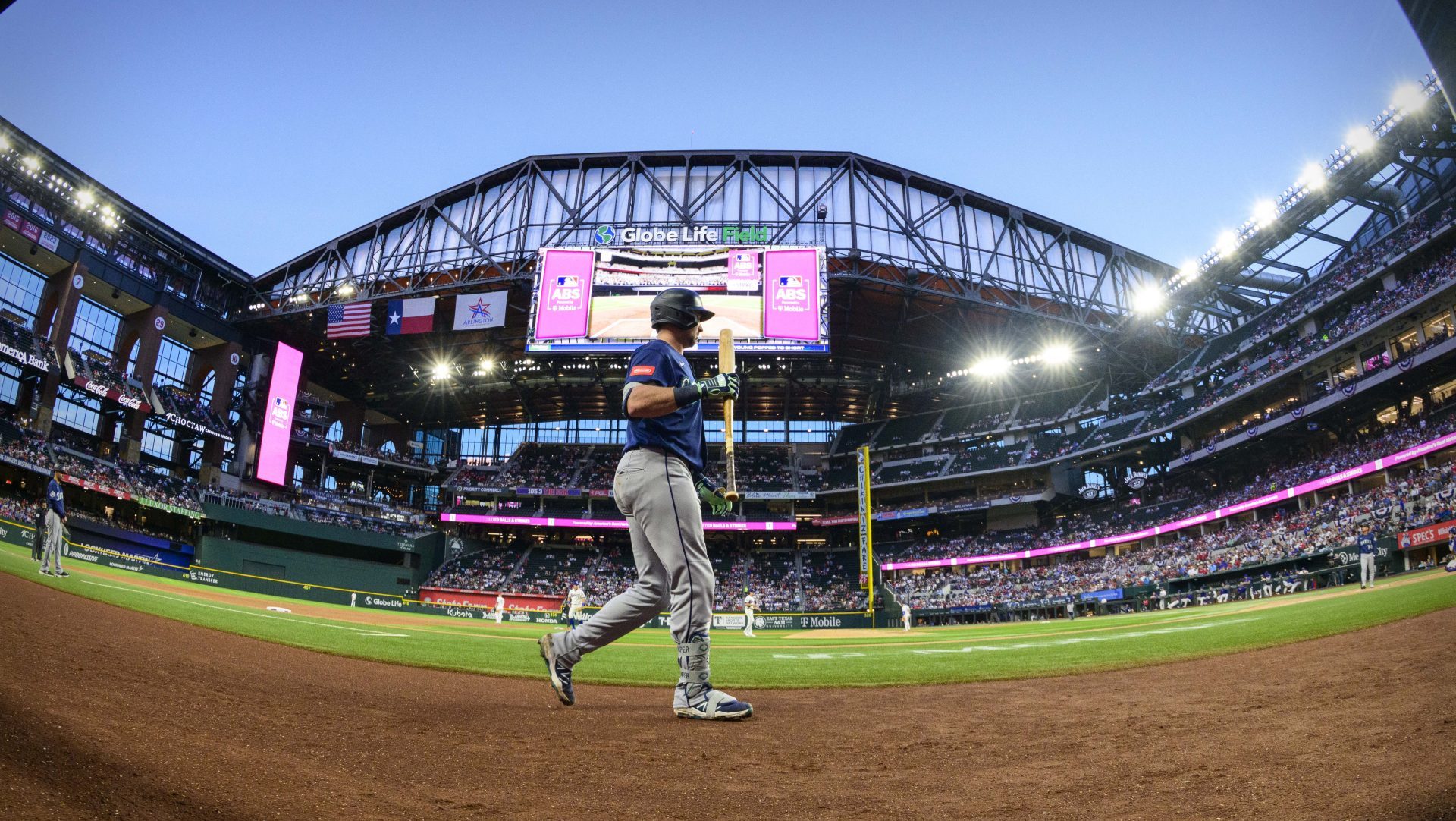
“It’s always on my mind,” Chris DeRuyscher, VP of ballpark entertainment for the Texas Rangers, tells Front Office Sports. “There’s a new generation out there, and there has been for a while. And baseball is slowly but surely catching up to it.”
Multiple clubs told FOS that they’ve recently made efforts to increase the frequency and volume of music, sound effects, and prompts into their stadiums. Whether this new soundscape is enhancing or tarnishing baseball is now a heated, sustained debate both online and on stadium concourses across the country.
“Insane Cocaine Bender”
Throughout the past few years at Rogers Centre, the Blue Jays have boosted sound effects, chant prompts, and punctuated music drops from roughly 50% of the time to nearly 95%. The White Sox say they have also been “more aggressive” this year, adding a variety of new songs to play between certain counts.
According to DeRuyscher, teams want to match the intensity of competing sports venues and also keep younger fans engaged from first pitch to final out. “We’re competing for entertainment dollars,” he says. “You’ve got the Mavericks and the Stars, who do great high-energy type shows. And then you’ve got the Cowboys. Around here, we don’t want to lose what baseball was—but at the same time, we’re having to draw attention to new fans and get new people in here.”
Meanwhile, Giants director of entertainment Marco Nicola says that while the team’s diehards remain a core marketing demographic, “our biggest ability to make an impact is on single-game ticket buyers,” he says. And, as the team’s season-ticket member base begins to decline each year, “that creates more of a need for us to provide differentiated experiences.”
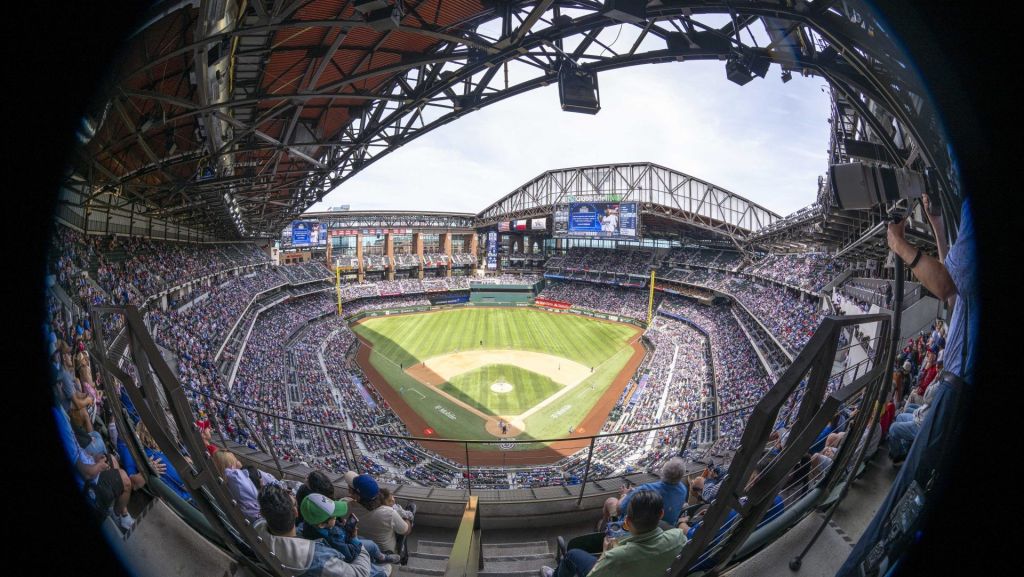
The Yankees, who declined FOS’s interview request, have made multiple headlines throughout the past year for their imposing soundscape—specifically the “Imperial Alarm” they implement for two-strike counts. In a recent interview with the New York Daily News, Jason Zillo, Yankees VP of communications and media relations, said the team has made a “concerted effort to increase the tempo and pace” during the game’s quieter moments to build “an arena atmosphere” for its younger fans.
That echoes what manager Aaron Boone told NJ.com last year: “It’s about time baseball caught up with the NBA.”
Shaun Morash, a radio host at New York’s WFAN, finds the strategy antithetical to baseball’s natural inning-by-inning drama, especially with the recent addition of a pitch clock. “When you’re playing that hardcore sound between every pitch in the pitch clock era, it’s almost like you’re on some kind of insane cocaine bender,” he says. “We’re baseball fans. We understand all the action could come in the first inning, the third inning … Every pitch matters.”
Blue Jays senior director of game entertainment and production Stefanie Wright argues the sound frequency and nightclub-level volume are meant to build stronger engagement and get people off their phones. “The whole point is for you to be focused and paying attention to the game,” she says.
The noise doesn’t irk Darcy Corbett. “The Blue Jays have done a great job of trying to get the fans involved,” says the 38-year-old native Torontonian. He understands the complaints from traditionalists but says the shift makes sense for baseball’s broader ambitions. “It’s a business. If your audience is younger and that’s what your audience wants, that’s who you’re growing to.”
“They Want More”
In 2024, the Giants upgraded Oracle Park with new speakers for the first time since opening the bayside stadium in 2000. Among their primary conditions for the new sound system was that the players needed to hear more on the field.
“It was one of the biggest pieces of feedback that we provided to our technology partners,” Nicola says. “And they said it’s what they’re hearing from every other team going through similar exercises: Players want to feel the energy coming from the P.A. system.”
The Giants placed a speaker beside their on-deck circle so players could hear their walk-up music loud and clear, then added two more near the bullpen so relievers could hear their own entrance songs better. They also added new subwoofers, allowing Nicola to crank up the noise and vibrations even further for late-inning, high-leverage situations.
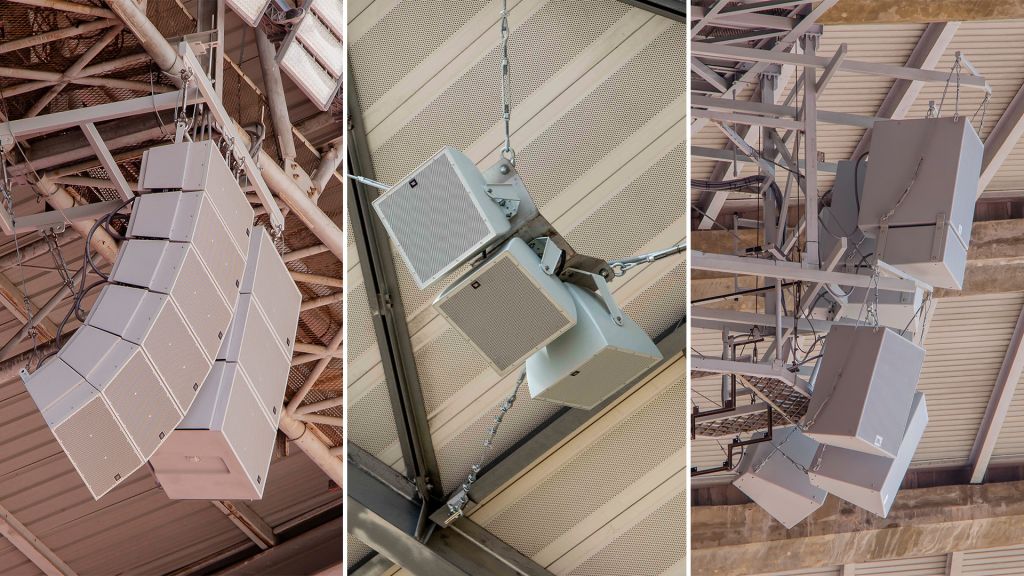
Today, most teams are looking for ways music can be felt throughout the park in short bursts, with volume, direction, and vibrating subwoofers all becoming part of the equation, says Jim Burdette, a business development manager at Harman, parent company of JBL, which outfits dozens of professional stadiums across the globe including Yankee Stadium.
Still, he says, “you have to be real careful about where loudspeakers are placed and where they’re throwing to so you don’t get unintended echoes or time arrival issues.”
These considerations are increasingly important because “as players get younger, they’re definitely in tune with these things,” Nicola says. And as more stadiums upgrade their in-game entertainment with pyrotechnics, light shows, and other theatrics, “we hear way more feedback from the clubhouse and the players now that they want it to be louder—they want more.”
Part of the Yankees’ move to bolster their tech in 2024 was to appease reigning AL MVP Aaron Judge, who has repeatedly asked the organization to turn up the volume so the team can hear it on the field. “The more music, the louder it is, the better,” he said.
Wright has noticed the same thing at Rogers Centre. When she started her job 15 years ago, higher-ups had specific rules: no music when Blue Jays pitchers were on the mound or once Blue Jays hitters stepped into the box. “But as the players have evolved and changed, they don’t want that,” Wright says, noting first baseman Vladimir Guerrero Jr.’s recent request to make every game feel like a big party. “They want music all the time. They want the fans to be loud.”
“Read the Room”
In May, Cincinnati’s Triple-A affiliate, the Louisville Bats, announced an unusual promotion for their Tuesday matchup with the Indianapolis Indians: “Nothing Night.” “That means no ad reads, videos or on-field promotions,” the International League team posted on social media. “Just baseball in its purest form.”
The Bats took the idea from the California League’s Lake Elsinore and have hosted quiet games over the past few years. (The Triple-A Omaha Storm Chasers hosted their own that same night.) But this year’s occasion struck a chord online and quickly went viral—enough that the Bats added another Nothing Night in July.
“I only pray this becomes a trend across all of baseball,” wrote one user on X/Twitter.
According to Bats director of marketing Vincent Zielen, Nothing Night can initially feel a bit “eerie,” like attending a high school game. But “when you take out all the frills and the fluff and the constant noise, you can become even more intimate with the game and the players and get to love it that much more,” he says.
It’s a unique case study for MLB entertainment directors—a reminder there’s still a strong contingent of fans who don’t necessarily need every lull injected with noise.
But ultimately, who takes priority in this knob-turning battle? There may be a middle ground.
The Rangers have experimented with new and traditional sound in just about every direction, making sure to acknowledge fan reaction through surveys, social media, and advisory boards, and pivoting where necessary.
Last year, for the White Sox’ 125th anniversary, Dan Mielke, the team’s senior director of game presentation and video production, says the team brought back revered organist Nancy Faust for several days, leaning primarily upon her windpipe tunes. White Sox fan Brett Haffner appreciates the balance, while noting the crosstown rival Cubs have maintained an even more classic ballpark feel, keeping between-pitch sounds to a minimum but still mixing in updated music—like a trap remix of Chappell Roan’s “Hot to Go!” for pitching changes.
The Giants believe it’s possible to have it both ways. “If it’s a Friday night versus a high-profile opponent, then maybe we’re coming out of the gates guns blazing,” Nicola says. “But if it’s a Wednesday afternoon game against a lesser opponent and people are there for a nice afternoon at the ballpark, we try to read the room a little bit.”
Download the FOS App
The business of sports, in your pocket.



Scan the QR code to get the app now.