Want more from Front Office Sports
in your search results?
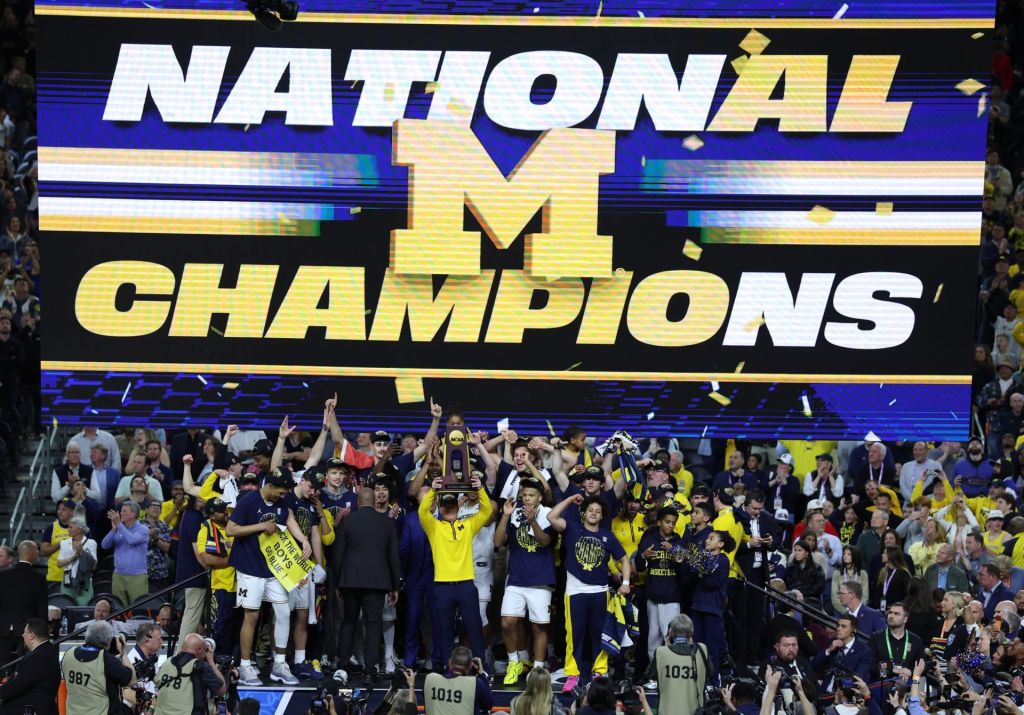
If Michigan wants to make another men’s basketball title run, the Wolverines will have to spend well over $10 million, according to Michigan head coach Dusty May.
This past year, May’s national championship-winning roster cost about $10 million between revenue-sharing and NIL (name, image, and likeness deals), a source familiar with the matter previously told FOS. Though the number was big, it was hardly considered the most expensive in the 2025-26 landscape.
When asked whether the Wolverines expect to spend more than $10 million for the upcoming season, May responded: “We do.”
“We anticipate it to be much greater next year because of the job our players did this past season,” May said in an interview with FOS News on Wednesday. “We’re very grateful, myself as a coach, our assistant coaches and players, for all of those that laid the foundation for the sport to be in the place it is now. And our job is to leave it in a better place than we found it.”
He noted, however, that because of the success the team had throughout the season, they were able to generate more than $10 million total with external NIL opportunities that arose.
“Our guys have been able to generate a lot of revenue outside of what they were contracted for throughout the season, postseason,” May said. “The autograph signings, the restaurants, the hotels that are basically hiring our guys like they formerly did coaches. So, yeah, that number has actually increased.”
As for what he may have to spend for this upcoming roster, May said he “hopes” it won’t have to be double the previous amount. (In order to be competitive in 2026-27, sources previously estimated schools would need to spend a minimum of $10-12 million.)
But even if the numbers are high, May said schools should look at the potential for a big return on investment in terms of advertising for the university .
“If you have to pay—let’s factor in the scholarship and operating budget of our team—and then you have to pay them a ‘salary’ of, call it $10 million, that’s a pretty good return,” May said.
“And obviously you’re not going to be able to do that every single year. But if you can invest $15 million and you get a return of multiple billions, I think a lot of universities would take that gamble. And that’s a component we don’t really talk about.”
Download the FOS App
The business of sports, in your pocket.



Scan the QR code to get the app now.