Want more from Front Office Sports
in your search results?
The NCAA is weighing a new five-year standard for eligibility that would give athletes extra time to complete their college careers but functionally eliminate redshirts, Olympic waivers, and gap years, with narrow exceptions including maternity leave, religious missions, and military service.
NCAA president Charlie Baker has backed the five-for-five rule, and is pushing for it to be voted on in May as emergency legislation.
In many Olympic sports—particularly ones with limited pathways to the pros—it’s common for athletes to sit out the semester before or after the Games in order to either optimize their preparation or recover from an extra-long season. The new rule would cut down on athletes’ ability to do so and still maximize their college careers.
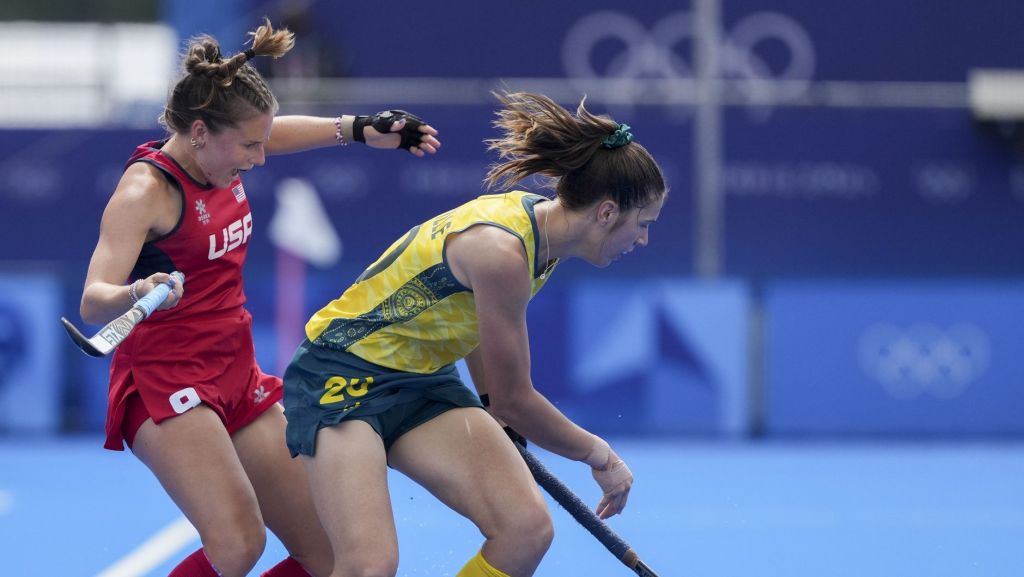
Northwestern field hockey alumna Maddie Zimmer, a three-time national champion who sat out the 2023 NCAA season to help the United States qualify for the 2024 Olympics, told Front Office Sports that the five-for-five system is unfair to Olympic hopefuls.
“If I took that Olympic waiver and I still lose eligibility, it seems a little counterproductive to me because Team USA relies so heavily on NCAA athletes,” Zimmer said. “The pipeline that’s trying to build us up to reach this [Olympic] goal is almost discouraging us from doing that.”
Zimmer was one of seven active NCAA athletes on the U.S. Olympic field hockey team that finished ninth in Paris, with six of those seven skipping out on their college season to train long-term with the rest of Team USA in Charlotte. It’s a common practice among Olympic sports with limited professional opportunities. In women’s hockey, the establishment of the PWHL let players break free from that norm in the leadup to the 2026 Winter Games, and the NCAA athletes on the team stayed in school.
In hindsight, Zimmer still would have taken her gap year, knowing that she made the Olympic team and that Team USA qualified. But she doesn’t envision that being the case for all collegiate field hockey players, who could risk playing for less than four years if they take off a year and get hurt another year.
“I could potentially see teammates of mine choosing to stay in the NCAA, because that time is limited, and waiting until they’ve graduated to pursue national team dreams,” Zimmer said. “That’s a really hard choice for athletes to make at a young age.”
Virginia swimming and diving head coach Todd DeSorbo, who also led the U.S. women’s swim team at the 2024 Olympics, told FOS he has mixed opinions on how the NCAA’s proposed rule could affect his sport and is generally “numb” to the constant changes in collegiate athletics. But he adds that it could make five seasons of competition the expectation for prospective recruits, leaving those who take an Olympic year off in a difficult position.
DeSorbo, who led the Virginia women to six consecutive national titles, actively discourages Olympic redshirts because he thinks the college season can be a healthy distraction before the summer. But six members of the 2024 U.S. swim team that topped the sport’s medal table still sat out their college seasons before the Paris Games. One of those swimmers, 2025 world champion Luca Urlando, missed a separate NCAA season for a shoulder injury.
Waviers also allow swimmers to train full-time in a 50-meter, Olympic-sized pool, rather than the 25-yard pool used for NCAA competition. But DeSorbo believes that the benefits of a waiver will begin getting drowned out by costs if the five-for-five proposal comes to fruition.
“I think you’ll still see it, but you won’t see it as much because some of those kids don’t want to give up that last year of eligibility,” DeSorbo said of Olympic waivers in college swimming. “You’re giving up a massive scholarship. You’re giving up potentially getting your grad school paid for.”
Other coaches, like Princeton men’s swimming and diving head coach Matt Crispino, are less concerned about the rule from an Olympic waiver standpoint. He’s also optimistic about what it can do for Ivy League schools, which don’t allow graduate students to compete, as students now have the opportunity to earn a degree from an elite academic institution while completing a fifth year at a Power Four school.
“You got to swim for college for four years and you chase your Olympic dream. What more could you want?” Crispino told FOS. “These are going to become the decisions that become a little bit more risk-laden, to me, maybe I’m in the minority here, but I’m fine with that.”
In turn, Zimmer thinks the five-for-five rule will help NCAA field hockey players who aren’t vying for the Olympics, while DeSorbo believes it provides an additional fifth-year cushion for swimmers in a sport where professional earning opportunities are limited.
But none of them believe the NCAA made these rules with anything other than football or basketball in mind, and that may present some complications when the Games roll around.
“We don’t generate the attention and the revenue that football and basketball do, but we matter just as much,” Zimmer said. “We’re still part of our schools and the NCAA, so I can only hope people are vouching for us.”
Download the FOS App
The business of sports, in your pocket.



Scan the QR code to get the app now.