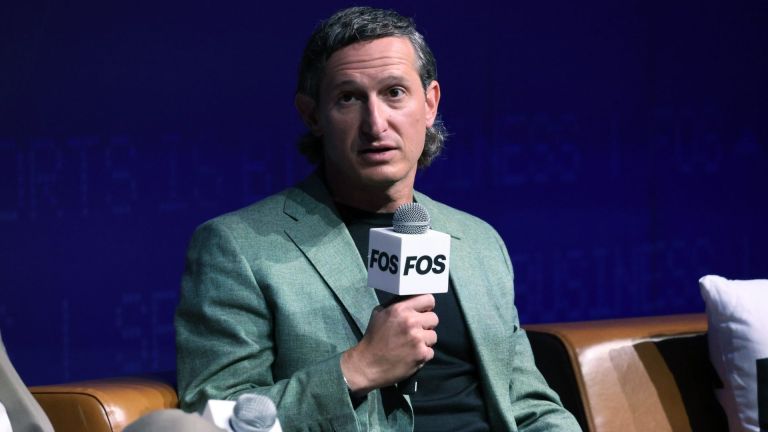
Novig founder Jacob Fortinsky is forthright about the fact that sports event contracts are sports betting by a different name, and he says the U.S. is at the start of a “massive paradigm shift” that will upend the industry.
Fortinsky—who cofounded New York-based Novig in 2021 while at Harvard—said during a panel at Next.io’s New York summit on sports betting and prediction markets that compared to offerings from traditional sports betting companies, peer-to-peer platforms like his are fairer and more transparent.
He says prediction-market platforms benefit from “two structural tailwinds”: shifting consumer behavior and a regulatory environment that’s increasingly favorable to the industry, especially at the federal level.
“People want to bet on sports because it’s fun,” he said. “I hate to break it to you, but the majority of sports fans in the U.S. already bet on sports. They want a better version of what already exists today.”
Whether prediction-market platforms will be allowed to offer sports the way they currently do remains an open question—there are numerous lawsuits winding through the courts, some filed by state gaming regulators against platforms, and others filed by platforms like Kalshi and Polymarket against state regulators.
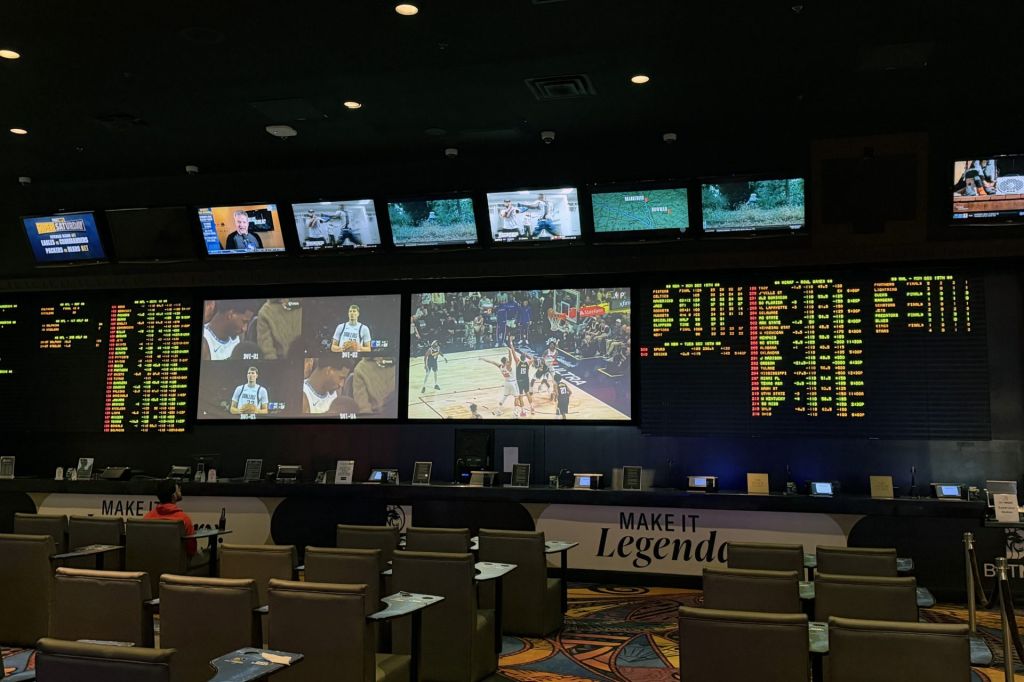
Platforms like Kalshi, Robinhood, and Crypto.com have argued there is a technical distinction between sports betting and sports event contracts. The idea is that when you place a bet on a prediction-market platform, you’re actually investing in a futures contract and users are trading against each other. Contrast that to typical wagers placed, where users bet against “the house”—casinos or sportsbooks like DraftKings or FanDuel, which set the odds and profit when bettors lose.
Experts expect the issue will eventually reach the Supreme Court. “The Supreme Court’s gonna sort it out, and they’ll decide,” Bill Gantz, a partner at law firm Duane Morris LP, said during the same panel Fortinsky was on.
When all is said and done, Fortinsky believes this period will be viewed as the point “in which the federal government legalized sports betting in all 50 states under a financial regulatory exchange framework.”
Fortinsky disagrees with the idea that regulators are struggling to keep up with the rapidly growing industry. “They made a deliberate decision that they don’t want to regulate,” he said. He speaks from experience; Novig debuted as a regulated sportsbook in Colorado, but quickly pivoted to a sweepstakes format. “We realized the traditional sports betting regulatory environment was not friendly to peer-to-peer,” Fortinsky previously told Front Office Sports.
Novig raised $18 million over the summer and another $75 million last month. The most recent funding was led by Pantera Capital, and the summer round was led by Forerunner Ventures. The company, which is also backed by NFL legend Joe Montana, has raised more than $105 million in total to date. In January, it applied with the Commodity Futures Trading Commission—the federal regulator that oversees prediction markets—to operate a federally regulated exchange.
On Monday, Fortinsky said opponents of prediction markets fail to see that companies like his are trying to do to the traditional sports betting industry what eBay did to e-commerce, or what Airbnb did to hospitality.
According to Fortinsky, Novig has grown “incredibly quickly” in the last 16 months. He said the company is up “100X across all numbers,” including volume. Novig recently had a month where there was $400 million in cash traded, he said. “I remember celebrating when we hit $10,000.”
“Our mission is to democratize and financialize sports betting,” he said.
He has a lot of competition. Kalshi and Polymarket are the two biggest names in prediction markets, but others include Robinhood, Crypto.com, Underdog, FanDuel, DraftKings, and Fanatics.