Want more from Front Office Sports
in your search results?
Mick Mulvaney, the former White House chief of staff under President Donald Trump during his first administration, is taking a stand against sports event contracts offered by prediction-market platforms.
Mulvaney, a longtime politician who was chief of staff for about 15 months during Trump’s first term, is the executive director of a new coalition called Gambling Is Not Investing. The coalition includes Consumer Action for a Strong Economy, Frontiers of Freedom, Hispanic Leadership Fund, and Moms for America, and others.
The group argues that sports event contracts undermine state and tribal gaming laws by allowing prediction-market platforms to bypass established regulatory frameworks. It plans to advocate for “consistent consumer protections and regulatory accountability,” according to a statement released Monday.
Mulvaney isn’t seeking a prohibition on prediction markets, even though he acknowledges there are concerns about issues like insider trading (he referenced the suspiciously timed trades on Polymarket on whether President Nicolás Maduro would be removed from power by the end of January).
“I just don’t believe that buying a contract on the outcome of the Celtics game tonight isn’t betting,” he told Front Office Sports. “It’s gambling. It just is.”
Mulvaney is a “big pro-gambling guy” who admits that he gets frustrated at times when he can’t place a bet because he’s in South Carolina. But the current legal framework in the U.S. gives states the right to decide whether to allow sports betting, he says.
“They go through a legislative process, arrive at a conclusion, and then, importantly, come up with the infrastructure necessary to make sure it runs fairly, effectively, and efficiently with the necessary consumer protections,” Mulvaney tells FOS.
He doesn’t buy the idea that sports event contracts fall under the exclusive jurisdiction of the Commodity Futures Trading Commission, a federal agency historically charged with regulating the trading of commodities like grains and oil. That’s what platforms like Kalshi, Polymarket, Robinhood, and Crypto.com are arguing in multiple lawsuits across various jurisdictions—and newly approved CFTC chairman Mike Selig recently made clear he agrees.
“The CFTC is not set up for this,” Mulvaney says. “I like the CFTC, and I used to work with them very closely, but they’re not set up to protect consumers. They’re set up to protect markets.”
In some states, like Nevada, gaming regulators have had early success in lawsuits. In other states, like Tennessee, platforms have prevailed in the early goings. Legal experts have told FOS the patchwork of conflicting decisions means the issue will ultimately reach the U.S. Supreme Court.
Even if that happens and the Supreme Court rules in favor of platforms, the battle will not be over, according to Mulvaney.
“All the Supreme Court is doing is interpreting the law,” he says. “But if Congress comes in after a Supreme Court decision and passes a law that says, oh by the way, prediction markets can’t do sports, that trumps the Supreme Court decision.”
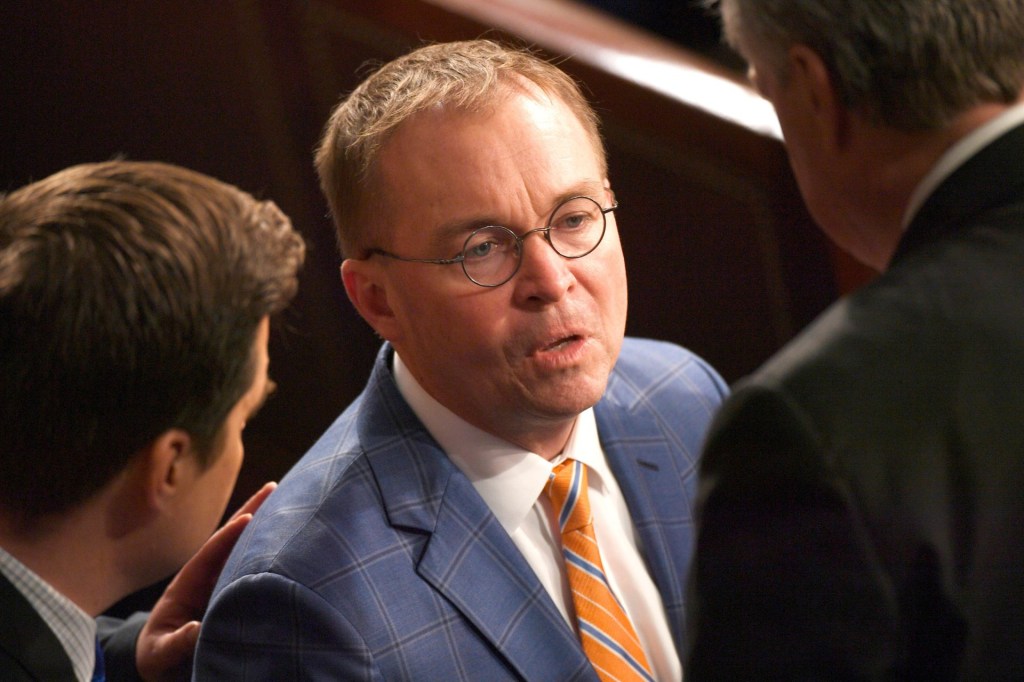
Mulvaney says he’s not intending to influence the court cases. “This is a political campaign, a PR campaign, not a legal campaign. We’re trying to win the hearts and minds of lawmakers, regulators, and voters.”
The coalition’s emergence also sets up an intriguing political dynamic due to the Trump family’s involvement in the industry. The president’s son, Donald Trump Jr., is an investor in Polymarket and an advisor to Kalshi, and Trump’s social media platform, Truth Social, plans to launch its own prediction-market platform.
Mulvaney declined to comment on the Trumps. A person familiar with the matter tells FOS that Trump and Mulvaney have a “mutual understanding” where both sides have agreed not to “say bad things” about the other in public.
Still, Mulvaney has not shied away from being critical of the president’s policies at times, including in late January when he said on NewsNation that pushing for an acquisition of Greenland and otherwise straining relationships with European allies could cause higher interest rates in America.