Want more from Front Office Sports
in your search results?
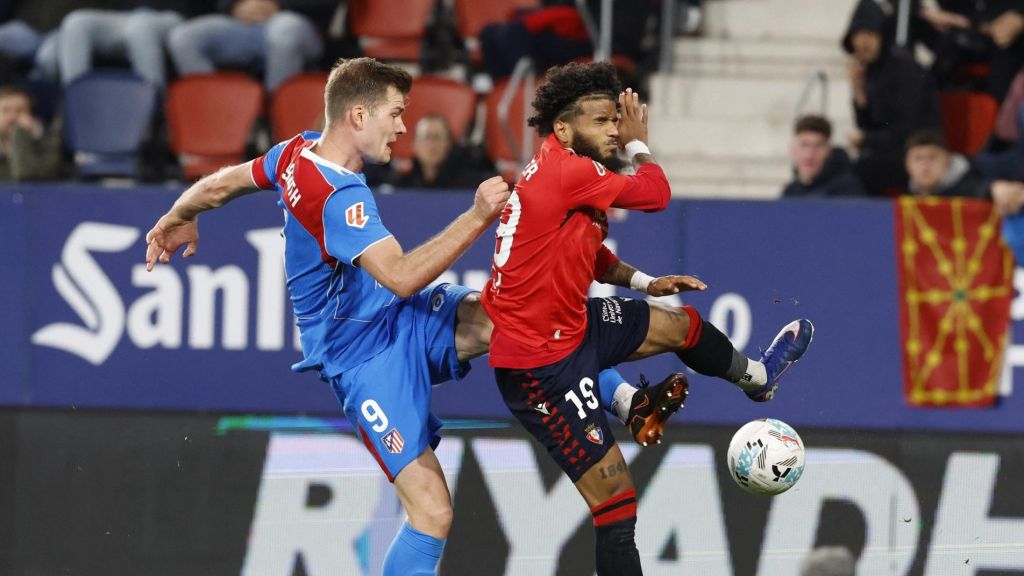
A Spanish soccer club on Monday issued a public statement defending itself for taking out an insurance policy against its own possible relegation.
Osasuna, which is based in Pamplona and plays in LaLiga, said it took out a 1.2 million euro (about $1.39 million) insurance policy that would pay out about 6 million euros ($6.93 million) if it were relegated at the end of the season. (It lost its final game, but narrowly avoided relegation.) The club said it wanted to “clarify” its actions after “recent reports.”
The report was a story at Semafor the week prior that declared: “A soccer team bet against itself,” though the story did not name the team. The story said, “The owners of a top-tier Spanish soccer team had to move fast… So they turned to Kalshi, placing a multimillion-dollar bet against itself, in case the game didn’t break its way.”
That isn’t quite what happened; the club did not bet against itself and did not turn to Kalshi.
Osasuna took out an insurance policy with Howden, a British insurer—that was the end of the team’s involvement in the subsequent movement of funds. Howden (which was not named in Semafor’s story) subsequently went to Game Point Capital, which works with many pro teams to hedge against the costs of losing as well as the costs of winning, and Game Point went to Greenlight Commodities, an institutional middle-man, to place a bet on Kalshi for roughly the same amount of the team’s 1.2 million euro insurance policy.
The soccer team was never aware of a Kalshi bet on the other end. As Osasuna told Semafor in a subsequent statement: “The club’s involvement in this matter was limited to the contracting of that coverage with Howden. The documentation signed by Osasuna corresponds to a standard relegation risk coverage and does not contain any reference to Kalshi, Greenlight Commodities or any other similar entity, nor does it refer to any subsequent transfer, reinsurance or hedging of the risk… Osasuna has no knowledge of, nor participation in, any arrangements that may have been carried out by third parties after the coverage was contracted… Osasuna did not place any bet, did not participate in any prediction market and did not have any direct relationship with Kalshi or any similar platform.”
Osasuna’s public statement said insurance policies against relegation “are routinely used by clubs and sports organizations to protect against financial contingencies related to their activity,” and linked to a LaLiga statement that echoes the same claim, calling them “common instruments.”
Game Point CEO Will Hall says soccer clubs taking out insurance policies against the costs of promotion or relegation is relatively common, but the public rarely learns about it. “No one bats an eye when teams hedge against winning, even though that’s still a financial risk management tool, it’s just on the other side of the outcome for the teams,” Hall told Front Office Sports. “The promotion relegation piece is sort of unique to soccer, but we work with tons of pro and college teams in the U.S. too. More teams and leagues should do it.”
As a longtime investment banker told FOS, “It strikes me as a very common sense thing to do. If you’re at risk of being relegated, why would you not try to offset some of that risk?”
One prominent European soccer owner told FOS that teams taking out insurance policies against relegation “happens more than we realize” and that Osasuna “did everything right, in my opinion.” It is not permitted in every major European league.
Similar policies have rarely been reported in European soccer, but they are known to exist. In 2015, Germany’s Borussia Dortmund was reported to have taken out a three-year insurance policy against failing to qualify for the Champions League, the lucrative competition that pays out tens of millions in prize money and television rights for those who qualify.
The use of Kalshi by parties on the other end of the policy was novel amid the rapid rise of prediction markets, but that aspect also did not surprise the banker, who sees it as a more efficient way of matching counterparties to balance risk. “All Kalshi has done is facilitate the alignment of supply with demand,” the banker told FOS.
Osasuna is fan-owned, and on Twitter/X, some fans weren’t pleased with the team’s reveal of the insurance policy. “This end of the season is the most lamentable thing that’s been seen in years at every level… an embarrassment of management squandering 1.2 million,” one fan said. Another railed, “Is it too much to ask that, instead of so many press releases, the president and the CEO hold a press conference? There’s a lot to answer for: poor end to the season, coach’s contract termination, anti-violence sanction, women’s team cuts, new direction for the Promesas, high-risk insurance.”
But another fan said the team has done this before: “Insurance has been contracted almost every year… I don’t know the premium… but if we ended up going down (we’re left hanging by a goddamn crossbar) we would applaud the 6k premium for relegation.”
Despite Osasuna going out of its way to say it had nothing to do with Kalshi, Kalshi has pushed the entire saga as a win. On Twitter on Tuesday, in response to comments from gambling reporter Dustin Gouker, a Kalshi spokesperson said, “The team bought insurance in case they got relegated. The insurer turned to Kalshi to cover itself. That’s it. That’s the whole story… and it’s actually a great one.” Semafor framed the story as “the (good) future of prediction markets.”
Just days after the LaLiga season ended, Spain temporarily banned Kalshi and rival Polymarket for operating without the proper licenses.
Download the FOS App
The business of sports, in your pocket.



Scan the QR code to get the app now.