Want more from Front Office Sports
in your search results?
For years, a group of college sports stakeholders—from the NCAA and conferences to coaches associations and NIL collectives—have been jockeying for political influence in Washington to determine the future of college sports. Despite spending millions of dollars on lobbying, none have been successful so far in pushing through legislation in Congress.
But now, there’s a new lobbying force to be reckoned with—one who has the support of President Donald Trump.
Texas oil and natural gas billionaire Cody Campbell was able to gain influence through a combination of college sports industry experience and political positioning. He serves as the chair of the Texas Tech board of regents and board member of Texas Tech’s NIL collective, The Matador Club. But unlike other college sports stakeholders looking from the outside in, Campbell came from inside the Trump policy circle. He was one of the earliest members of the America First Policy Institute, a nonprofit closely associated with the Trump administration.
For months, Campbell has helped advise the White House while it was crafting Trump’s recent executive order, and Trump appointed him as a member of the President’s Council on Sports, Fitness and Nutrition. He recently launched a nonprofit dedicated to college sports legislation and policy called Saving College Sports to continue his advocacy.
“I have known [President Trump] for a long time,” Campbell tells Front Office Sports. “I’ve been talking to them and working with them for a long time now on this topic specifically—even since the transition period.”
Now, the question is whether Campbell can use Saving College Sports to wield that same influence on Capitol Hill as he has in the White House.
Bankrolling Recruits
After his stint at Texas Tech and a year with the Colts in the NFL, Campbell made a fortune in the energy sector, most notably as the co-CEO of Double Eagle Energy Holdings, a company he founded with business partner and fellow Texas Tech megadonor John Sellers.
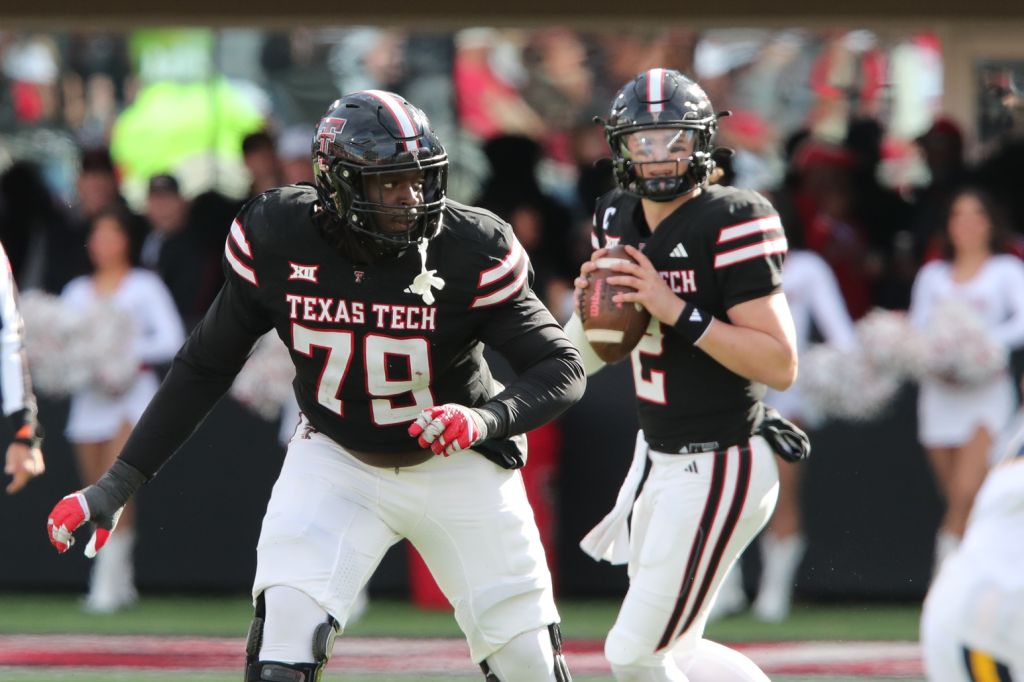
Campbell now serves as a leader at Texas Tech for athletics and beyond. In 2021, he was appointed to the Texas Tech board of regents by Texas gov. Greg Abbott—and became chairman of the board in April of this year. Along with Sellers, he served as a board member of the Matador Club. The deep-pocketed collective has made headlines over the past few years for bankrolling major recruits from football to softball. The Red Raiders dubbed the field at Jones AT&T Stadium “Cody Campbell Field” after Campbell made a $25 million donation for the south endzone.
At the same time, Campbell was working on gaining political capital. He helped launch the nonprofit America First Policy Institute in 2020, according to The New York Times, which became known as the most influential organization in building Trump’s second administration. The organization boasted alumni including Linda McMahon and Pam Bondi, and currently sports a whose-who of conservative advocates and media personalities. Campbell served multiple roles, including as treasurer and chair, according to tax filings reviewed by FOS. Campbell is currently not listed on the organization’s website as an active participant, however.
Campbell’s political investment, as well as his college sports industry experience, led to his role as a Trump administration advisor.
Several months ago, Campbell established a nonprofit called Saving College Sports. The organization’s IRS affiliation—501(c)(4) —is often considered a “social welfare organization,” which means it can’t support a particular political candidate, but it does have more freedom for lobbying and political activity than 501(c)(3)s, which is how the NCAA and athletic conferences are designated.
Since the IRS doesn’t require 501(c)(4)s to disclose their donors, they are often used to anonymously funnel money to super PACs, which can raise unlimited amounts of money from companies and individuals to support political candidates. But Campbell has been transparent about his founding of the group, confirming to FOS that he is “spearheading” the organization on his own.
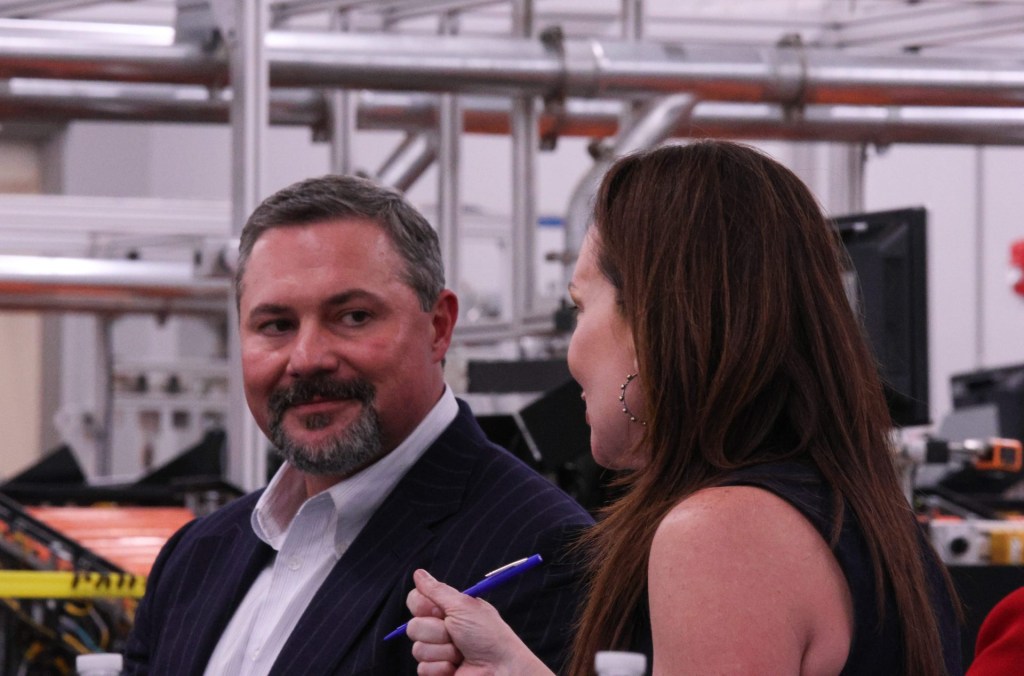
It’s currently operating with a full-time staff, including executive director David Polyansky, who is a GOP strategist and former chief of staff for Sen. Ted Cruz., chief of staff, and a “whole group of media experts and policy experts and attorneys,” Campbell said. (He declined to name some of the other individuals involved and did not name existing employees.) Campbell added that the group has “engaged” with a wide range of boosters, athletic directors, university presidents, and former athletes from across the country.
The organization believes that athletes should be amateurs, rather than employees, and a governing body should have the legal authority to set rules about college sports without fear of being challenged by litigation or state laws.
But the organization that runs college sports shouldn’t be the NCAA, Campbell says. Instead, the federal government should establish a new nonprofit modeled after the U.S. Olympic and Paralympic Committee to oversee college sports called the United States Collegiate Athletics Corporation. That organization can be self-sustaining—and generate additional funding to protect Olympic and women’s sports—by pooling all Division I media rights to be sold together as one package, rather than separating them by conference and championship, as they are now. This could be accomplished through an amendment extending the Sports Broadcasting Act to college sports.
Trump’s Executive Order
For months, rumors flew that Trump was preparing an executive order. But it was unclear who was advising Trump on the subject.
He golfed with SEC Commissioner Greg Sankey and met with Nick Saban. But NCAA President Charlie Baker said in June the NCAA was not having conversations with the White House, and was talking almost exclusively with Congress. Reports suggested Trump was considering a commission headed by Saban and Campbell, though that never was confirmed or materialized.
Campbell, however, was in touch with the White House all along. College sports policy “has a lot of focus from the White House,” Campbell says. “They’re thinking about things the right way, and they’re thinking about things consistently with how the American public thinks about them. And so I’m really encouraged.”
Trump signed the executive order, “Saving College Sports,” on July 24—notably with the same name as Campbell’s nonprofit. (Was it inspired by Campbell’s nonprofit? “I think you’re going to have to make that judgement for yourself,” Campbell joked.)
The order aims to force richer schools to preserve or expand their Olympic sports programs and attempts to ban “pay-for-play” NIL deals. But most importantly, it gave a window into Trump’s thinking on the biggest issues plaguing the industry. It also showed he’s in favor of designating athletes as amateurs rather than employees, potentially supporting antitrust protections that could keep NCAA rules from being challenged by lawsuits, and preserving the Olympic pipeline.
Campbell expressed public enthusiasm for the executive order, which appeared to jive with all of his main policy points. “This is a huge step forward in preserving a great American institution,” he posted on X at the time.
Lack of Trust in the NCAA
Meanwhile, in Congress, House Republicans voted this summer to send a pro-NCAA bill called the SCORE Act to the floor for a vote. The bill satisfies the NCAA’s main wishlist items, including antitrust protections and athlete amateur status.
In July, Saving College Sports wrote a letter to Congress endorsing the SCORE Act broadly. But Campbell still has some gripes. “The current bill is not a comprehensive solution to the problem,” Campbell says. “We don’t have a governing body that is representative of the entire college sports landscape. It doesn’t represent the smaller institutions very well. It doesn’t represent the student athletes at all. And more than anything, it just doesn’t function very efficiently.”
Campbell’s lack of trust in the NCAA adds another layer to the lobbying battle in Congress—one he’s already begun to participate in. Saving College Sports hired two lobbying firms, Invariant and Fierce Government Relations, and has spent a total of $140,000 in the second quarter of 2025, according to lobbying disclosures reviewed by FOS.
When Congress returns from its August recess, Campbell’s influence will be put to the test.
Download the FOS App
The business of sports, in your pocket.



Scan the QR code to get the app now.