Want more from Front Office Sports
in your search results?
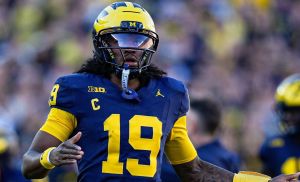
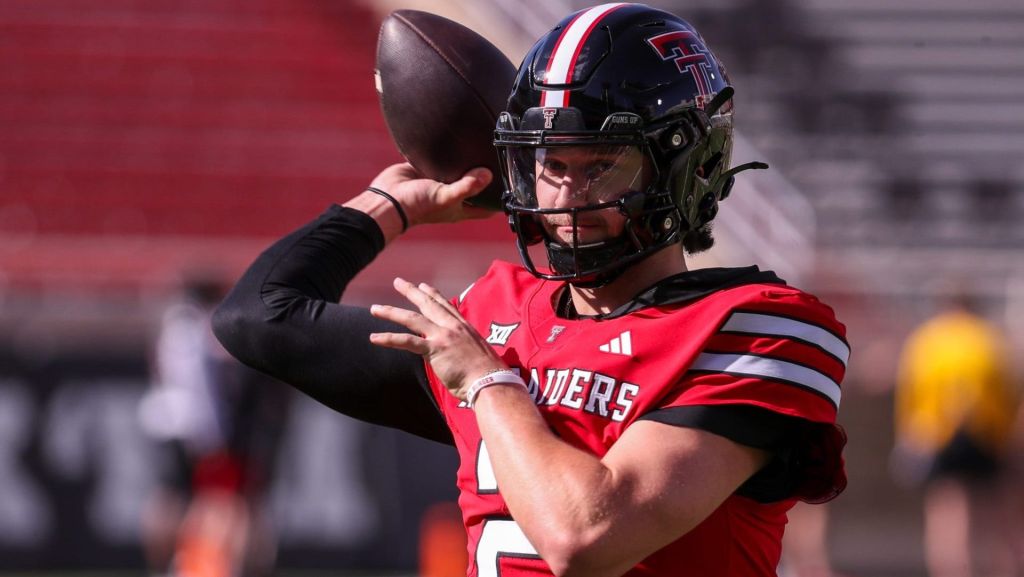
The backlash following the ruling allowing Texas Tech quarterback Brendan Sorsby to play college football—despite engaging in gambling activities (including gambling on his own team)—has reached Capitol Hill.
The Sorsby decision came up multiple times during a Senate Commerce Committee roundtable on the future of college sports Wednesday. It’s also been the subject of private conversations in Congress.
Sources in and around Capitol Hill tell Front Office Sports the ruling could increase momentum for the Protect College Sports Act, a sweeping bipartisan bill introduced a few weeks ago by Sens. Ted Cruz (R., Texas) and Maria Cantwell (D., Wash) and cosponsored by Sens. Eric Schmitt (R., Mo.) and Chris Coons (D., Del.), because the bill is being marketed as giving the NCAA the power to enforce rules.
But it’s unclear whether the bill itself, as currently written, would have prevented the specific scenario with regard to Sorsby, legal experts say.
More Momentum?
During Wednesday’s Senate Commerce Committee roundtable on the future of college sports, Middle Tennessee State football coach Derek Mason said “governance” is the most important part of the bill, bringing up Sorsby.
“We’ve all seen the Sorsby case, what’s transpired with that, pre and post,” Mason said. “What we know and understand is we’ve always had rules around what we do. It’s grown our sports, it’s allowed us to have wonderful memories about what teams—when, where, how, why. But we are worried with the state of college athletics and gambling—and what’s happening in and around it—will it become an epidemic?”
He continued: “With that being the case, without having the true opportunity to govern the sports with rules and regulations becomes really hard. … We need a strong governance to give ourselves a chance. It may not be perfect, but we need strong governance.”
During calls between lawmakers and SEC and Big Ten officials Tuesday, university officials expressed increased desperation for Congress to pass a law that would allow the NCAA to set and enforce rules without legal challenges, one source familiar with the discussions said. On the call, Cruz assured them that the bill would have prevented the Sorsby debacle, the source said.
In general, multiple sources said they believe that the Sorsby news might help spur momentum for the bill lawmakers.
On Tuesday, at an annual gathering of college sports officials held in Las Vegas NCAA president Charlie Baker explained why: “I think it’s about as good an example as you’re ever going to have of a thunderbolt moment. So many of the folks that I deal with every day, either through email or text or calls, were shocked by this. And I think for a lot of ’em, it’s going to create a more significant thought process, participation, engagement around where Sen. Cantwell and Sen. Cruz are. That’s probably a good thing.”
Baker himself wrote last week that the NCAA had mixed feelings about the bill, but came out in staunch support of it after the Sorsby ruling.
Limitations of the Bill
At Wednesday’s hearing, Cruz said the gambling issue “goes right to the real heart of what we’re doing here.”
“One of the really important parts of this bill is trying to put in place protections to be able to protect the integrity and to be able to enforce prohibitions on gambling that, I think, really do threaten the entire system,” he said.
Cruz said the bill would have prevented Sorsby from being able to get a local judge to grant him eligibility. But some legal experts disagree.
The bill offers the NCAA or conferences limited antitrust immunity to “restrict a student athlete’s eligibility to participate in intercollegiate sports if the student athlete participated in sports wagering activities.” In other words, players couldn’t challenge the NCAA’s legal authority to prevent them from playing college sports if they gambled.
But the Sorsby situation may not have been prevented by the bill because his lawsuit isn’t an antitrust case—instead, it’s a state contract dispute. Sorsby argued that the NCAA had committed a breach of contract by unevenly applying its gambling rules (restoring eligibility for some players and not him) and by not adequately supporting him through his gambling disorder, as its bylaws say it will. He also argued that it committed a breach of contract by not quickly providing a decision on his eligibility reinstatement. As a result of this breach of contract, Sorsby said, he suffered irreparable harm. The NCAA disputed all these claims in court documents and during a hearing last week.
The bill may not prevent a player from suing the NCAA on the basis that it violated a contract. “Congress has no authority to prevent a college athlete from filing a lawsuit in state court for breach of contract,” said attorney Tom Mars, who has sued the NCAA on multiple occasions (including the Trinidad Chambliss eligibility case, that was a contract dispute).
Tulane sports law professor Gabe Feldman chimed in with his analysis on X, saying: “The Act is ambiguous about whether a state breach of contract claim challenging a permanent ban for gambling would be preempted by the Act, or could still be brought by an athlete like Sorsby.”
Download the FOS App
The business of sports, in your pocket.



Scan the QR code to get the app now.