Want more from Front Office Sports
in your search results?
Kalshi and Polymarket have dominated the headlines in the prediction-markets wars, but Robinhood is setting itself up to be the ultimate victor.
The company announced Tuesday a joint venture with market-maker Susquehanna that will acquire crypto exchange MIAXdx, better known as LedgerX, in order to launch a dedicated exchange for prediction markets. Prediction markets have “quickly become Robinhood’s fastest-growing product line by revenue,” and nine billion contracts have been traded in the last year, according to the announcement.
Prediction markets have garnered controversy due to the growing popularity of sports event contracts, which look a lot like traditional sports betting, but they have been getting around state laws through a loophole (companies like Kalshi say there’s a technical distinction between betting on sports and “trading” on the outcome of sporting events).
JB Mackenzie, VP and GM of futures and international at Robinhood, says prediction markets are here to stay, and he doesn’t think sports are even necessary to sustain the industry’s growth.
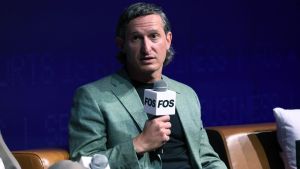
Front Office Sports recently spoke with Mackenzie about the rise of prediction markets, the controversy around sports event contracts, and why he thinks Robinhood is positioned to become the world’s “financial super app.”
Front Office Sports: Sports and politics have dominated the headlines, but there are other sorts of contracts, including on economic and cultural issues. Do you see this evolving to be more well rounded?
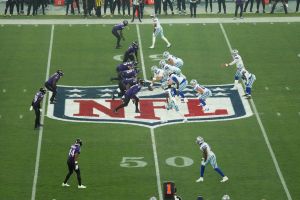
JB Mackenzie: I think we’re already there; it’s just that nobody is seeing it out in the marketplace because there is such an emotional attachment to sports and politics. The price of bitcoin is garnering just as much interest, if not more, than the most recent NFL game. The proxy vote on Elon Musk’s pay package for Tesla had a massive peak of people participating.
If you think of everything as a fire, I feel as though the core wood at the bottom—that just burns continuously—that’s the various economic questions, like will there be a federal rate cut, price volatility, economic numbers both domestically and internationally, etcetera.
That wood is constantly burning, and the fire is very warm and bright. But the emotional issues, like sports, politics, and pop culture, have flare-ups.
FOS: Polymarket and Kalshi have dominated the headlines, but there’s a new entrant to this world seemingly every day. What is the state of this industry right now, and where does Robinhood sit?
JM: Polymarket and Kalshi are the two incumbents. This market has exploded so quickly; 12 months ago it barely existed. A lot of people are moving into prediction markets now, but no one is really sure where it’s going to end up.
At Robinhood, we saw the opportunity early and have been building out our product offerings. We launched sports—we have the NFL, college football, the NBA, etcetera—and have continued to grow that offering here in the U.S. We’re also expanding globally, not just in sports, but elections, pop culture, economic issues, and more. We have over 1,500 contracts that are live and tradable. We are out to prove the thesis that this is an important asset class. It’s developing and becoming more mainstream.
FOS: With all the players that have entered the industry—from the Trumps to FanDuel and DraftKings—do you see the market being ripe for consolidation? And assuming there is such activity, who will remain when all is said and done?
JM: We’re at a point similar to what options markets went through. At first, there were 13, 14, 15 different companies in that space. Everyone said, “Is there really enough room for this many options markets?” Then you started seeing a period of consolidation, before everything settled for a bit. Once there was an opportunity to change part of the industry, because something overall needed to change based on client behaviors, new players started popping back up.
We’re at the same point with prediction markets. The question of who’s going to win will be based on your ability to have great products, deep liquidity, and engagement with clients. Certain players out there have those three attributes at a higher level than others. At the same time, some groups have built new technology that is more receptive to the fast-moving world we now live in.
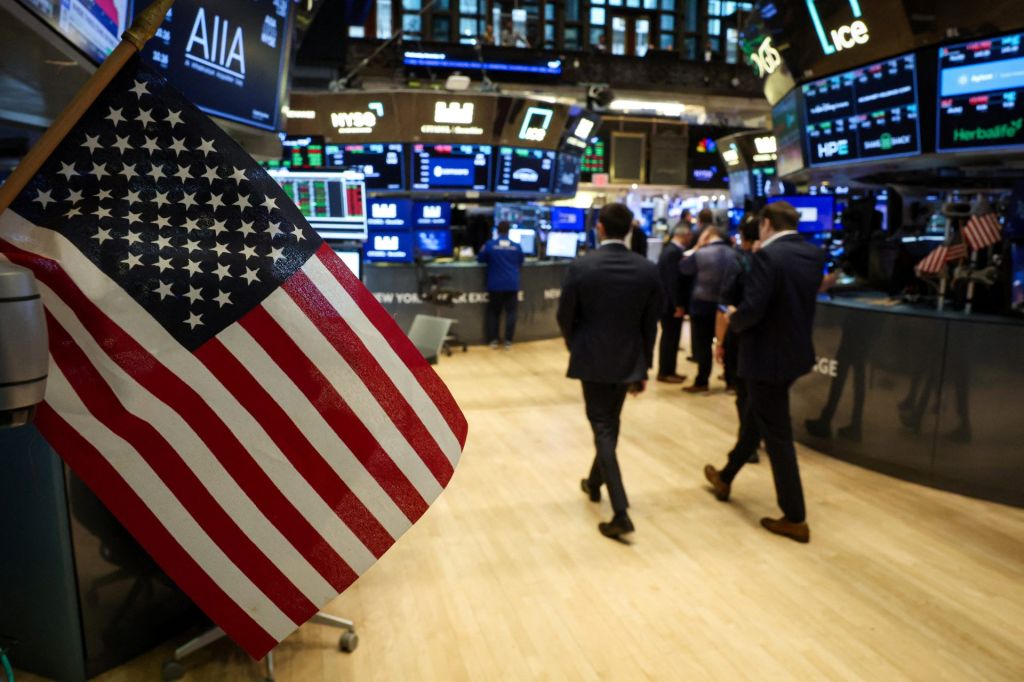
The question is, do the older incumbents acquire some of the newer entrants to acquire their technology in order to be able to leapfrog ahead? We’ve already seen some activity, like CME Group—the oldest futures exchange in the U.S.—building a prediction-markets relationship with FanDuel. And you have ICE, the other sort of grandaddy of the exchange world, investing in Polymarket.
For us, we have been able to connect to a variety of the newer entrants and will figure out who we have the best relationship with. There’s a lot of interesting opportunities here. I think we’re at the beginning of the conversation.
FOS: There is potential for certain markets to be manipulated—like whether President Trump will say a particular word during a speech. This issue exists in sports, too, as we’ve seen with recent NBA and MLB scandals around prop bets. How do you protect against that?
JM: Those are called mention markets, and they’re a newer innovation in the overall ecosystem. The first thing I would say is that, with Robinhood, we only offer federally regulated products, and we have requirements with regard to client oversight. We are also very deliberate in the types of products we put out to end customers.
Safety and integrity are our core principles. This stuff concerns me whether you’re looking at prediction markets or the OSB [online sports betting] or traditional finance models. There are always bad actors, so before we put a product out into the world we have to make sure there are controls and oversight.
FOS: Mention markets seem particularly manipulatable.
JM: I’m not saying someone should, or should not, offer mention markets. I’m also not saying someone should, or should not, offer micro bets, first-pitch bets, etcetera. There’s probably a world for all of this.
But you need controls in place. Offering a market where there’s potential harm, it’s not something we do at Robinhood. So we may be slower to market for something because we want to make sure we are doing it in the right way, and we’re O.K. with that.
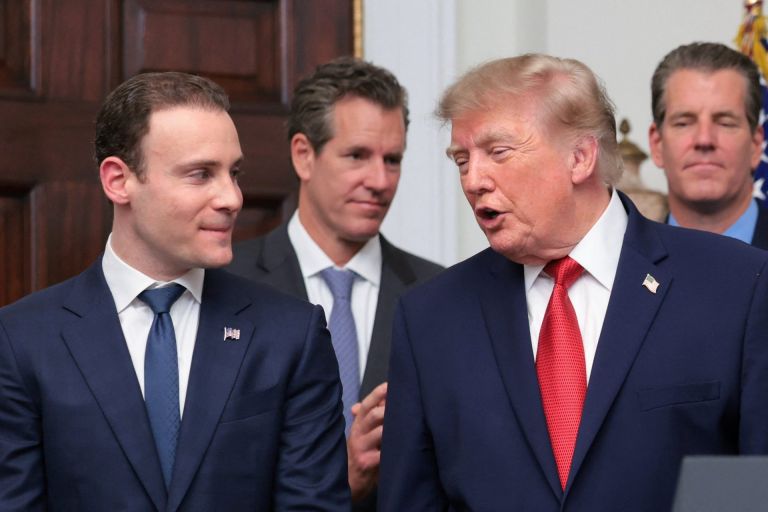
FOS: The Trump Administration is friendlier to prediction markets than the Biden Administration was. What happens when there’s another change in administration?
JM: Crypto is a great example for this. At one point, people thought one party was pro-crypto and the other was not. That isn’t quite the case. One party was more concerned about regulation and oversight, while the other party felt existing capabilities were there. There’s been a shift to the middle in crypto.
The CFTC is the federal regulatory agency in control of prediction markets, and they have the right to oversight under the Commodity Exchange Act. The only group that has the ability to change that is Congress, which can either issue a congressional amendment that rewrites that law or enact a new law.
What we do at Robinhood is build products we believe are agnostic to the party in power, because they meet the regulatory requirements. This goes back to what I said about being slower to market at times; speed can be a concern, and sometimes taking the slower road allows us to be more deliberate in decision-making to offer a product we believe will stand the test of time.
FOS: Where does Robinhood see itself in the long term?
JM: We aim to be a financial super app. Prediction markets are one of 11 businesses at Robinhood. We have users who may not be looking at prediction markets right now, but they might be looking at equities, or options, or crypto. Then, suddenly they see a story of interest, and there’s our prediction-markets platform, sitting in our ecosystem, for them to participate in. That’s the strength of Robinhood. We’re a one-stop shop to do all of your investing, whatever that might be. We’ll give you the mechanism.