Want more from Front Office Sports
in your search results?
For the majority of men’s college basketball players, choosing to enter the NBA Draft is a high-risk, high-reward decision.
They could go into the draft and forgo their college eligibility in the hopes of pursuing a coveted NBA salary. Or they could go back to school and continue working on their skills — and their education.
If players lose out on an NBA contract, they could be left in limbo — forced to go overseas, endure endless tryouts for G League teams, and postpone or abandon their degrees. Everyone knows a player who entered the draft a bit too early and was left high and dry.
But the arrival of name, image, and likeness has completely changed that calculus. For the first time, players can have their cake and eat it, too: go back to school and make money at the same time.
Since NIL rules were changed in 2021, many high-profile players have chosen to stay in college longer than they may have without NIL. The rise of collectives — groups of donors and alumni who pool resources to help athletes at a particular school get deals — have contributed significantly.
Since NIL isn’t the only factor, its influence is ultimately impossible to quantify. But Gonzaga’s Drew Timme, Illinois’ Terrence Shannon Jr. and Coleman Hawkins, and UNC’s Armando Bacot are just a few of the more noteworthy holdouts.
Even former NBA star Spencer Haywood, who sued the NBA in the 1970s so he could be eligible for the pros at a younger age, told FOS that NIL would have convinced him to stay put.
Haywood, whose mother was living in poverty in Mississippi at the time, told Front Office Sports, “My whole system of belief at that time was that I just wanted to get my mother out of this cotton field — picking this cotton for $2 a day. She’s been picking since she was four years old. … I just wanted them out.”
The Process
Multiple rule changes regarding NBA Draft eligibility have contributed to the current conundrum.
In its early days, the NBA didn’t allow athletes to declare until they’d been out of high school for four years.
That all changed in 1971, when Haywood sued the NBA for disallowing him to play for the Seattle SuperSonics. In a case ultimately decided by the Supreme Court, the NBA was forced to allow players to enter the draft at age 18.
In 2005, the league adopted the current “one-and-done” rule — meaning players must be 19 to enter the draft. That iteration of the rule created the current situation, where players have to decide whether to declare or stay in school.
Since 2016, the NBA has softened the rule — but only a bit. It now allows players thinking of declaring to meet with teams, participate in tryouts and the combine, and get feedback on how their draft stock may fare. But if they ultimately decide to participate in the draft, their NCAA playing days are over.
Making A Choice
This year, that grace period for testing the waters was relatively short — after their seasons were over, the NBA-mandated deadline to make such a monumental decision was May 31.
For the top stars, entering the draft is a no-brainer — no amount of NIL earnings can usurp a top-20 NBA contract. But NIL is truly transformative for athletes on the bubble for only 60 coveted spots.
The first thing to consider during that time is feedback from pro scouts and coaches about the probability of being drafted. A second option to consider is whether their projected NBA salary would be significantly more than a player’s projected NIL earnings.
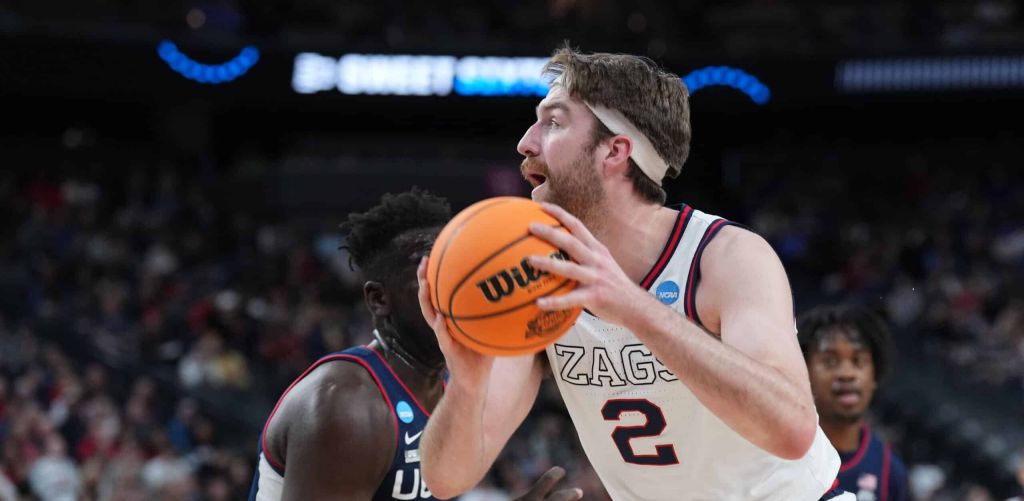
Take Drew Timme. The Gonzaga forward chose to spend an extra year in college before participating in this year’s edition. Part of his logic, he previously told Front Office Sports, was that his NIL earnings were already comparable to his most likely NBA offer: a two-way deal ranging from $250,000-$500,000.
Timme even used NIL to explore post-basketball career paths, like being a sports broadcaster.
“We’re so young, and there’s so many things we can do later on in life,” Timme said. “It’s important not to limit yourself to one thing only. I think you should try out a bunch of things to figure out what you like.”
Of course, not every player has the marketability of the bubbly, recognizable “chin-fluencer.” But the rise of NIL collectives has allowed athletes who may not be as appealing to brands but still appeal to alumni to stick around and earn a decent amount. While collectives and players have to be careful that deals aren’t considered “inducements,” there’s an unspoken assumption that players can “negotiate” with collectives for offers that entice them to stay in school longer, according to CBS Sports.
And then there are the players who don’t even go through the draft exploration process, content to stretch out their college careers as long as possible.
UNC center Armando Bacot, who reportedly makes at least half a million each year from NIL, could have entered the 2022 Draft. At the time, he didn’t even explore the possibility.
The decision to return to the Tar Heels was “a no-brainer,” Bacot told SI last year. “I get a chance to get better, get my degree, be around all my friends, and then also make a lot of money.”
And even though his draft stock has improved in the past season, he didn’t explore the draft option this year, either. He’ll return to UNC for his fifth year of eligibility.
Download the FOS App
The business of sports, in your pocket.



Scan the QR code to get the app now.