LAS VEGAS — In the war between the College Sports Commission and NIL collectives over compensation limits, collectives may have won the first battle.
A basic agreement has been reached between House v. NCAA plaintiff attorneys and lawyers for the power conferences to resolve a dispute over how collectives would be handled in the new NIL clearinghouse, Front Office Sports has confirmed. The parties have agreed that the CSC will treat collectives like any other business when evaluating whether their name, image, and likeness (NIL) deals are for a valid business purpose and fair-market value. Yahoo Sports first reported the news.
The resolution would be a major win for collectives, which are meant to support athletes’ potential endorsement opportunities. Collectives were at risk of going extinct if the previous CSC guidance stood (though it was widely expected that at least one collective would file a lawsuit challenging the guidance). Collectives would be able to provide players with as much money as they want above the $20.5 million revenue-sharing cap—provided the money they pay players matches the fair-market value of the service they’re receiving from those players.
Both sides are still hammering out specifics, however.
A spokesperson for the College Sports Commission and defendant conferences told Front Office Sports: “Conversations with class counsel remain ongoing. A formal statement will be issued when the issue has been resolved.” A spokesperson for House plaintiff attorney, Steve Berman, declined to comment when reached by FOS, saying they would not issue a statement on Tuesday.
The House settlement, approved on June 6, set up a system that requires all NIL deals in Division I schools to be scrutinized by a software program created by Deloitte, called NIL Go. The software would be used to determine whether the deals were coming from an entity offering a “valid business purpose,” and whether the money offered was “fair-market value,” or simply pay-for-play. If the deals didn’t meet those criteria, they would be rejected.
Then, two weeks ago, the College Sports Commission, which oversees House settlement rules, issued guidance suggesting that NIL collective deals wouldn’t be approved unless they involved another third party company. The CSC would not consider collectives or other entities to be offering a “valid business purpose.” That meant NIL collectives wouldn’t be allowed to pay players simply for promoting collective merchandise, creating content sold by the collective, or engaging in events the collective organized. But they would be able to operate as agencies, facilitating payments between brands and players.
House plaintiff attorneys challenged that interpretation in a letter to their defendant counterparts, and entered negotiations with defendant lawyers to change the guidance.
The new agreement would now treat collectives like any other business in the NIL Go clearinghouse.
Collectives would still have to ensure the money they offer players is “fair-market value.” In other words, they can’t pay a player $1 million for showing up to one autograph signing unless they can prove the player’s participation is worth that much. As long as they can come up with enough NIL activities for players to take part in, the collective can pay them without serving as a middle man for another company.
Deals that have been rejected because of the previous guidance will have another chance to get approved.
The new guidance potentially provides much-needed clarity in a landscape where rules and enforcement have been fluid, and communication has been lacking. The somewhat inconsistent release of the new rules—coming from a news report rather than a formal communication from the CSC—reflects the inadequate clarity around guidance that so far characterizes the new era of college sports.
On Tuesday morning, Big Ten Commissioner Tony Petitti said lawyers were still negotiating. He noted that part of the issue was that the House settlement was approved later than expected.
Then, at about 1:30 p.m. PT, a spokesperson for the College Sports Commission also told FOS that conversations were ongoing.
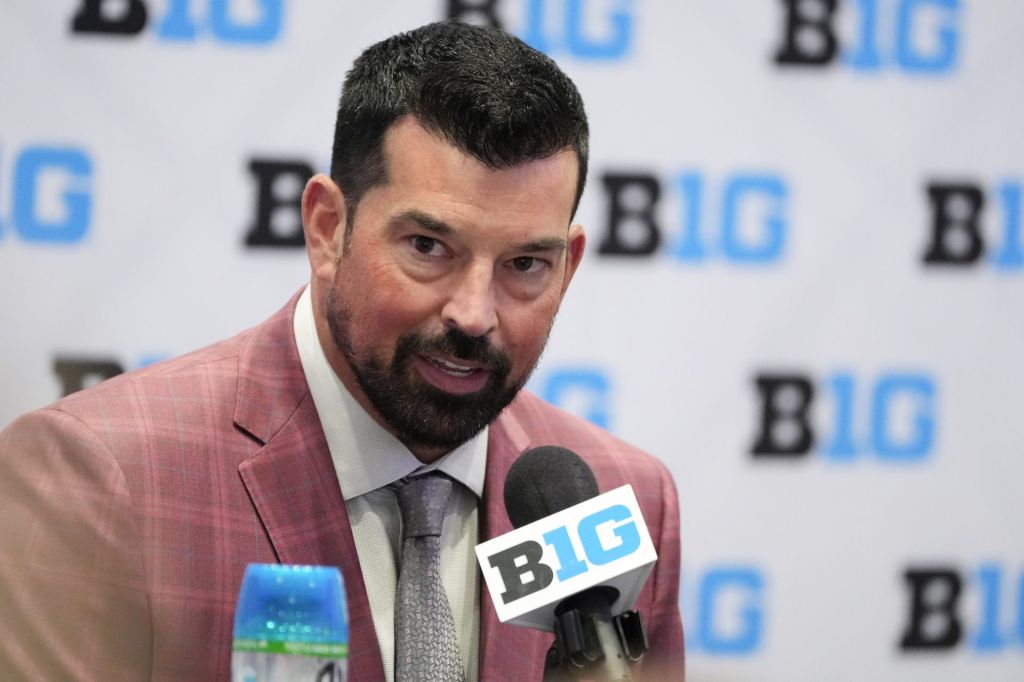
Then, during a press conference commencing at 2 p.m. PT, Ohio State football coach Ryan Day lamented the lack of clarity with third-party NIL deals.
“I’m excited to find out what the rules are, so I can play by them—and then find out if they’re actually going to be enforced,” Day told reporters. “The grey is what drives me insane.”
In response to a question from FOS, he said: “What we don’t want to do at Ohio State is make agreements or talk to people about certain deals that have to claw those things back because they don’t get cleared.”
Minutes later, Yahoo Sports reported that the CSC relaxed its guidance on collectives.