Want more from Front Office Sports
in your search results?
The fourth edition of Ken Griffey Jr.’s Swingman Classic will take place later this week. The annual HBCU All-Star Game will kick off MLB All-Star Weekend in Philadelphia this Friday on MLB Network at 7:00 pm ET.
Ahead of the game, the Baseball Hall of Famer spoke to Front Office Sports about the impetus for starting the event, the role of analytics in baseball, his fascination with photography, and several other topics.
Front Office Sports: The Swingman Classic is entering its fourth year, what made you conceive of the idea and how has it grown over the last several years?
Ken Griffey Jr.: I’m a fortunate guy. My dad played in MLB, and I was able to go in the locker room and have accessibility that 99.9% of the kids in this country don’t get. You look at the decline of Black baseball players over the years and a lot of it is due to accessibility, resources, and exposure. These kids don’t have that.
My dad, mom, and I have always given back and to give back to the community that isn’t seen as much as it should be—you talk about baseball being an athletic sport, everyone needs to run, hit, throw, and catch. It takes time and patience and in certain situations family dynamics. Some kids don’t have that so they switch to football and basketball. I’m trying to bring them back to baseball.
FOS: I think baseball is in a better spot than might be generally realized, but the players aren’t as famous nationally as you were in the 1990s. If Rob Manfred came to you and asked for advice on how to market players to make them bigger national stars, what would you say?
KGJ: I would probably say to make it relatable. You look at what the NBA did in the 1980s with the slogan [It’s FANtastic] and then you had football with the voiceovers. It’s something that catches kids’ eyes and makes them want to go into that sport.
Once you get a kid to want to play baseball and he gets hooked, it’s over. A baseball kid is different than any other kid. Our game is 70% failure [if you are a .300 hitter] so we are more likely to not be as hotheaded at some points because we understand failure.
FOS: They had the strike in 1994 when you were playing. We’re staring down the barrel of CBA negotiations and a possible work stoppage. Do you have any thoughts on the broader labor situation?
KGJ: I’m not in the room so I don’t know what’s been negotiated and what’s not. Like you, I hear things. Hopefully we can get this resolved and move forward and play baseball because everyone wants to see it.
FOS: You said last year that you’d love to be part of a possible new Seattle SuperSonics ownership group. After you said that, have any bidders approached you about being part of their group?
KGJ: I haven’t even entertained anything yet. I’ve been busy with the WBC and other things I’ve been working on to help grow the game of baseball.
FOS: What players do you love watching today?
KGJ: There’s a lot of great players. Ohtani, Freeman, Betts, Trout, Harper, Guerrero. You look at Seattle’s pitching staff and Julio [Rodriguez]. Cal [Raleigh], even though he’s not performing the way he wants to and everyone knows he’s capable of doing, he’s still fun to watch. I watch a lot of games. Judge is hurt—half the Yankees are hurt—but they’re still must-watch TV. It helps that I have the MLB app, so I spend a lot of time on my couch around 7 o’clock.
FOS: You had such a beautiful swing. Is that something that can be taught or were you kind of born with it, being the son of a major leaguer and being around the game and absorbing it by osmosis?
KGJ: For me it just developed into that swing. It’s very tough to teach somebody how to swing like you. That’s like asking Michael Jordan to teach people to imitate certain moves that he does. You can do it, but it just may not look the same because everybody’s kinetics are different.
FOS: If all these analytics and iPads in the dugouts had existed when you played, do you think they would have been helpful for you or that they might have messed up your approach?
KGJ: In the big scheme of things, some people like all the information, some people don’t. The eye test is the most important thing. If you look at it on paper and this guy’s throwing 94, 96, 98, and he gets in the game and he can’t break 93 that day because there’s something going on—I think human heart and human error are the two things they can never measure.
When you walk into the batter’s box and he doesn’t have it. You’re not going to have your best every day. When these guys go out there and throw a pitch, they’re not going to throw a strike every single time. Your curveball’s not going to break every single time.
For me, I want to have the eye test. I’m fortunate that I batted third so I had two guys in front of me that I can see what the pitcher’s doing. I think the hardest position is to be the leadoff hitter of the game. Everybody has a chance to look at a pitcher and see what he has—that leadoff guy doesn’t.
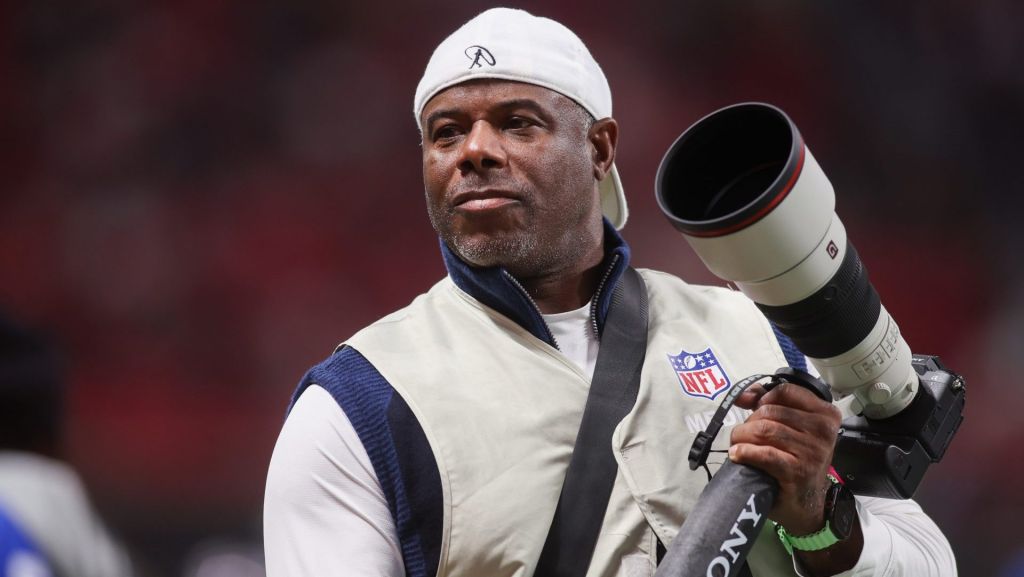
FOS: You’ve gotten really into photography. What’s been your favorite event or scene to photograph?
KGJ: I would like to take more family photos, but my subjects don’t seem to cooperate [laughs].
[I loved] being able to shoot the All-Star Game, the WBC, the Masters, PNC when Tiger played with Charlie, the Ryder Cup. I did NASCAR, IndyCar. I just like going out, taking pictures, and being comfortable being uncomfortable. What I’ve done my whole life is go into a batter’s box, trying to be as comfortable as possible but not really being comfortable, because you never know when you’re going to get hit. Photography’s the same thing.
Photographers and pilots want to help you as much as they can. I’ve got a good support network of people who I can lean on for advice. It’s just like any other thing—I think when a guy gets a CEO job, he calls other CEOs to help him out, to be mentors. I think we’re losing that in society as far as guys and girls being mentors to kids and young adults.
FOS: Do you bond with Randy Johnson over photography?
KGJ: Oh yeah—Randy and I have talked a few times. The first time I went to Africa, I had a two-and-a-half-hour conversation with him about what I should bring, what I shouldn’t bring, clothes to wear, and things like that.
Randy took it up in high school and college. He’s been doing this way longer than I have, and when I need help, I’m not afraid to reach out and ask questions.