Troy Aikman, Dolphins Have No Ongoing Consulting Agreement
Want more from Front Office Sports
in your search results?
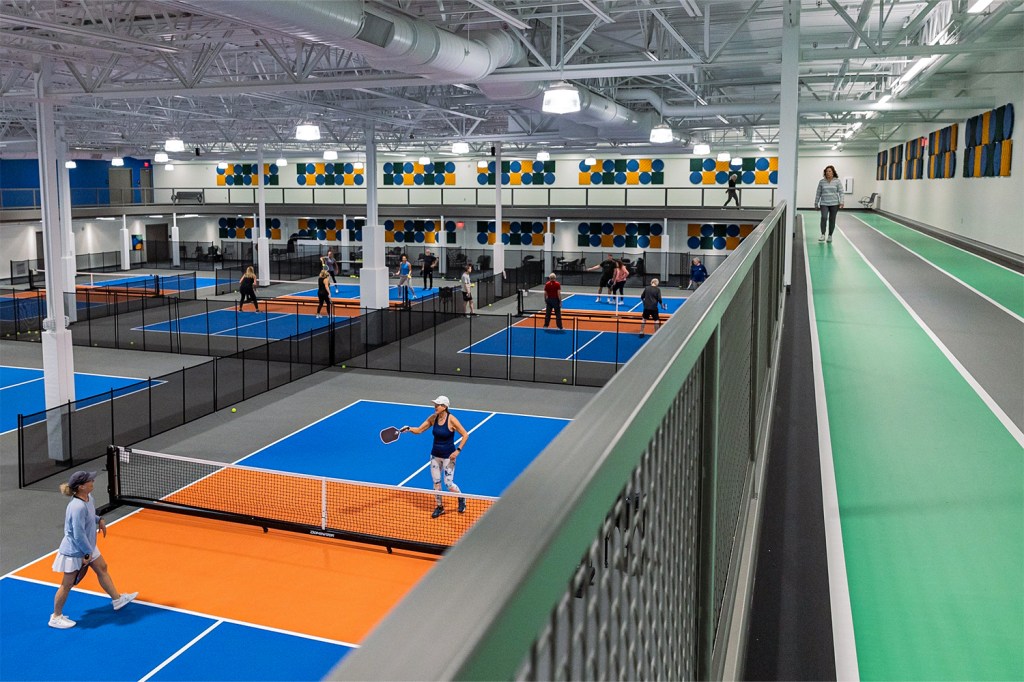
Over the past five years, derelict basketball courts, tennis courts, and vacant lots in neighborhoods from coast to coast have transformed into pickleball courts.
Behind the scenes, one investment group has been pulling many of the strings.
As pickleball has skyrocketed in omnipresence and value, an increasing share of the sport’s assets has been gradually rolled up by Tom Dundon, the American billionaire businessman in Dallas. His private-equity firm, Dundon Capital Partners, has a major footprint in professional sports, and Dundon personally owns the Carolina Hurricanes and soon the Portland Trail Blazers.
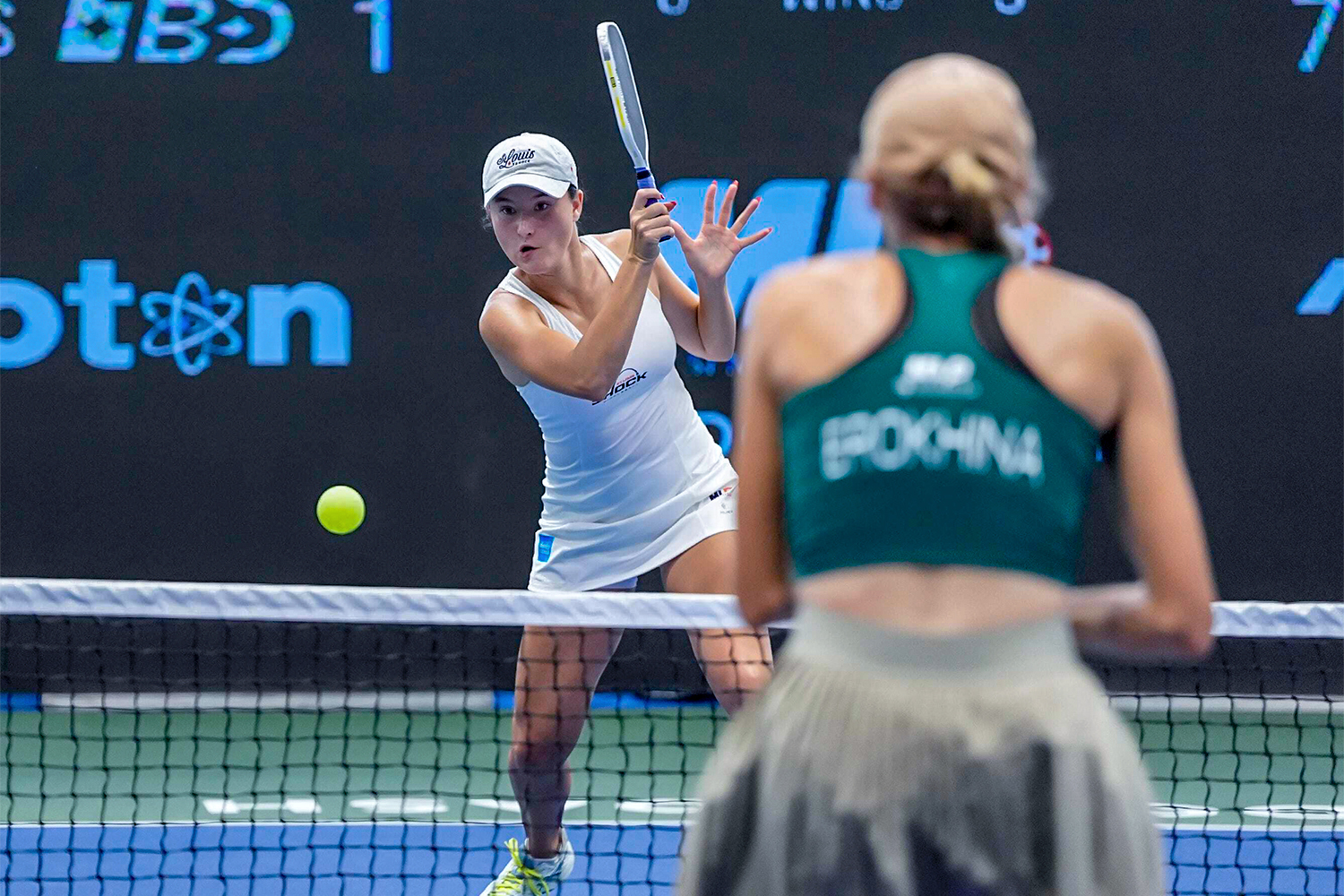
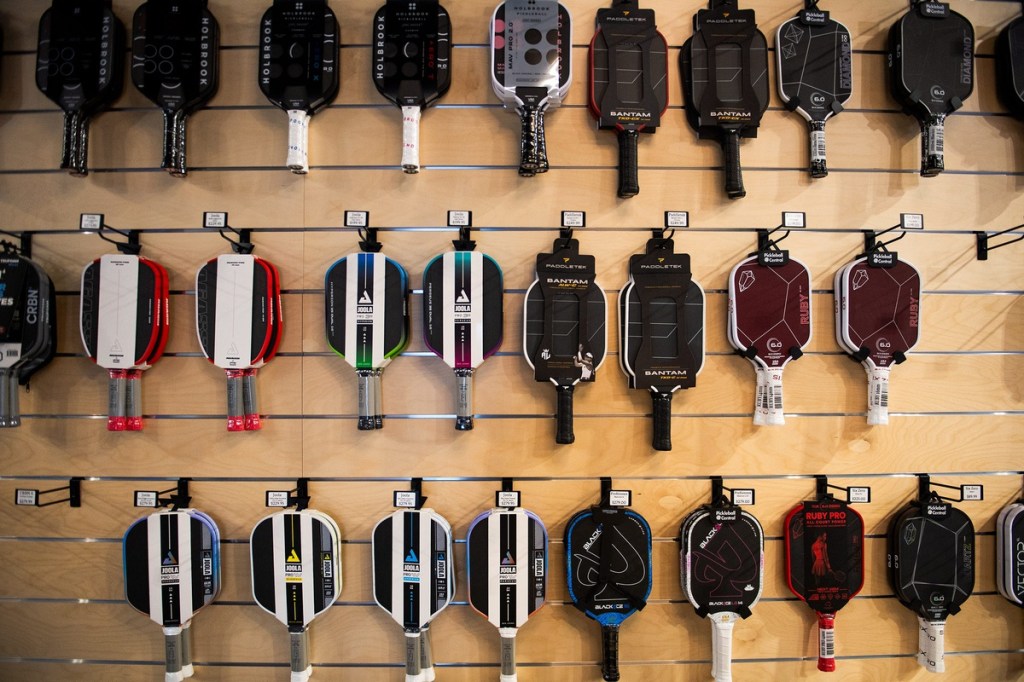
Players can buy a paddle at Pickleball Central, register to play in games found on Pickleball Tournaments, read pickleball news updates on Pickleball.com, and attend a pro event featuring Major League Pickleball. All of these companies are in Dundon’s portfolio.
According to research from Market.us in April, the global pickleball market had a $2.2 billion valuation in 2024. It’s projected to reach $9.1 billion by 2034, with a compound annual growth rate of 15.3%. Sources who work within Dundon’s pickleball empire say his vision has catalyzed that astronomical growth in the U.S., particularly on the consumer side. (Dundon, an avid player himself, declined an interview with Front Office Sports.)
Unlike most other sports, pickleball covers ground as both a popular hobby for weekend warriors as well as an upstart professional sport taking off. Its market valuation—which has grown significantly in a short window—has left big-money investors and corporate sponsors thirsting to get a piece of the game that has devotees from suburban retirees to competitive pros.
Dundon has beaten nearly everyone to the chase. He is not the sole holder of the sport’s properties, but most roads lead back to him, both on the retail and infrastructure sides.
Major League Pickleball commissioner Samin Odhwani tells FOS that Dundon’s strategy has always been to corner the market for both “economies of scale, but also ability to cross-promote.” And if pickleball continues its massive surge—avoiding the fate of past sporting fads—investors have practically unlimited upside.
Pickleball became a widespread leisure activity for many Americans in the aftermath of the COVID-19 pandemic. People craved connection and a physical outlet after so much time in isolation, and the barrier to entry was and remains invitingly low: Two to four people, a low-slung net, rackets, and a ball are all you need.
The sport’s popularity “stems from the fact that it’s maybe the only sport or game, really, where you can have almost no athletic ability, not know the rules, and within 25 minutes you can play a game,” says Zubin Mehta, chief investment officer at Dundon Capital Partners.
Pickleball lore is well known to those in the sport: In 1965, the game was invented on Bainbridge Island in Washington State by a trio of family men who sought to find something for their bored families to do in the summertime. Barney McCallum, Bill Bell, and former Washington congressman Joel Pritchard are credited as pickleball’s founding fathers.
The inventors eventually formed the company Pickle-Ball Inc., which McCallum steered for decades before passing leadership on to his son David. In 2016, the e-commerce business Pickleball Central bought Pickle-Ball Inc., ultimately giving the industry’s reins to Pickleball Central’s cofounder, David Johnson. Johnson, an entrepreneur from the Seattle area, rebranded the two entities under the umbrella of Pickleball Inc., which also established Pickleball.com.
In 2021, as TikTok and Instagram feeds teemed with pickleball content, Dundon’s investment firm pounced, starting the negotiations for what would ultimately turn the sport into the consumer beast it is today.
That year, the investment firm took a majority stake in Pickleball Central, which had grown into the world’s biggest purveyor of pickleball equipment. The deal, which closed for an undisclosed amount, also saw Dundon Capital acquire Pickleballtournaments.com—which is where 80% of tournaments across the country are organized, according to MLP’s Odhwani. Around the same time, according to multiple reports, Dundon also acquired the Professional Pickleball Association. In 2022, Dundon relaunched Pickleball.com, which serves as a one-stop digital hub of all the investor’s properties within the sport.
“It’s an ecosystem play,” says Mehta. “When you look at most other sports, given how established they typically are, it would be hard to do that, because there’s fragmentation across all of that,” Mehta adds. “This was a unique situation.”
The sport’s two pro leagues, MLP and the PPA Tour, announced a merger in 2023. Dundon and the private-equity group SC Holdings were among the group of investors that injected $75 million into a new umbrella organization, the United Pickleball Association. Mehta is on the UPA’s board of directors.
Dundon is not the sole deep-pocketed supporter of the sport. Several pro athletes—including Tom Brady, LeBron James, and Kevin Durant—have invested in MLP teams. There are also independent brands, such as the paddle-maker Selkirk, founded by Idaho-based brothers Rob and Mike Barnes, that have helped grow the scene.
Venture capital has also flowed into the space over the years. Before the sport’s commercial explosion, Hyperspace Ventures took a stake in the Dynamic Universal Pickleball Rating (DUPR) app, which allows players to track and rate their performances and is now a big part of the scene’s digital infrastructure. It also benefited from the MLP-PPA merger deal, which allowed previously independent investors, including Hyperspace, to retain equity in the larger umbrella organization.
That consolidation has been a boon, says Hyperspace managing partner Taylor Meyer. “We were super fortunate [to be] included in that rollup and through that acquisition we got some equity in the parent company.”
Now, the pickleball industry seeks massive global expansion, and Mehta sees few obstacles in its way. “Between Asia and India, we’re seeing tremendous growth and similar opportunities, probably what was here four or five years ago,” he says.
For Odhwani of MLP—which in September reported 84% ticket revenue growth during its 2025 summer season and more than double the sponsorship revenue of 2024—no other games threaten pickleball’s grip on consumers’ attention. “The sports where you see sort of this sharp rise in interest typically coincide with the Olympics … in terms of a five-year-plus sustainable growth run—and I’ve looked hard—there hasn’t really been a formidable rival,” he says.
As the sport grows, so too will the value of Dundon’s pickleball portfolio. Is his web a monopoly?
Some conglomerates with far-reaching ownership in a single sport have faced anti-competitive legal action. The most high-profile is Varsity Brands, the leading global player in cheerleading, which has been a private-equity fixture for years and was most recently sold by Bain Capital to KKR for $4.75 billion in 2024. Through its Varsity Spirit subsidiary, the company settled two class-action antitrust lawsuits over monopolistic practices in the cheer market—paying roughly $126 million in combined settlements. (All defendants denied wrongdoing.)
But some antitrust experts say Dundon’s hold on the sport isn’t a monopoly because pickleball is still so nascent, and its footprint is extremely fluid and evolving. “I don’t think the professional pickleball industry is such that one could really credibly take the stance that [his portfolio] is a monopoly,” says Michael Elkins, partner at the sports, business, and employment law firm MLE Law.
And there still is a world in which the sport ends up being a fad similar to past sports that exploded then waned, such as racquetball in the 1970s, or skateboarding’s different eras of popularity and obscurity. Elkins particularly compares the pickleball craze to CrossFit, which exploded and then shrunk in popularity during the 2010s.
“Are people going to keep playing pickleball religiously such that it’s a good bet financially or is it a fad?” he asks. There’s no definitive answer for now.
The sport will also have to avoid financial scandals and legal snags like the ones that put a dent in CrossFit Inc.’s growth potential.
Some issues have already emerged as pickleball grows so quickly. In April, the founders of the Arizona sports complex Pickleball Paradise were charged by the U.S. Securities and Exchange Commission with fraud over the use of forged financial documents to raise $280 million from investors. And in June, the entrepreneur Rodney Grubbs made numerous headlines when he solicited about $47 million in investment for his apparel company Pickleball Rocks, which the U.S. Department of Justice called “consistent with a Ponzi scheme.”
For now, investors believe pickleball is far from a bubble, and rather a sport with no ceiling—though Elkins thinks it’ll take some luck to rival big U.S. sports leagues. “Certainly, it’s not going to try to compete with the NFL, but let’s say it wants to get traction like MLS soccer has gotten,” he says. “I guess there’s a shot at that.”










![[Subscription Customers Only] Jul 13, 2025; East Rutherford, New Jersey, USA; Chelsea FC midfielder Cole Palmer (10) celebrates winning the final of the 2025 FIFA Club World Cup at MetLife Stadium](https://frontofficesports.com/wp-content/uploads/2026/02/USATSI_26636703-scaled-e1770932227605.jpg?quality=80&w=300)