
Max Kellerman, LeSean McCoy Off DAZN Boxing Show As Mario Lopez Joins
Want more from Front Office Sports
in your search results?
Susan Czeterko Jordan has a shrine to a cocktail. In her apartment, a delicate watercolor print of the Honey Deuce, the signature drink of the US Open, hangs above a cabinet stuffed with commemorative plastic cups. She amassed the collection throughout more than a decade of attending the New York City tennis tournament, each time making a beeline for the blush-pink beverage.
“It’s refreshing, and it’s a status symbol,” she says. “Sometimes they even run out of cups by the end of the night.” When she got married, the number-one item on her registry was a melon baller so she could replicate the cocktail’s signature garnish: a trio of honeydew melon “tennis ball” spheres.
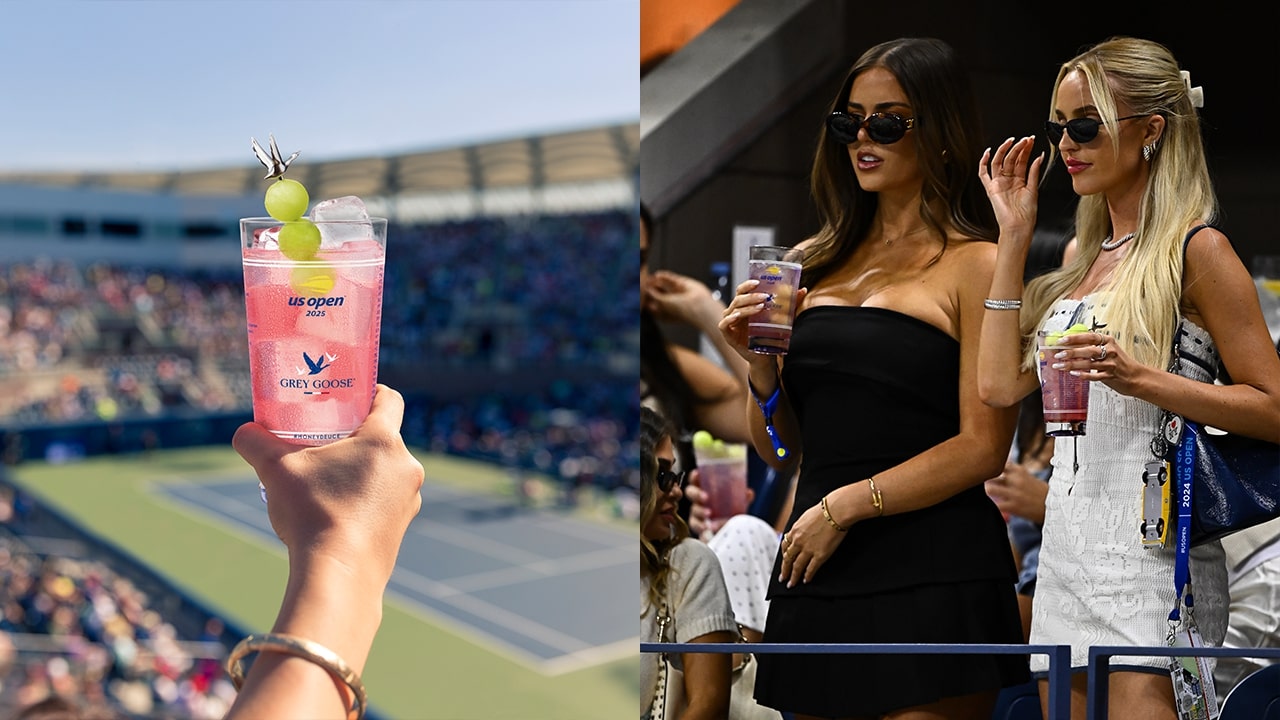
While Czeterko Jordan may be more devoted than most, she’s in good company as a Honey Deuce acolyte. During the 2024 US Open, fans purchased more than 550,000 cups of the cocktail—a sweet, summery mix of Grey Goose vodka, lemonade, and Chambord raspberry liqueur—totaling more than $12 million in sales.
Until Sept. 7, the USTA Billie Jean King National Tennis Center will once again be thronged with spectators sipping the tournament-exclusive drink from coveted souvenir cups printed with the names of past champions and updated every year.
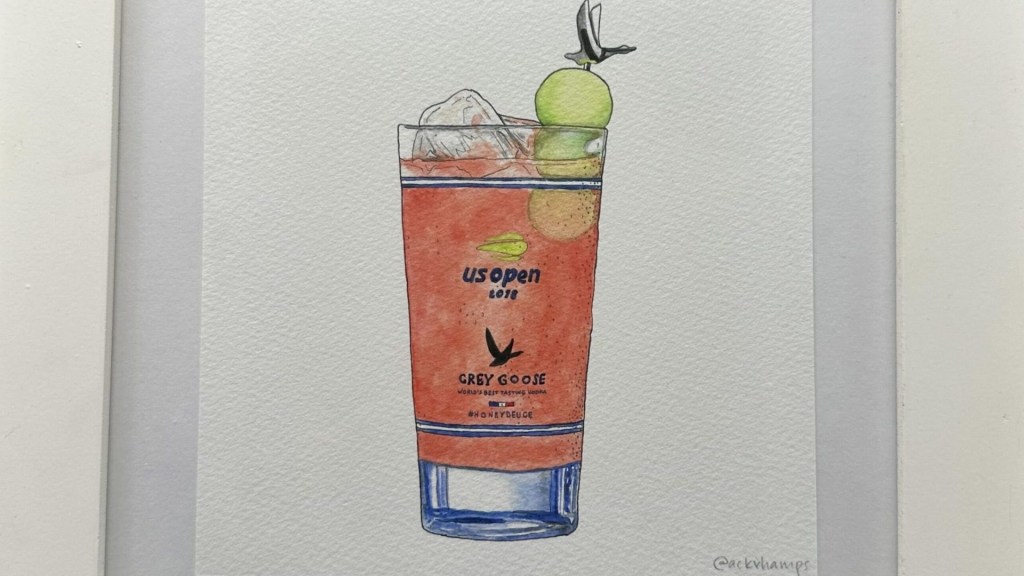
“I think the fun is that it’s a once-a-year thing, like a Christmas cookie or the Starbucks red cups,” Czeterko Jordan tells Front Office Sports. “It’s special because you can only get it during those two weeks” (three when you count the free-admission Fan Week around the qualifiers).
Like the US Open with its signature Honey Deuce, each of the four Grand Slams has its own boozy calling card.
Wimbledon has the Pimm’s Cup, more than 300,000 glasses of which flow during the championships. The quintessentially British drink is made from the herbal, gin-based liqueur Pimm’s No. 1 Cup, mixed with lemonade, soda, and an array of sliced fruit, cucumbers, and mint. In Paris, Roland-Garros serves up Moët & Chandon champagne, befitting its image as tennis’s most stylish stop. (Though, as of 2024, alcoholic drinks are banned in the stands, in an effort by organizers to discourage disruptive fans.) And in Melbourne, the Australian Open introduced its own contender in 2025: the Lemon Ace, a citrus-and-passionfruit Grey Goose concoction engineered to taste like an Australian summer.
These drinks have become core touchstones of fan experience and tournament culture. And, in the case of the $23-a-pop Honey Deuce, they’ve also become tests of what people are willing to pay for the privilege of partaking.
The Honey Deuce was an “overnight success, 18 years in the making,” according to Grey Goose global VP of marketing Aleco Azqueta. Introduced in 2007, the cocktail was the brainchild of restaurateur and mixologist Nick Mautone, who the vodka brand commissioned early in its sponsorship of the Open to create a drink that would be both memorable and easy to serve on-site. Inspiration struck as he was making a fruit salad and noticed how much the honeydew balls resembled tennis balls.
The Honey Deuce was popular from the start, but social media and the post-pandemic hunger for shareable, in-person experiences helped it escalate into a full-blown phenomenon. Serena Williams posted her first taste test of the drink to TikTok last summer, while Taylor Swift and Travis Kelce were photographed sipping Honey Deuces courtside.
To keep up the momentum, Grey Goose treats “Honey Deuce season” as a tentpole event. For 2025, that includes a pop-up “Last Serve Bar” in Grand Central Terminal to offer suburban commuters a taste of the tournament, open from Aug. 27 to 29, and a Times Square billboard featuring tennis star Frances Tiafoe. The brand also works with top New York bars, including Dante, to offer their own versions of the cocktail in the weeks leading up to the Open, building a city-wide buzz.
Of course, with massive popularity comes equally huge operational challenges. More than one million fans streamed through the gates last year over the full three weeks, a new record. And the sheer demand for the Honey Deuce—one is sold every 1.5 seconds during the tournament—has led to notoriously long lines, a point of contention for some. “You spend 45 minutes in a terrible line missing the match because … some poor bartender with a jigger [is] making each and every one,” complains fan Mike Falco. Until last year, the ingredients had to be measured and mixed one drink at a time; the cocktails weren’t pre-batched.
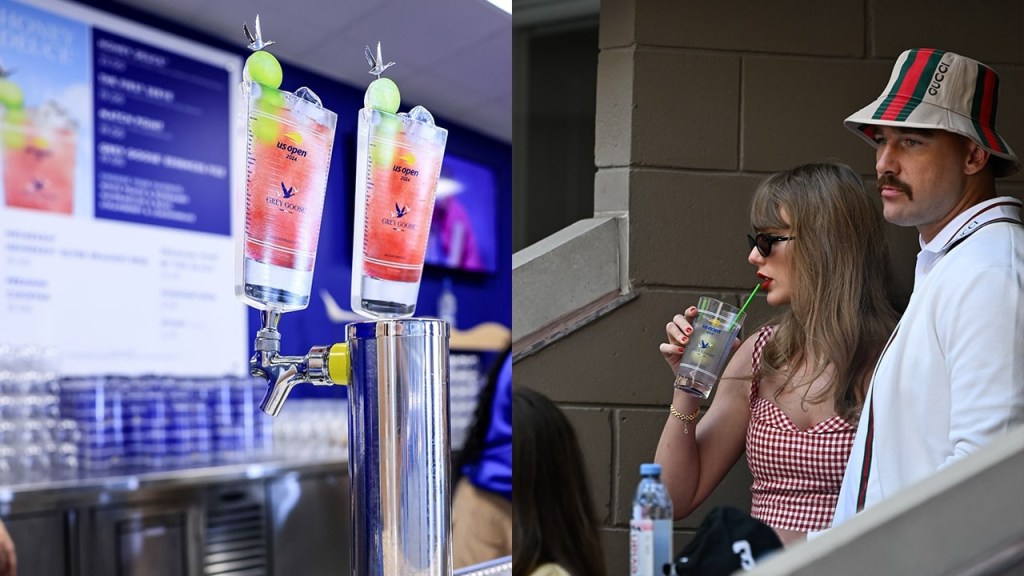
Organizers have made moves to change this, however. National Tennis Center COO Danny Zausner confirms Grey Goose now has infrastructure on-site to pre-mix the vodka and lemonade (the Chambord is still drizzled in last), and added cocktail taps in 2024 to the existing dedicated Honey Deuce to speed up service. The brand has also expanded its footprint beyond the tournament grounds, offering to-go kits via Cocktail Courier in New York, Chicago, and Miami. The kits include branded canned cocktails, metal straws, and an insulated tote, and cost between $36 and $144 for two to eight servings.
The initial idea for the Honey Deuce borrowed directly from another iconic sporting beverage: the Mint Julep, which sells 120,000 cups during Kentucky Derby weekend. “I saw them serving Mint Juleps, and for them, it was tradition,” Zausner tells FOS. “You brought home that glass and cherished it.” The goal was to create a drink just as tied to the US Open with a cup that was also a key to the allure.
“The Open has evolved into as much an entertainment spectacle as a sports spectacle,” Zausner says. “People come for the tradition … part of the US Open experience is getting that Honey Deuce cup.”
That’s held true even as the drink has become more expensive. The Honey Deuce’s price has increased six times in the past decade, jumping from about $15 in 2015 to $23 today. But demand hasn’t wobbled. That trend defies basic economics, which suggests the real product isn’t vodka and lemonade at all, but the intangible currency of taste, means, and cultural fluency.
“It’s so expensive, and you’re not really going to get drunk,” says fan Ama Kwarteng. “It’s just for the vibes. You’ve already committed to buying a ticket, so you might as well go all in.”
If the Honey Deuce is tennis’s “it” drink, Wimbledon’s Pimm’s Cup is its venerable elder. The cocktail dates back to the 1840s, and it has been part of the tournament experience for more than 50 years.
“Pimm’s is the drink for summer gatherings in the U.K.,” says Ryann Stutz, who attended Wimbledon in 2024. “At the tournament, everything’s crisp to a T, full-on Ralph Lauren Polo, strawberries and cream, and the Pimm’s flowing. It felt timeless.” Still, there was a sense of approachability: Spectators bring picnics to Henman Hill, the grassy slope on the tournament grounds, and fans are allowed to bring in one bottle of wine or champagne per person.
At the Australian Open—dubbed the “Happy Slam”—the strategy isn’t just about reflecting tradition but actively creating it. The tournament has cultivated a reputation as a “fun festival environment” complete with live music and pickleball courts, says Fern Barrett, Tennis Australia’s head of product growth and innovation. This was the ethos behind the Lemon Ace, a “true collaboration” between the organization and Grey Goose, a new sponsor of the Open.
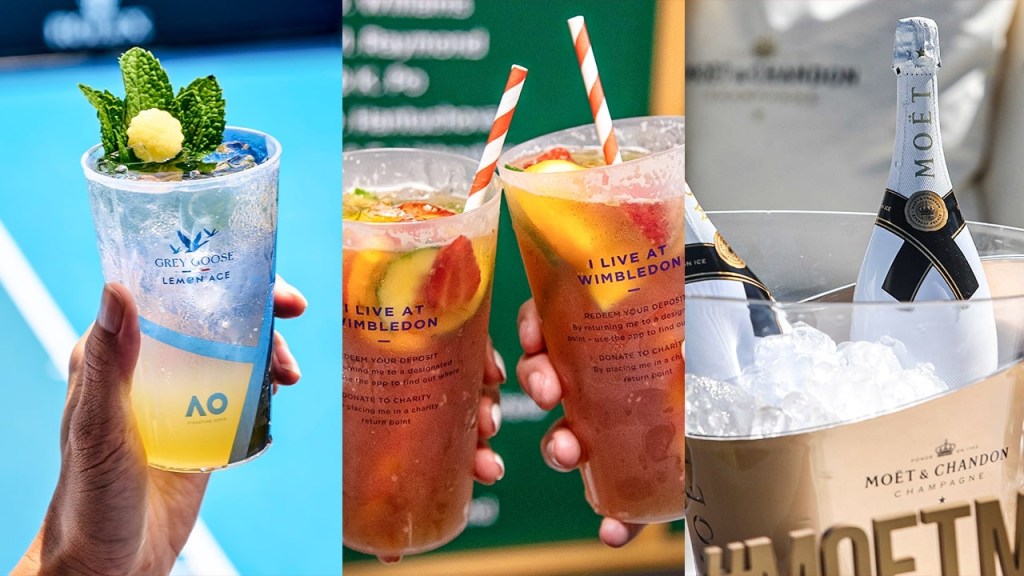
Barrett flew to London to workshop the recipe, aiming to capture the spirit of the Slam with a drink that drew on Aussie nostalgia and seasonal produce. “Something that quenched your thirst, was light and citrusy and super refreshing,” she explains. The result was a hit, selling more than 100,000 units in its first year. It’s a deliberate play to replicate the Honey Deuce’s success, building a new ritual from scratch for a tournament that prides itself on being modern and fan-friendly.
Why does this all work so well in tennis? The pace of the sport is part of it. Unlike the concentrated action of a basketball or football game, tennis is a game of leisurely pauses and long afternoons. A match can be a multi-hour affair, with ample time for wandering and socializing. “People are here for eight hours,” Zausner says, “so they have time to explore.”
That extended timetable, combined with a crowd that Kwarteng says is “much more leisure-forward,” creates the perfect conditions for a beverage to become an institution. “Because tennis isn’t super rowdy, you’re not worried about spilling,” she adds. “You can cheer or fist-pump, and it fits the vibe.”
With a dozen souvenir cups in her cupboards, annual US Open–attendee Julia Harrison says the Honey Deuce “is representative of one day you have per summer that’s hot and long and indulgent and silly, and that’s what I like.” She adds it’s a delicious drink—but “I would never order that outside of the US Open.”
Download the FOS App
The business of sports, in your pocket.



Scan the QR code to get the app now.