Want more from Front Office Sports
in your search results?
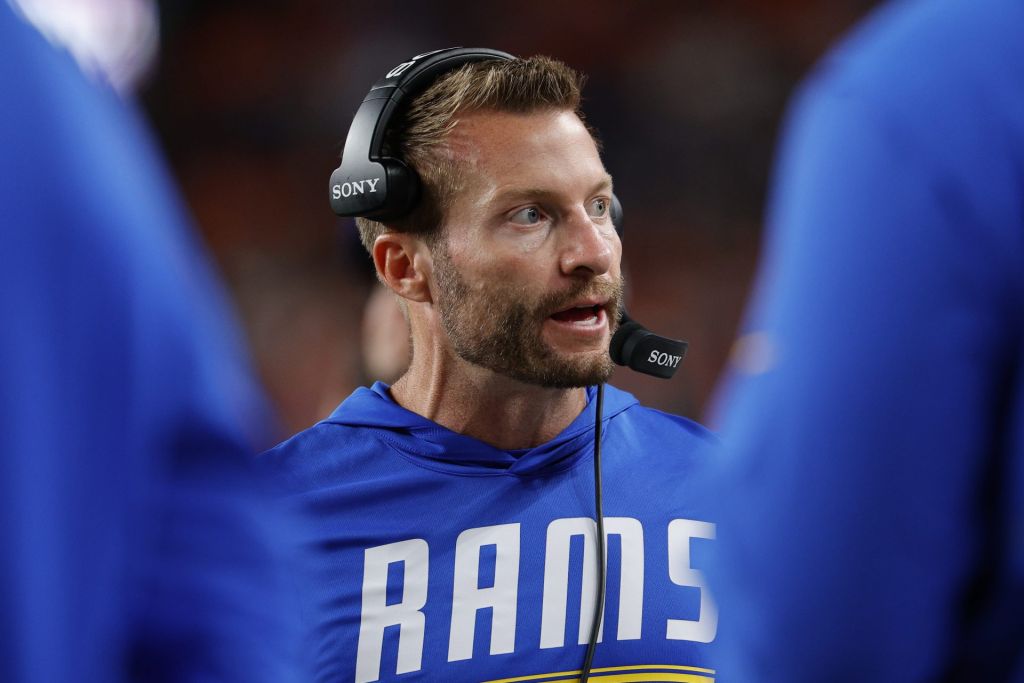
The public comments this week by Rams coach Sean McVay about the controversial pass interference call in his team’s loss Sunday night in Denver put a spotlight not only on the NFL’s officiating and its instant replay system, but also on the league’s policy regarding conversations between its officiating department and teams.
McVay told reporters during a midweek news conference that the NFL had told the Rams that the interference call against them was incorrect. According to the league’s game operations manual, the discussions between teams and the NFL officiating department are supposed to be kept private.
“All such conversations are confidential and are not to be discussed publicly and League discipline may be imposed on club personnel for breaching that confidentiality,” the NFL’s operations manual says.
The NFL sent a memo to all teams Friday reminding them that such conversations are supposed to be confidential.
When John Harbaugh, then the coach of the Ravens, told reporters on the day after a December loss to the Steelers last season that the NFL had acknowledged an officiating error, he said he had been given “permission to state this, that it was a wrong call.”
It’s not clear whether McVay, a member of the NFL competition committee, was given similar clearance in this case.
The NFL declined to comment. The Rams did not immediately comment on whether McVay received permission from the league to make his public remarks.
NFL coaches sometimes reveal such conversations with the league about disputed calls. The discussions between teams and the league thus are not always treated as confidential, no matter what the game operations manual says.
“There was never a message to not say anything,” a former NFL head coach told Front Office Sports this week. “But it doesn’t change the outcome.”
An executive with an NFL team told FOS that he couldn’t recall being told not to comment on such an issue but always is wary of the league taking action for what it considers impermissible conduct.
McVay was asked by a reporter during a news conference Wednesday about the Rams’ discussions with the league on the call.
“They agreed with me,” McVay said.
Asked if that meant the Rams were told the play should not have been called defensive pass interference against them, McVay said: “That’s correct.” He also said: “The goal is to just get good, consistent feedback. It doesn’t matter… The only thing that matters to me is how to educate our players.”
Officiating Manual
The NFL’s game operations manual says the league office “encourages NFL Officiating to respond candidly to questions regarding officiating raised by head coaches and other club employees following review of each game.”
Teams are instructed to forward up to 10 questions about officiating and instant replay following a game. In response, the operations manual says, “NFL Officiating is obligated to give its factual opinion of each call (or non-call) to the appropriate club executive.”
The NFL also sends a weekly officiating video to all teams. This week’s video did not address the debatable defensive pass interference calls in the Rams-Broncos and Cowboys-Ravens games.
Ravens coach Jesse Minter did not publicly address any conversations between his team and the league this week about the call. He was asked during a news conference Wednesday whether he believes pass interference calls should be made subject to instant replay review again, responding that’s “a topic maybe for the offseason.”
The NFL made interference calls and non-calls subject to review by instant replay in the 2019 season. But the system failed miserably and was not renewed for the 2020 season. The competition committee generally has opposed making judgment calls such as pass interference subject to replay review, even now, when soaring viewership and legalized sports betting have intensified the scrutiny on officiating.
The NFL competition committee designated both offensive pass interference and illegal contact by defensive backs against receivers in the secondary as points of clarification for this season. Such points were previously called points of emphasis and represent what the committee and league are emphasizing to the on-field officials in a given season.
Sunday’s debatable calls came in closely scrutinized games with prominent teams and significant viewerships.
The Ravens’ last-second victory over the Cowboys in Brazil drew an average of 24.9 million viewers on CBS and was the most-watched international game in league history. The audience peaked at more than 30 million viewers. The Broncos’ win over the Rams in Denver on Sunday Night Football averaged 20.8 million viewers on NBC and Peacock.
The call against Ravens cornerback Nate Wiggins came even as his arm was being pulled by Cowboys wide receiver CeeDee Lamb. It gave the Cowboys a chance to win in the game’s final seconds. But they settled for a tying field goal with seven seconds left. The Ravens rushed down the field and won on a field goal as time expired.
The Rams weren’t as fortunate. The call against Rams cornerback Josh Wallace nullified what might have been a game-sealing interception by him and set up a go-ahead touchdown by the Broncos.
“I wouldn’t change the way that I’m coaching Josh Wallace on how to play the cycle of that snap,” McVay said Wednesday. “Whether it was or wasn’t right, that wasn’t the point. The call was made. And that was what the call was. What I am interested in is if there’s any sort of feedback that says … here’s the coaching points that you want your [defensive backs] or your back-end guys to be able to have. … That game’s over with.”
Download the FOS App
The business of sports, in your pocket.



Scan the QR code to get the app now.