Want more from Front Office Sports
in your search results?
Madison Square Garden’s response to Shahana Hanif’s biometric-data bill was “ridiculous,” the New York City council member told Front Office Sports. But she remains open to talks with the company as lawmakers negotiate the bill’s language.
Hanif, who represents New York City’s 39th District, originally proposed the “Ban the Scan” bill in 2022 during her first term in office. She currently has 28 colleagues listed as co-sponsors, giving the bill support from a majority of the 51-member council. She recently received support from Mayor Zohran Mamdani. Although her legislation doesn’t currently have any Republican co-sponsors, she told FOS she would “absolutely” welcome bipartisan support. In order for her bill to become law, it must be advanced by the council’s committee on technology, then approved by a simple majority of the full New York City council, and finally signed by Mamdani.
She said her bill is intended to protect consumers by requiring providers of public accommodation, including arenas, stadiums, and retail stores, to obtain consent before collecting and storing customers’ biometric information. Critics have described it as too broad, but Hanif called it “pretty basic” and “common sense.” She also noted the language of the legislation is currently being negotiated with other lawmakers.
Madison Square Garden Entertainment, the company that owns and operates Madison Square Garden, has previously defended its use of facial recognition technology.
“People have been recognizing each other’s faces since the beginning of time – we just do it electronically,” a spokesperson said in a statement when asked by FOS about Hanif’s bill. The company gave Wired the same response for an August report on the legislation.
“I think that’s a ridiculous statement to make,” Hanif told FOS.
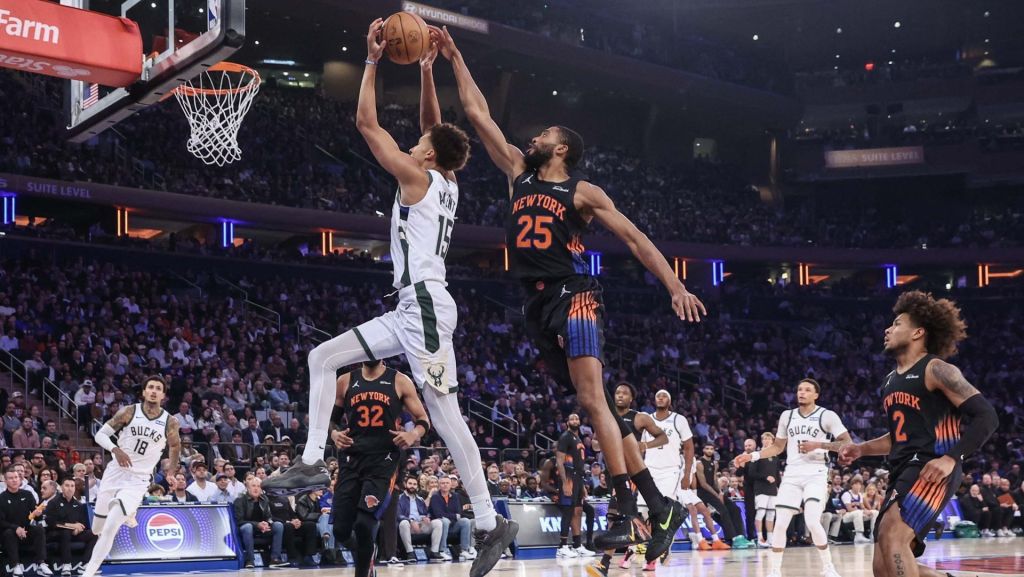
She pointed to a separate story from Wired that included information about a transgender woman who attended a Knicks game and was reportedly tracked “minute by minute” once she entered the arena.
“No one wants to attend a game or a show and have that kind of surveillance happening,” she said.
An MSG spokesperson said in a statement that “Wired’s reporting is inaccurate and false. MSG is pursuing legal remedies.”
Hanif said she remains willing to discuss her bill with MSG. “We’re open to these conversations,” she said.
Hanif is not the first public official to challenge MSG over its data collection practices. In 2023, New York attorney general Letitia James criticized the company for using the technology to find and remove lawyers from Knicks and Rangers games because they worked at firms that were in active litigation with the company.
In June of this year, days after the Knicks won the 2025-26 NBA championship, MSG was hit with multiple lawsuits tied to claims that hackers accessed sensitive visitor data from up to 26 million people that had been collected through the controversial surveillance and facial-recognition systems. Those suits have since been dropped. But Blake Hunter Yagman of Yagman PLLC, the attorney behind one of the suits, told FOS in July that the battle over MSG’s data collection techniques was only just beginning. “We’re talking about deeply disturbing, systematic privacy violations, the categorization of people, and potentially even civil rights concerns,” he said.
Hanif, who said she hasn’t been to MSG since being elected in 2021, also expressed concerns about discriminatory uses of facial recognition by MSG and emphasized the importance of protecting the “civil liberties” of New Yorkers. She said she is “excited” about the Knicks and would like to attend an upcoming game.
“Hopefully, I’m allowed a seat,” she told FOS. A source familiar with the matter told FOS Hanif is not banned from the arena.
Download the FOS App
The business of sports, in your pocket.



Scan the QR code to get the app now.