Want more from Front Office Sports
in your search results?
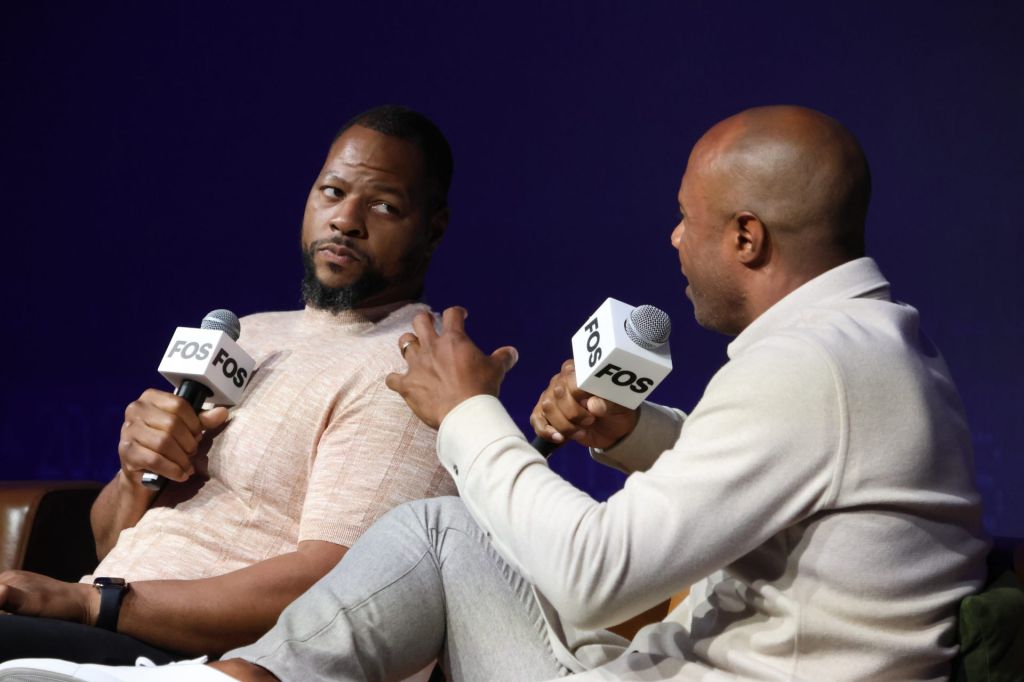
Former NFL star Ndamukong Suh knows private equity isn’t going away in youth sports. But he says investors need to find a better balance between their pursuit of returns and what’s best for young athletes.
“They’re always gonna be looking for those returns,” Suh said during the Front Office Sports Asset Class event Tuesday. “To me, I understand it, but I don’t necessarily agree with it.”
Suh, who has two children, acknowledged there are ways private equity can play a “positive” role in youth sports, but said “there needs to be a better way of doing it.”
“It’s inevitable at the end of the day,” he said.
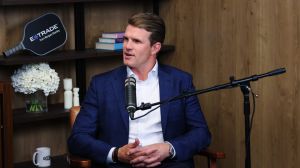
ESPN host and former NBA pro Jay Williams, who has three children, said during the same panel that the cost of youth sports has become obscene.
“I keep seeing the cost of youth sports, it’s up, and up, and up, and up,” Williams said. Yet whether it’s volleyball, soccer, basketball, or flag football, he said his kids are “actually not getting the type of skill training that I would like for them to have.”
The former pro athletes are not alone in their concern. Families spend a total of between $30 billion and $40 billion annually on sports activities for their kids, according to research from the Aspen Institute. During a June subcommittee hearing, members of the House of Representatives on both sides of the political spectrum expressed concerns about the rising costs of youth sports on families.
In recent years private equity firms have increasingly gotten involved in the industry. Unrivaled Sports, the youth sports holding company of PE billionaires Josh Harris and David Blitzer, has been building a sprawling portfolio of more than 20 companies that includes flag football. Maple Park Capital–owned Prep Network runs hundreds of youth sports events each year, including basketball, football, and volleyball. Last year, KKR-backed PlayOn bought high school sports information provider MaxPreps, which features information about 29 different sports and covers roughly 28,900 high schools across all 50 U.S. states.
Some private equity firms have sought to combat the perception that PE does nothing but contribute to rising costs in youth sports. Former Giants quarterback Eli Manning told FOS in June that Brand Velocity Group, which he became a partner of in 2022, is not part of the problem. “This isn’t about raising prices for families,” Manning, who has four children, told FOS. “This is about keeping prices low and adding access so that more kids can play sports. That’s the ultimate goal.”
But the idea that PE is making it challenging for parents is not unfounded. In May, a group of Democratic lawmakers proposed federal legislation that would effectively ban PE investors from owning or operating youth sports businesses by forcing existing owners to sell assets and penalizing those who engage in predatory practices. The Let Kids Play Act was introduced by Sen. Chris Murphy (D., Conn.) and Rep. Chris Deluzio (D., Pa.), alongside several other Democratic lawmakers.
Earlier this month, the uproar over alleged predatory practices in youth sports became the subject of a federal lawsuit. A group of parents sued youth hockey operator Black Bear Sports Group over claims the company coerces families into using designated hotels, charges undisclosed fees, and collects kickbacks from hotel partners.
Black Bear itself is not technically a private equity firm, although its founder, Murry Gunty, has worked in private equity in the past. The lawmakers who proposed the legislation, and the parents who sued, do not care whether Black Bear technically falls under the private equity category. “Black Bear ownership’s roots are in private equity,” Murphy said at the press conference announcing his legislation. “They see my son’s hockey experience as a chance to make a massive amount of money. They are using youth sports to get rich.”