Monday, October 5, 2026
  • -
    days
  • -
    hours
  • -
    minutes
  • -
    seconds

Latest Class Action Eligibility Lawsuit Challenges NCAA’s ‘Redshirt’ Rule

The case challenges the concept of an eligibility rule across sports, rather than seeking an individual injunction allowing a player to compete this season.

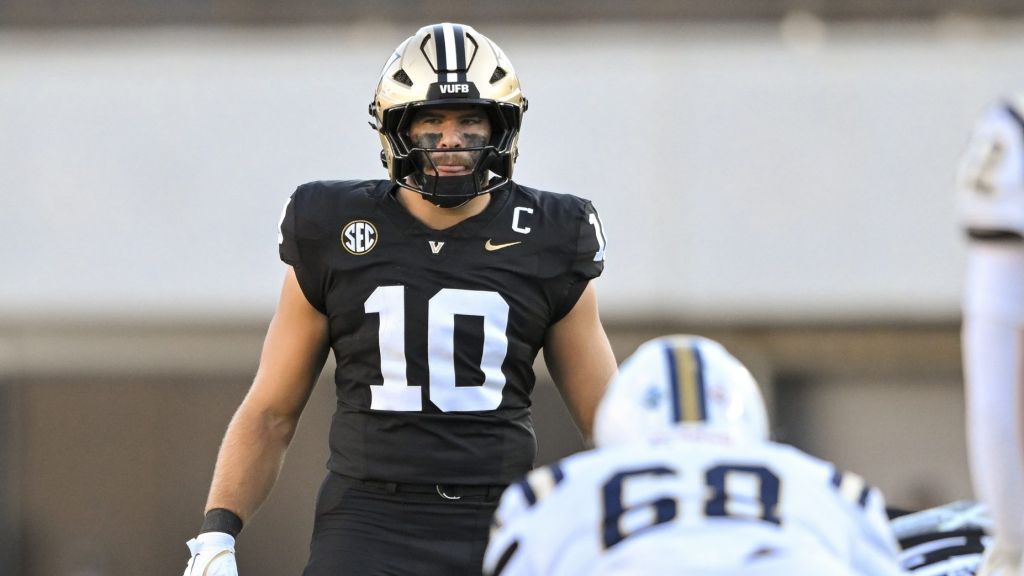
Aug 30, 2025; Nashville, Tennessee, USA; Vanderbilt Commodores linebacker Langston Patterson (10) looks over the defense against the Charleston Southern Buccaneers during the first half at FirstBank Stadium.
Steve Roberts-Imagn Images

Want more from Front Office Sports
in your search results?

Add Front Office Sports on Google

On Tuesday, a group of 10 current and former NCAA Division I athletes led by Vanderbilt linebacker Langston Patterson, Vanderbilt defensive lineman Issa Ouattara, and former University of Hawaii quarterback Brayden Schager sued the NCAA to challenge its longstanding redshirt rule. 

It’s the latest in a series of lawsuits challenging the NCAA’s core eligibility requirements that began in the fall of 2024 with a case filed by the Vanderbilt players’ teammate, Diego Pavia.

The lawsuit, filed as a class action in the middle district of Tennessee, argues that the NCAA’s eligibility rules that state players only have five consecutive seasons to complete a maximum of four full seasons violates antitrust law. 

Specifically, the case aims to strike down the “redshirt rule,” where the NCAA allows players to sit out a season, or “redshirt,” if they want to preserve one of their four years of eligibility—a choice commonly made by players who are injured or who hope to transfer. However, players have to continue to practice with the team while they redshirt. The lawsuit argues that players should be able to complete five full years of play within the five-year window, rather than four, and not have to redshirt.

The lawsuit also argues that in the era of NIL (name, image, and likeness) and revenue-sharing, the rule prevents players from valuable compensation opportunities. 

“So long as college athletes remain within the NCAA’s five-year eligibility window, they should not be arbitrarily barred from competing in seasons for which they are physically, academically, and competitively prepared,” the complaint said. “By inserting such a barrier, the NCAA restricts fair competition, depresses college athlete compensation, and entrenches its cartel power in violation of the Sherman [Antitrust] Act.”

The arguments are similar to the dozens of others filed since October 2024. But this lawsuit differs in that it challenges the concept of an eligibility rule across sports, rather than seeking an individual injunction allowing a specific player to compete this season. 

It’s also not the only lawsuit to challenge the concept of allowing players four seasons. Diego Pavia’s successful lawsuit, for example, argued that years played at junior college shouldn’t count toward eligibility. But Tennessee basketball player Zakai Zeigler challenged the rule that a player should only have four full seasons to compete within five years (though his request for an injunction was denied). 

NCAA president Charlie Baker has previously warned that the lawsuits could challenge a core aspect of college sports reflected in its eligibility rules: that players have to be students, that their eligibility is tied to being enrolled in college, and that they can’t compete in perpetuity.  

“We are not challenging the NCAA’s rule limiting players to five years of eligibility to play college sports or the concept of a defined eligibility period generally,” co-lead counsel Ryan Downton said in a statement. “But the NCAA has no basis to prohibit a player who is working just as hard as all of his teammates in practice, in the weight room, and in the classroom, from stepping on the field (or court) to compete against another school in one of those seasons. Five years to practice, five years to graduate, five years to play.”

The greater issue of whether the NCAA has the legal authority to enforce eligibility rules could be resolved in either Congress or at the Supreme Court level. 

The Supreme Court often chooses to take up cases that involve a “circuit split”—when two federal appeals courts in different parts of the country issue conflicting rulings on the same subject. Multiple eligibility lawsuits are pending at the appeals court level, so it’s possible their rulings could set up potential intervention from the high court.

Meanwhile, the NCAA and power conferences are lobbying in Congress to pass the SCORE Act, a bill that would grant them antitrust protections to impose eligibility rules—as well as other restrictions like transfer rules and compensation limits—on athletes without the fear of future litigation.

“The NCAA stands by its eligibility rules, including the five-year rule, which enable student-athletes to access the life-changing opportunity to be a student-athlete,” an NCAA spokesperson said. “The NCAA is making changes to modernize college sports but attempts to dismantle widely supported academic requirements can only be addressed by partnering with Congress.”

This field is for validation purposes and should be left unchanged.

Sign up for
The Memo Newsletter

Get the biggest stories and best analysis on the business of sports delivered to your inbox twice every weekday and twice on weekends.

This site is protected by reCAPTCHA and the Google Privacy Policy and Terms of Service apply.
Linkedin
Whatsapp
Copy Link
Link Copied
Link Copied

What to Read

New-Look Pac-12 Returns for First Week of Conference Play

It’s a milestone many thought unlikely just three years ago.
Dec 31, 2025; Arlington, TX, USA; A detailed view of the College Football Playoff logo on the pylon during the game between the Miami Hurricanes and Ohio State Buckeyes during the 2025 Cotton Bowl and quarterfinal game of the College Football Playoff at AT&T Stadium. Mandatory Credit: Jerome Miron-Imagn Images

ESPN’s Exclusive Window Closes Next Week As 24-Team CFP Looms

The College Football Playoff has until Dec. 1 to expand for 2027.
Sep 26, 2026; Starkville, Mississippi, USA; Mississippi State Bulldogs quarterback Kamario Taylor (1) passes the ball during warm ups prior to the game against the Missouri Tigers at Davis Wade Stadium at Scott Field. Mandatory Credit: Petre Thomas-Imagn Images

Can Mississippi State Keep Kamario Taylor?

Chiefs star Chris Jones has vowed to try to keep Taylor in Starkville.
podcast thumbnail mobile
Front Office Sports Today

A Conversation with Randy Levine on the Yankees’ $2.6B Apollo Deal and the Protect College Sports Act

0:00

Featured Today

How the Baseball Cap Became a ‘Behemoth’

The hat has become essential for athletes, fans, and the sports-agnostic.
Morishita-Sato-homerun-celebration-at-Meiji-Jingu-Baseball-Staidum-2025
September 28, 2026

Japanese Baseball Is Fighting Back Against MLB Talent Drain

Nippon Professional Baseball is reimagining how to be a global juggernaut.
Aug 9, 2026; Bedminster, New Jersey, USA; President Donald Trump walks out of the clubhouse during the final round of the LIV Golf New York tournament at Trump National Bedminster.
September 25, 2026

Trump’s Year of Sports Gets Busier With CFB, Presidents Cup

The impact of Trump’s attendance varies across each sporting event.
A Bar of Their Own
September 25, 2026

Women’s Sports Bars: Novelty Has Worn Off, ‘That’s a Good Thing’

They’re leveling up, but sustainability remains the first consideration.
Hot & Social/Mets
September 18, 2026

Sports Teams Are Playing a New Role: Matchmaker

The latest promotion at the stadium? Love.
Arizona State hockey head coach Greg Powers watches his team as they play UMass-Lowell at Oceanside Ice Arena on Jan. 12, 2018, in Tempe.

ASU Commissions Independent Investigation of Hockey Workout

Coach Greg Powers was placed on leave earlier this week.
Apr 3, 2026; Phoenix, AZ, USA; Detail view of an NCAA basketball in the hoop during the second half of a semifinal of the Final Four of the women's 2026 NCAA Tournament between the UConn Huskies and the South Carolina Gamecocks at Mortgage Matchup Center. Mandatory Credit: Kirby Lee-Imagn Images
October 2, 2026

Ohio Court Reverses Grandfathering of Athletes Into NCAA Eligibility

Parallel litigation remains ongoing in several states.
Florida Governor Ron DeSantis speaks with New York Yankees president Randy Levine as they attend a roundtable event on collegiate sports at the White House in Washington, D.C., March 6, 2026.
Exclusive
October 2, 2026

SEC and Big Ten Don’t Want to Expand: Randy Levine

Levine argued amending the conference realignment provision would be unnecessary.
Sponsored

Beyond the Scorecard: How Dow Is Putting Purpose at the Center of Women’s Golf

Discover how Dow and the LPGA are building a partnership with lasting impact.
Exclusive
October 1, 2026

Where Does New Big East Commissioner Stand on PE?

Commissioner Tim Brosnan told FOS that PE firms have approached the league.
Arizona State hockey head coach Greg Powers watches his team before a game against UMass-Lowell at Oceanside Ice Arena on Jan. 12, 2018,
October 1, 2026

ASU Hockey Coach Administrative Leave Isn’t Enough: Attorneys

They also renewed their calls for an independent investigation.
October 1, 2026

College Basketball Player in ICE Custody Allowed to Re-Open Case

Kentucky State’s Senegalese center was detained at the airport on Aug. 7.
September 30, 2026

Ted Cruz: Critics of ESPN ‘College GameDay’ Appearance ‘Partisans’

The Texas Republican defended his appearance in an interview with FOS.