Want more from Front Office Sports
in your search results?
Since 2024, the NCAA has been hit with 33 lawsuits challenging various aspects of its eligibility rules—with the most recent filings coming just last week.
As a result, the fate of the NCAA’s eligibility rules remains unclear just weeks before college football season starts. Across the country, federal judges don’t appear to have found common ground on whether the NCAA can legally enforce rules about when players are eligible for NCAA sports. And even bigger splits may be on the horizon.
“I’m not even sure I’d say that [the lawsuits are] trending in the right direction for the NCAA,” Boise State law professor Sam Ehrlich, who has tracked the barrage of litigation through his own website, tells Front Office Sports. “They’ve won more than they’ve lost for sure, but given how inconsistent judges have been in these cases I have to imagine the NCAA is super frustrated about all of this.”
The NCAA did not immediately respond to a request for comment.
At the beginning of the 2024-25 season, the NCAA’s rules were as follows: Players got four years of eligibility, with some exceptions including the year they “redshirt” (sitting out a season of play in order to extend eligibility) or the year of the COVID pandemic. All four years must be completed within five calendar years. Playing full seasons at non-NCAA institutions, like at the junior college level, still counted toward NCAA eligibility.
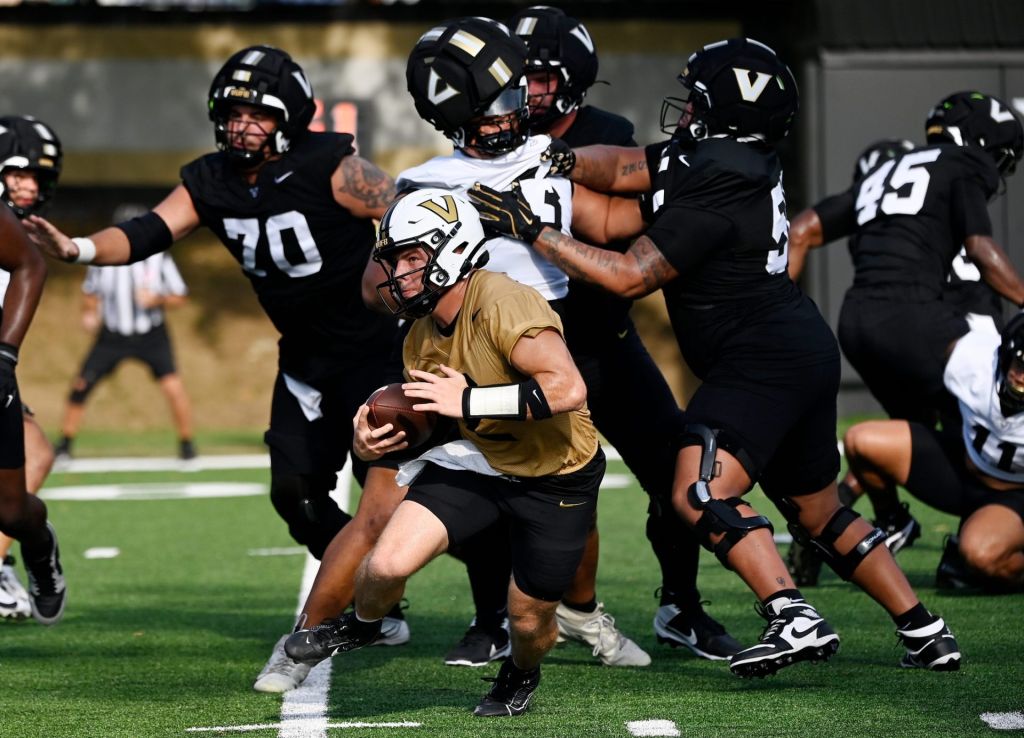
In November 2024, Vanderbilt quarterback Diego Pavia started the flood of litigation. In a lawsuit filed in Tennessee federal court, Pavia argued that the two years he played football at junior college shouldn’t count against the NCAA’s four-year rule. Pavia also argued that he would lose out on NIL earnings if he was barred from extending his NCAA career—constituting a violation of antitrust laws.
Within a few weeks, a federal judge in Tennessee granted a preliminary injunction allowing Pavia to suit up this fall for the Commodores. It was an early loss for the NCAA, which then issued a waiver for players like Pavia for the 2025-26 season.
But it also spurred dozens of other athletes to file cases of their own.
Some argued against the same NCAA restriction as Pavia: that their years at junior colleges, which are not NCAA institutions, should not count against their NCAA eligibility. Others, however, challenged other aspects of the rule: NCAA football player Jett Elad, for example, challenged the rule stating all four years of play must be completed within five calendar years. His request was granted in April.
But then the NCAA’s luck turned.
In March, two different federal judges denied preliminary injunctions sought by baseball players who didn’t want the NCAA to count their years playing at the JUCO level. Georgia outfielder Dylan Goldstein lost his appeal at the end of February. The judge in Goldstein’s case, Tripp Self, was accused of having a conflict of interest given that he had worked as an NCAA official, but the case was closed after Tennessee baseball transfer Alberto Osuna also lost his bid in early March.
The most consequential, perhaps, is the case of Tennessee basketball player Zakai Zeigler, who exhausted all four years of full eligibility at the NCAA Division I level over a span of five years, and is simply arguing he should be allowed to continue to play a fifth during a six-year span. Zeigler’s motion for a preliminary injunction to be allowed to play this season was denied in June. (Zeigler will continue to seek damages over lost NIL earnings despite losing his opportunity to continue playing, however.)
The NCAA’s wins aren’t absolute, however, according to Ehrlich. “The biggest differentiating factor is whether courts are finding the rules to be ‘commercial’ or not,” he says (meaning that eligibility rules have an impact on an athlete’s ability to earn money). “If they’re not commercial in nature, there’s no antitrust applicability, so that’s a big deal for the NCAA.” At this time, Ehrlich says that among the eligibility lawsuits brought so far, there’s a six-and-six split on whether eligibility rules are commercial. The judge in Zeigler’s case, for example, found that the four season rule was commercial—and therefore could be challenged on antitrust grounds.
In mid-July, the NCAA was able to successfully reverse a preliminary injunction granted to Wisconsin football player Nyzier Fourqurean, though the case itself is still ongoing. Ehrlich notes that the reasoning issued by the seventh circuit, which heard the appeal, likely isn’t a major ideological win for the NCAA.
Meanwhile, the NCAA is also appealing three decisions they’ve lost: Pavia v. NCAA, Elad v. NCAA, and Braham v. NCAA—a case brought by football player Cortez Braham Jr. in May challenging the NCAA’s JUCO rule and its five-year completion rule. (The NCAA’s official appeal of Braham v. NCAA was issued last Friday.)
In order to avoid further confusion, the NCAA has to win all three of these appeals. If it doesn’t, it faces the potential for a “circuit split,” when two different appeals courts issue opposing decisions. Those splits are sometimes resolved at the Supreme Court level.
But while the NCAA battles each individual lawsuit in court, it’s also lobbying Congress for a law that would protect its ability to set and enforce eligibility rules without fear of any future litigation.
Download the FOS App
The business of sports, in your pocket.


Scan the QR code to get the app now.