Want more from Front Office Sports
in your search results?
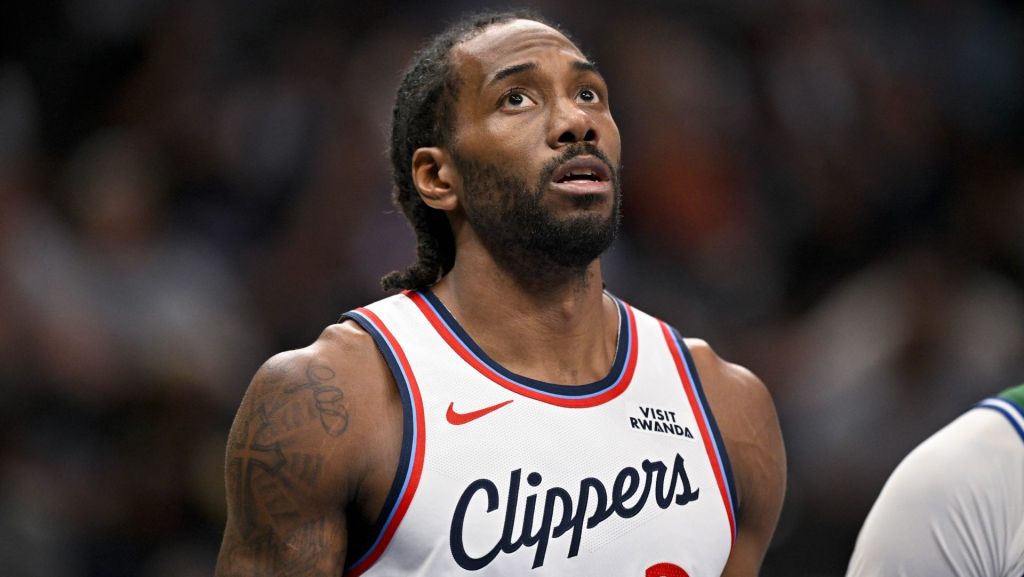
What started as an NBA investigation into an alleged salary-cap violation has reportedly drawn the attention of federal prosecutors, opening a consequential new chapter in the Clippers’ Kawhi Leonard saga with the potential for criminal charges.
The New York Times reported late Thursday evening that the U.S. Department of Justice has launched a probe into the situation. The investigation is in its most preliminary stages and is being led by the Eastern District of New York, the report said; that’s the same district overseeing the gambling and poker scandals that have ensnared the likes of Terry Rozier and Chauncey Billups, as well as Guardians pitchers Emmanuel Clase and Luis Ortiz. A representative for the EDNY said in an email to Front Office Sports they “can’t confirm or deny any investigation,” and the NBA declined to comment.
Mitchell Epner, a former federal prosecutor who is now a criminal defense attorney at Kudman Trachten Aloe Posner LLP, has a word of advice to anyone connected to the Clippers who are part of the investigation: lawyer up.
“To the extent this hasn’t already happened, each of the Clippers owners and employees who are part of the investigation almost certainly need their own lawyers,” he tells FOS.
Another word of advice: “do not talk to the press.”
That opinion is shared by former DOJ trial attorney Michael Weinstein, who now works at law firm Cole Schotz. He says it’s time to “batten down the hatches.”
“Everything the Clippers were threatening to do, thumping their chest and going after the NBA to be disruptive and challenge the report, their lawyers are likely telling them, ‘hold on, let’s sit tight,’” Weinstein says. “If they go on offense against the NBA, everything they do becomes fodder for the government in its investigation.”
The news of the reported investigation comes just more than a week after the NBA released its findings following a yearlong investigation, which was spurred by reporting from podcaster Pablo Torre that Ballmer had arranged a “no-show” job for Leonard with since-failed environmental start-up Aspiration worth millions of dollars. Just as Torre did in subsequent reporting, Wachtell Lipton—which the NBA enlisted to run its investigation—found the issues went far beyond Aspiration.
The law firm’s report found the Clippers used four companies to route payments to Leonard off the books: Aspiration, Boingo Wireless, Daktronics, and Lockton Insurance. Daktronics, a publicly traded company, disclosed on Sept. 2 that it is under investigation by the U.S. Securities and Exchange Commission. A representative for Lockton declined to comment. None of the other companies, nor the Clippers, responded to requests for comment Friday.
The league handed down significant penalties to the Clippers, banning owner Steve Ballmer for a year and fining him $30 million, while stripping the team of five first-round draft picks. Leonard got off relatively light with a $700,000 fine.
Weinstein tells FOS he was “slightly surprised” to see news of the federal probe. “The opening of a criminal investigation brings this into new territory, and it’s a problem for all parties involved, he” said, before adding: “The $700,000 fine is the least of [Leonard’s] problems at this point.”
The mere existence of the investigation doesn’t necessarily mean Leonard himself is in the government’s crosshairs, however. Epner says potential charges could be difficult to bring against Leonard because of the layers between him and the alleged underlying conduct.
“If the charge is money laundering or wire fraud, it is harder to charge Leonard than other people,” he tells FOS. “With regard to money laundering, you have to know about the underlying criminal activity, and Leonard is insulated by many layers. He would, I assume, be able to say, ‘I picked up the money, that’s all I did.’”
Leonard’s uncle, Dennis Robertson, and his former agent, Mitch Frankel (who Leonard replaced with Harrison Gaines of Splash Sports & Entertainment over the summer), may have more culpability because they likely serve as his “first layer of protection,” Epner says. Robertson could not immediately be reached, and Frankel and Gaines did not immediately respond to requests for comment.
“If neither of those two people communicated an underlying illegal activity to Leonard, he can’t be guilty of money laundering, for the same reason that, if you are a grocery store and somebody comes in with drug proceeds to buy groceries, you’re not guilty of money laundering,” Epner tells FOS.
So what happens now? Although he can’t speak to the specifics of this probe, Epner says federal investigators typically start by talking to people they can reach without subpoenas, seeking voluntary cooperation and documents before escalating to a grand jury. “You see who will voluntarily talk to you. You want to do as much with voluntary cooperation, and people voluntarily giving you documents, as you can.”
Once those efforts are exhausted, the “next level” is using a grand jury to subpoena documents. “Because documents can’t change,” Epner says. Ultimately, prosecutors can ask the grand jury to return an indictment.
Late on Thursday, Torre posted a video to social media reacting to the reported probe. He teased that more information will come out, saying “there is a lot more.”
“Back in the 70s and 80s, the scariest sentence an executive could hear was, ‘Mike Wallace from 60 Minutes is here to speak to you,’” Epner tells FOS. “Today, it’s, ‘Pablo Torre is here to speak to you.’”
Download the FOS App
The business of sports, in your pocket.



Scan the QR code to get the app now.