Want more from Front Office Sports
in your search results?
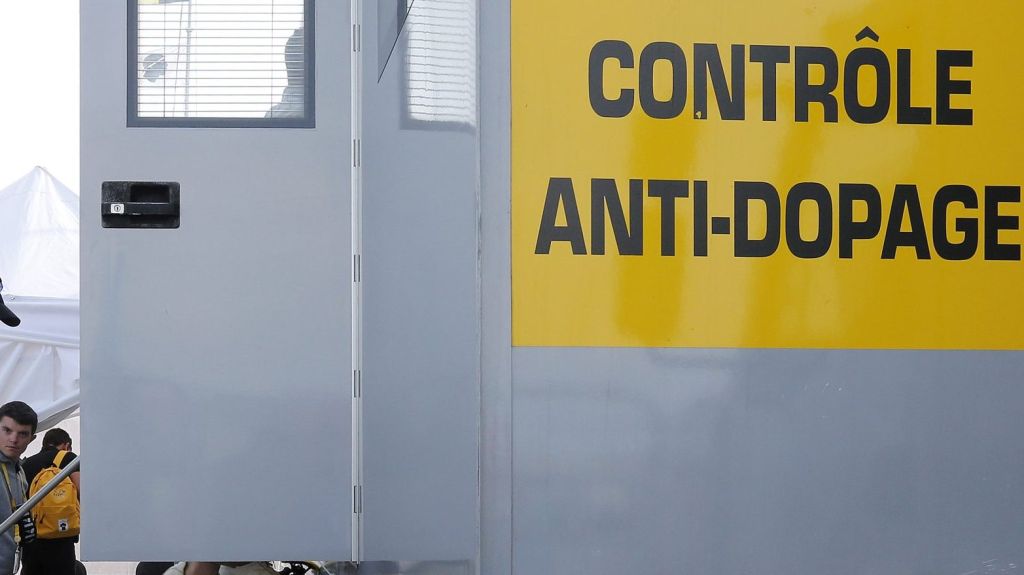
Overnight doping tests at this year’s Tour de France have sparked debates about athlete health, recovery, and the credibility of professional cycling, a sport haunted by its drug-ridden past.
Jonathan Vaughters, a former professional cyclist turned CEO and team manager of EF Education–EasyPost, believes occasional overnight testing is a necessary deterrent, even if they disrupt a rider’s sleep.
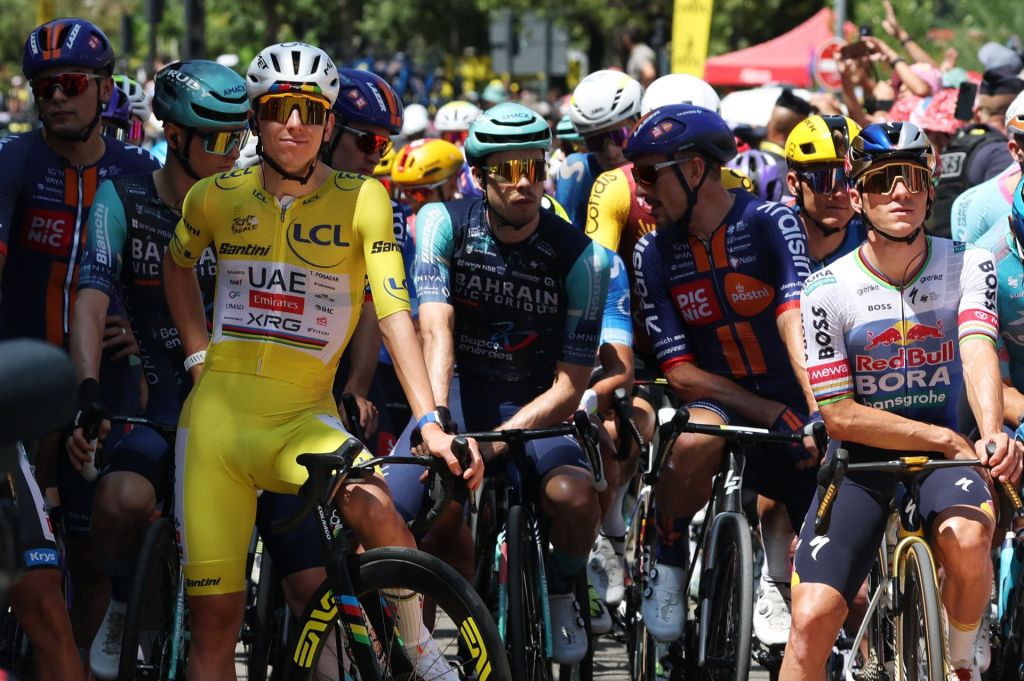
Vaughters has some expertise in the topic, as he has testified to his own illegal drug use during his professional cycling career. Earlier this week, as much of the peloton lamented the late-night tests of Jonas Vingegaard and Tadej Pogačar, Vaughters defended them. “If UCI had tested us in 2001 at 2am? We’d all have been suspended and saved the sport 25 years of drama,” he wrote in a tweet.
He spoke to Front Office Sports about why testing riders at 2 a.m. can catch illegal microdosing, whether cycling’s anti-doping system helps or harms its reputation, and how emerging weight-loss drugs could shift the conversation.
This conversation has been lightly edited and condensed for clarity and brevity.
Front Office Sports: Would you support one of your own riders being woken up at 2 a.m. before a Tour stage for testing? Where should the line be drawn between effective testing and protecting rider health and prioritizing their recovery?
Jonathan Vaughters: I wouldn’t have made the comments that I made unless I was supportive of any and all of my riders being tested in the middle of the night at any point in time. And, to that end, I’ve also discussed with them and basically given them my point of view on this.
By no stretch of the imagination have I asked them to agree with me publicly, but I have shown them why I feel like this is important.
I don’t think that these riders should be tested once a week at one in the morning. That’s not it. It’s a deterrent that they need to understand that it’s possible that it happens.
If occasionally it does happen through all the teams, not just one or two, and that deterrent is consistently present but certainly not overused, then I feel like that probably effectively solves the problem.
FOS: What safeguards should exist around nighttime testing other than limits on frequency, and should decisions about which riders are selected and when they are tested be left to the ITA?
JV: Ultimately, I think it’s [the International Testing Agency’s] prerogative. If they started doing it more regularly, then my opinion might change as to when athletes’ rights are actually being impinged upon.
It’s a very difficult line between protecting the athlete’s health via anti-doping and really encouraging athletes to not take performance-enhancing drugs, and then respecting their sleep, recovery, and privacy.
Cycling has a history, and I feel like it needs to do everything it can to really reinforce credibility. This is a super high-performing sport. It’s human Formula One car racing. These athletes are so optimized. This sport takes every level of optimization far beyond where any other sport is, honestly, from a science standpoint.
On a personal level, I hate that they’re getting woken up at 2 o’clock in the morning. On a scientific level, I know exactly why that’s happening and how an 11 p.m. to 6 a.m. window where testing is not allowed can be exploited to continue using performance-enhancing drugs.
I feel like the risk to athlete health and the reputation and credit of the sport outweighs the risk to athlete health from losing some sleep.
FOS: At what point has cycling done enough to earn back trust and stop subjecting today’s riders to increasingly intrusive testing? Is it unfair for individual riders to face overnight testing because of the sport’s broader reputation?
JV: I’m an ex-professional cyclist. I’m an ex-teammate of Lance Armstrong’s. I was part of that investigation, and I doped myself. So I understand quite clearly how microdosing in an overnight window works.
A lot of the athletes that I saw commenting were saying, “This is horrible. Why would they ever do this?” I’m not upset with them that they have a different point of view than I do because they don’t have any idea as to why you would possibly test at two in the morning.
They’ve never encountered someone that was trying to convince them to dope and to use this seven-hour window in order to exploit the system. That’s not part of their world, and it’s completely and totally unfair to them that they’re being subject to something that isn’t necessarily part of their world.
But on the flip side, the risk of doping coming back in when you’re dealing with the highest-performance athletes in the world is high, and you need to make sure that you’re doing everything you can to prevent that.
The culture of the sport has completely changed since I was a rider, and the sport really has cleaned itself up. But in order to stay that way, we need to be on top of this.
When people reputationally throw cycling under the bus from stuff that happened 20 years ago, they are not looking at what the current evidence is. It’s incredibly disappointing to me and annoying because we’re doing more than any other sport.
If you want to watch a clean sport, watch professional cycling. This sport has suffered so much from scandals that it has done a lot to clean itself up. It has done more than anyone else.
FOS: Are you worried that more aggressive testing will reinforce the perception that cycling still has a major doping problem?
JV: The way they choose who they test is basically by risk profile. Cyclists are being blood tested very consistently, and that blood profile can show certain abnormalities that would not trigger a positive blood test but would trigger additional testing to follow up on.
One way a rider can be targeted is if there are abnormalities in the blood. The other way a risk profile of a rider can be targeted is because of high performance. They’re riding fast.
Getting a French judge to sign off on potential doping of the three fastest guys in the Tour de France is not going to be that difficult. They’re going to say, well, the sport has a little bit of a history, and these are the fastest guys, so, O.K., go ahead and do it.
I don’t think any level of suspicion or shadow should be a result of that. ITA did what they had to do to get the test.
The confidentiality that goes around a lot of the testing in professional league ball sports is very high. Confidentiality that goes around professional cycling testing is very low. Transparency is actually very high.
Who are you going to believe? A sport that has very little testing and high confidentiality regarding all of the tests, or a sport that is being so transparent that the athletes themselves are the ones calling out that they got tested, and that has the highest level of testing, the highest level of funding, and is willing to go to such extreme regards?
Do you want the appearance of clean, or do you want clean and fair? If you want the appearance of clean, that’s one thing. If you want the brand of clean, that’s one thing. If you want actual transparent, fair, clean racing, that’s another thing.
FOS: Do you think public opinions around doping are changing as athletes gain access to new kinds of drugs and technologies like GLP-1s that were not designed as performance enhancers but could affect weight, endurance, and recovery?
JV: To me, there’s a big difference between somebody choosing to take a GLP-1 or choosing to take a peptide or whatever else to enhance their looks or to enhance their health. That’s their choice. They’re not physically competing against anyone else.
Where it’s different in sports is this: The ultimate goal of sport, I think, is to determine who is the best. All fans want to know who is the best. Who’s the best team? Who’s the best athlete? Who’s the best rider?
Once you introduce doping or peptides or whatever else and say it’s all O.K., you lose the possibility of ever finding out who’s the best, because what you’re finding out now is whose body is most adept at improving with the current technology of 2026. You are not finding out who is the best.
People say, “But if everyone takes it, it still doesn’t matter.” Different drugs, different peptides, and different hormones affect different bodies in very different ways.
Do we want to prejudice athletes that are choosing, for moral reasons, for health reasons, for whatever it is, that they just don’t want to do that? Do we want to prejudice those athletes against people who are willing to risk it, that don’t have the same moral compass?
To me, that’s wrong. That is essentially letting the bullies win, if you will.
Download the FOS App
The business of sports, in your pocket.



Scan the QR code to get the app now.