Want more from Front Office Sports
in your search results?
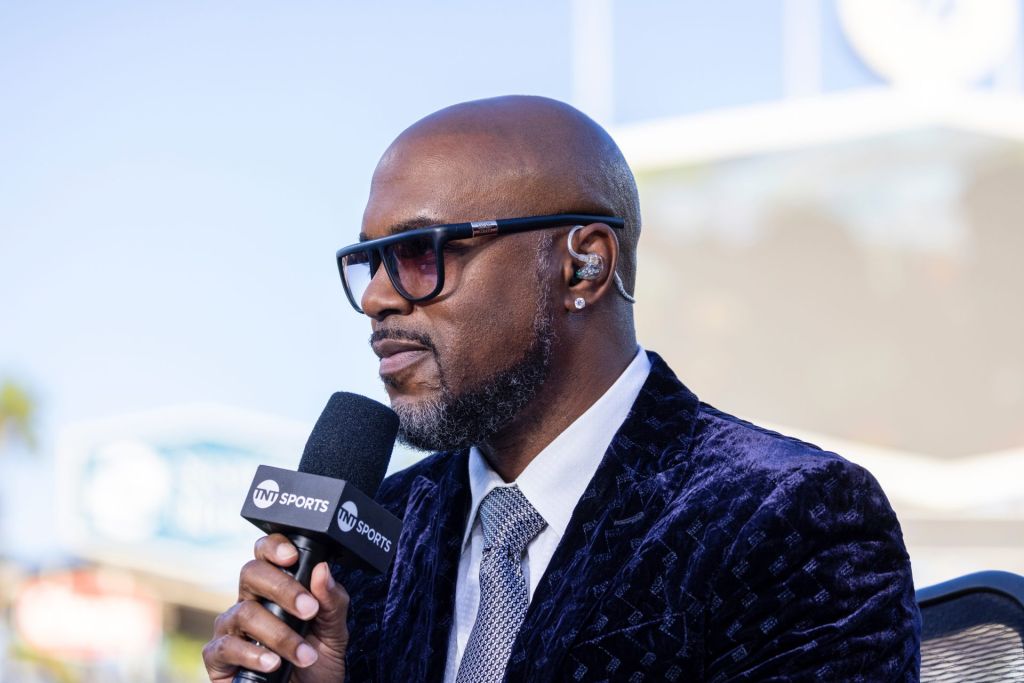
Jimmy Rollins is part of TBS’s MLB studio coverage for the ALDS and ALCS. He spoke to Front Office Sports about the White Sox’ “secret sauce,” team chemistry being undervalued amid the proliferation of analytics, what moves the Phillies should make, his favorite Pedro Martinez story, and his work in the Commissioner’s Ambassador Program.
Front Office Sports: Tell me about the White Sox magic. What’s their secret sauce?
Jimmy Rollins: I wish I was in a clubhouse to give you a full secret sauce, but I’m not. But I was golfing today with Ryan [Howard], and we talked about that a little bit how they reminded us of where we were in, I would say, about 2006.
We were ahead of schedule accordingly, meaning Pat Gillick, who was GM at the time, projected three years until he thought that we’d be good enough to get to the playoffs. But in the clubhouse, we felt completely differently. We looked at each other and kind of had the attitude of, “Why not us? Why can’t we? I don’t care what they say, but why can’t we? We have enough. We’re good enough. We’re hungry enough.”
And there comes a point where you’re just tired of going home, and then you really like each other. I see the camaraderie. We got to interview [Miguel] Vargas yesterday, and the way they were giving him a hard time—he’s going around excited about talking to Pedro Martinez, Curtis Granderson, and me—and his teammates are jabbing him like, “Well, why are they talking to you?”
Those types of things in the biggest moments of their lives; they haven’t been here before, but in the biggest moments of their lives, you can see that they’re enjoying it, that nothing has changed from Game 48 to the second game of the American League Division Series. They are who they are. They understand that.
And it’s almost like they have a sense of “We have nothing to lose and everything to gain.” And with that, there’s a lack of the anxiety and tension that comes with being a playoff team that’s expected to win. It’s like, “Hey, guys, we’re here, we’re having fun. And let’s see how far we can ride it.”
There is a belief that they can really win it, and when you have that going on, it makes for what we’re seeing now. It’s a loose clubhouse, a team that, right in my eyes, is America’s team right now—just a joyous team, a joy to watch, and a break from the teams that have that intensity that they have to win because their payroll demands it.
FOS: So much of baseball now is analytics, and I’m not dismissing the math and spreadsheets out of hand, but I was going to ask you: Do you think that chemistry and the idea of players in a clubhouse really liking each other and the game has become undervalued in assembling MLB rosters?
JR: 100%. In my opinion, that is the biggest key to how fast your team can be successful. You can do all the numbers, place them there, and on a piece of paper or via computer say, “This is the best team if we could get this guy, this guy, that guy, etc.” And then they get in the clubhouse and they don’t get along. There’s no camaraderie. They don’t even like being around each other.
They enjoy playing baseball, but I don’t enjoy playing for you.
You have successes … but there’s no real passion of, “Man, you helped us win today.” And after the game, [there’s not] “Let’s go out and grab some dinner or get some drinks or go out” or whatever they may do. When you have guys that can do that, win or loss, say, “Let’s go talk it out. Let’s go have some dinner. Let’s put this one behind us.”
When we go to the field, we’re going to talk about what happened last night and have a laugh about it. Every good team has that: that no one is off limits. It doesn’t matter if you’re the highest-paid player or the guy that’s been up for two weeks. Everybody’s open game, and so that feels like you’re in that foxhole together.
It doesn’t matter, good or bad, you know I have your back. And when there’s no way to quantify that with the algorithm or their numbers, it’s no longer as important because baseball people are no longer running organizations, or at least not in a way that they should be. Baseball people get kicked out.
We [baseball people] can look, we can feel, and we can talk to them [the analytics experts], but they’ll say, “Well, it doesn’t make sense, and where’d you go to college?” That’s the truth. “Where’d you go to college? I went to the college of MLB. Where’d you go?” They have no experience of what it’s like to be on the field when a guy’s present, when a guy’s having success, when a guy can’t get out of his own way, or if he’s going a little too far, when he could reel him back in. They don’t know how to do that.
You know what? They don’t care because in their minds and in their hearts, and I’ve had this discussion, if they were allowed to write a lineup, their team would go 162–0. But doesn’t every team have an analytics department? So that’s impossible. But in their mind, they’re perfect.
FOS: The Yankees don’t seem to have that joy and camaraderie that we’re talking about with the White Sox. Do you sense that that’s missing from them?
JR: So they’re interesting, and I think they have camaraderie. I don’t think they have the joy. And a lot of it comes from the White Sox not expected to win, while the Yankees expected to win every single year. And that’s impossible, but that’s the expectation that’s put on them. So when you have the pressure of the city, the organization, if we don’t win a World Series, it’s a failure,
It’s hard to have joy unless you’re actually doing that.
We see moments of it, pockets of it, but there’s a lot of pressure to play in New York, on the East Coast in general, but in New York with the expectation of “If we don’t win a World Series, we had a failed year.” Well, only one team can win every year, and I guarantee you it’s not [always] going to be the Yankees, but that’s the expectation.
So because of that, I don’t think they lack camaraderie. I think they enjoy playing with each other, but [not] the joy of actually going to play baseball up against the expectation of “If you don’t win the World Series, you stink.”
FOS: What’s your funniest or craziest Pedro Martinez story?
JR: Well, as a teammate, when he first came over and he signed with us on the Phillies in the ‘09 season, we know he’s on his way in, but we don’t know when he’s getting to the clubhouse. He finally gets to the clubhouse. And I see some black shoes in the clubhouse. And at this time, you had to have 51% of the team’s base color, which for us was red.
And I know who they are, and I’m like, “Oh, no, you got to get those match colors out of the clubhouse.” And Pedro has no idea that this is happening. So I go to [clubhouse operator] Sean Bowers. I’m like, “Bro, do we have any red shoes that we can get Pedro?”
He’s like, “Yes. But his shoes are custom-made for the way his foot uses the mound and he drags his toe.”
Pitchers have shoe glue on the front to keep their shoes from just ripping a hole at them when they drag their foot. So I’m like, “Okay, well, go get us some paint.” So Sean goes and finds some red spray paint, and by the time Pedro goes and does everything he needs to do, like saying hello to everyone, and goes out and runs some sprints, I take the pleasure in painting his black shoes red. So when he gets back, his black shoes are red, and now it’s his welcome-to-the-Phillies moment.
It goes back to, as I said earlier, it doesn’t matter who you are. Everybody is the same here. You can get it just as much as the next person, and I think that endeared him to us as an organization, who we were as a team. I think that made him feel welcome, just because if you know Pedro, he’s a clown. I mean, he loves to joke and clown around, and that let him know that he was in the right spot.
FOS: What improvements do you think the Phillies have to make from here to make it deeper in the postseason?
JR: We’ll start with the most obvious, and they have to find bullpen help. I like Duran closing, and then I like three of our starters—with Hill and Nola we just don’t know what’s gonna happen—but the top three, Sanchez, Luzardo, and Wheeler, I really like those; they’ll keep you in any game.
But when they come out [of] the game, there’s no guarantee—and not that there’s a guarantee in sports—but there’s really no guarantee where it’s like, “Okay, we can count on this guy outside of Duran.”
Outside of him, there’s nobody you can say we can count on. So bridging that gap and losing so many games in the seventh and eighth innings becomes tough. It’s a mountain that after a while, it gets hard to climb up.
Second, is their offense. I’ve never liked the construction of the offense, but that’s the way that everybody’s going with this analytical-style offense. I think somewhere between what they have and, I guess, a more traditional-style offense would work. They need to get some right-handed pop in that lineup. They’re left-handed heavy outside of Schwarber and Harper.
Where do we go for power? We need guys who can put the ball and play and not strike out so much, and we definitely need to step up our defense, although it was better as compared to what it’s been in the past.
And then just basic baseball: learning how to run the bases. Take the extra base, knowing when to go, knowing when to stop. So there’s a lot of things that need to happen, but they’re easy fixes. The hardest is finding the right-handed bat and the correct bullpen pieces because you’re probably going to have to go out and buy that. But the other things are easy to correct.
FOS: What has been the best part about leading the Commissioner’s Ambassador Program [to try to grow the game] with your former teammate, Ryan Howard?
JR: I’ll put it this way: It’s like having an all-star team, but you don’t have to play against each other. You just get to enjoy each other’s company. That’s probably the best part. Just being around, sharing stories, sharing experiences.
For example, going to Japan all together for the CAP program when the Dodgers opened up against the Padres. Absolutely amazing. Fortunately, everything’s paid for, so they take care of the travel, they take care of the hotel.
Then they set us up at doing different events, going around, experiencing the city, shaking hands, doing activations, and then going out to dinner and hanging out afterwards and sharing stories and who did what today and then talk about battles that you had amongst each other.
And it’s like the clubhouse—no one’s off limits, especially now that we’re all retired.
We spent our whole career battling that other side, and we get to take the uniform off and just see both sides, and it’s actually cool what’s over here. We get to know the business of baseball. We kind of get a glimpse of what [that side] wants to be done in baseball.
Although we have no say, we’re kind of aware of moves that need to be done that we can stand in that gap for. Players that want to get back into the game. You can go through teams, you can try to reach out to somebody that may have a connection, or you can come to the Commissioner Ambassador Program, which we have ties to both sides because we have players that still have connections with organizations.
If you want to get on the administrative side or with the Office of the Commissioner, this is an easy way in. Come in; it’s a two-year program for the most part. And if there’s something you want to do, we can have you shadow, interview, hang out, and try to get along. So, to see guys stay connected with the game was one of the main purposes because in baseball, you have your career and people disappear.
It’s almost like ESPN’s old “Where are they now” [features]. We could find out. There’s a network of people that know people. If there’s an event going on, who do we know in this area? That’s a former big leaguer that may want to help out and participate.
At the World Series, we get to hang out with all the cool people and ourselves, celebrities, entertainers, and really just extend the life of baseball to not just being on the field.
And as I said, in the beginning, it was tough. When people saw who we were and what we were doing, the players that were signing up to be a part of the Commissioner’s Ambassadors Program, I think they understood the mission that it wasn’t to take anyone’s side. We’re always players first, but yet there is still room for us on this side to be active in the game without necessarily having to solely be on the team level.
Download the FOS App
The business of sports, in your pocket.



Scan the QR code to get the app now.