Wednesday, September 9, 2026
  • -
    days
  • -
    hours
  • -
    minutes
  • -
    seconds

How College Athlete Buyouts Could Work in the Revenue-Sharing Era

The proposed buyouts may harm both players who sign those contracts and the schools they transfer to.

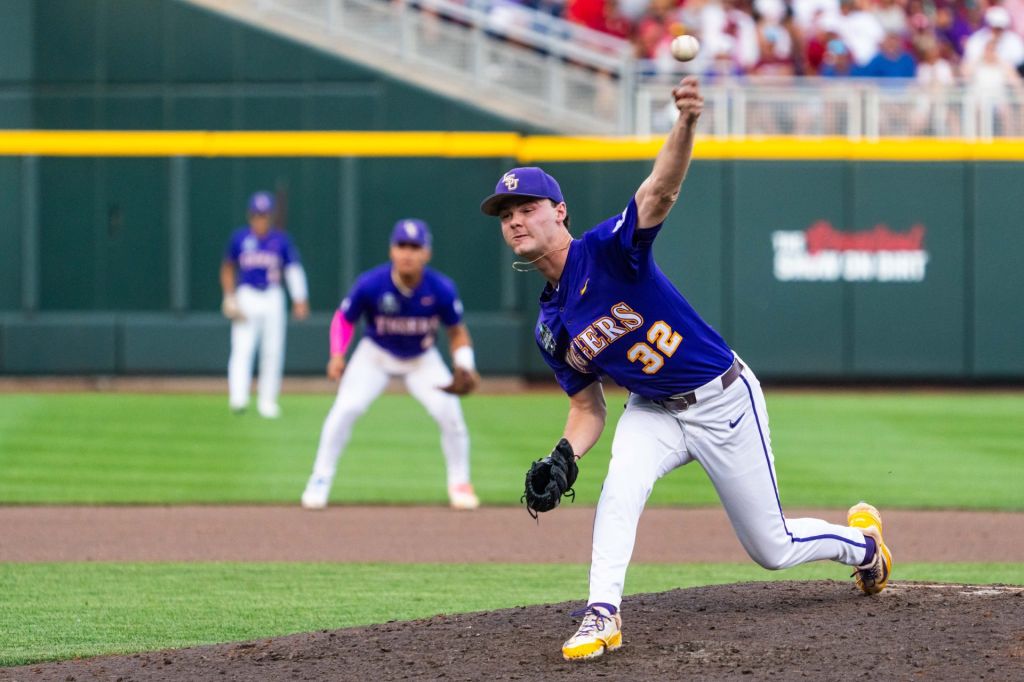
Jun 14, 2025; Omaha, Neb, USA; LSU Tigers starting pitcher Kade Anderson (32) pitches against the Arkansas Razorbacks during the seventh inning at Charles Schwab Field.
Dylan Widger-Imagn Images

The revenue-sharing era is officially set to commence on July 1, after federal judge Claudia Wilken approved the landmark House v. NCAA settlement allowing schools to pay players for the first time in college sports history.

Contracts may include a concept familiar both among college coaches and in the pros, according to an FAQ released by the NCAA and power conferences last Friday: player buyouts.

The 36-page document suggests schools can include buyout clauses in revenue-sharing agreements with players as a contingency in case a player decides to enter the transfer portal. In the scenario presented, players could potentially lose out on a portion of their earnings. The school they transfer to would be responsible for paying a buyout, which would count toward their revenue-sharing cap. (The buyouts, as with revenue-sharing agreements, would be overseen and enforced by an entity created by the power conferences called the College Sports Commission.)

Buyout clauses have become increasingly common in NIL (name, image, and likeness) collective contracts, Front Office Sports previously reported, though they usually require players to repay some of the money they’ve already received if they decide to transfer. But it’s unclear how many schools might include this buyout structure in their revenue-sharing contracts at this point. 

The FAQ provided an example of how a revenue-sharing buyout clause could work with a player who gets a one-year contract for $100,000, as well as a $100,000 buyout clause. The player would receive $50,000 at the beginning of the school year, and then $50,000 at the end of the academic year if they stay. If they decide to transfer, however, they would lose the second payout. Their new school would then pay the $100,000 buyout to their old school; and the money would count toward the $20.5 million cap on revenue-sharing.

These types of buyouts could be seen as a positive for some schools if they disincentivize athletes from transferring, especially for non-power conference programs who fear losing successful athletes to the transfer portal and the promise of bigger earnings at richer schools. 

But if the transfer market really does suffer, players could challenge these buyouts in court. Multiple attorneys pointed out on X that a previous NFL rule requiring teams to pay each other for acquiring free agents made it extremely rare for NFL players to switch teams—creating a restriction that was eventually found to be illegal.  

“Athletes could initiate litigation and claim that the anticompetitive language will considerably chill the transfer market by obligating the new institution to pay the buyout and have it count against their cap on revenue-sharing on an annual basis,” sports attorney Darren Heitner tells FOS.

Regardless of their legality, the buyouts may be considered a bad deal for players in general. “No player should sign this,” one industry expert tells FOS. “Did they or did they not earn the remaining $50,000 for usage of NIL during their season? … That amount is not earned during the offseason.”

This field is for validation purposes and should be left unchanged.

Sign up for
The Memo Newsletter

Get the biggest stories and best analysis on the business of sports delivered to your inbox twice every weekday and twice on weekends.

This site is protected by reCAPTCHA and the Google Privacy Policy and Terms of Service apply.
Linkedin
Whatsapp
Copy Link
Link Copied
Link Copied

What to Read

Feb 8, 2026; Santa Clara, CA, USA;General view down the line of scrimmage as New England Patriots center Garrett Bradbury (65) prepares to snap the ball against the Seattle Seahawks during Super Bowl LX at Levi's Stadium. Mandatory Credit: Mark J. Rebilas-Imagn Images
First at FOS

NBC Sports Ditches Blended Ratings for Nielsen’s NFL Standard

The network will report its NFL audiences like other league rights holders.

Late-Night Shelton-Alcaraz Thriller Raises Questions for US Open

Alcaraz and Shelton’s match ended at 3:34 a.m. ET.

LSU Will Not Roster Former NFL Players Wright, Harris

It’s unclear if de-escalation will be enough to end the litigation altogether.

MAC Asks NCAA, CFP to Overturn Western Michigan Loss

The conference had previously implied that it accepted the game’s outcome.
podcast thumbnail mobile
Front Office Sports Today

9/9/26 – SEC Seeks Right to Expel LSU, MAC Appeals WMU Loss, LIV Golf Files for Bankruptcy

0:00

Featured Today

Is Carolyn Tisch Blodgett the Future Face of Giants Ownership?

Amid changes at top of Giants ownership, eyes are on Tisch Blodgett.
September 4, 2026

Wild Transfer Window Shows How Premier League Towers Over Soccer

Spending in England vastly outstripped the rest of Europe.
September 3, 2026

Teams Are Spending Millions to Build Luxury Locker Rooms

It’s a recruiting pitch, a retention tool, and a seven-figure line item.
September 1, 2026

High School Football Sidelines Are Clogged With Content Creators

Administrators call these amateur newcomers the “pajama paparazzi.”
Aug 3, 2026; Washington, D.C., USA; Alexandra Eala (PHI) kisses the championship trophy during the trophy ceremony after her match against Jessica Pegula (USA) (not pictured) in the women's singles final of the 2026 Mubadala DC Open at Rock Creek Park Tennis Center. Mandatory Credit: Geoff Burke-Imagn Images
August 30, 2026

How Alex Eala Turned the Philippines Into a Tennis Nation

A December homecoming match could break tennis’s attendance record.
Sep 5, 2026; Baton Rouge, Louisiana, USA; LSU Tigers head coach Lane Kiffin reacts to a touchdown by quarterback Sam Leavitt (not pictured) against Clemson Tigers during the first half at Tiger Stadium. Mandatory Credit: Stephen Lew-Imagn Images
Opinion

Lane Kiffin’s Villain Act Has Made Him College Football’s Biggest Story

Kiffin’s first season at LSU has already been eventful in multiple ways.
September 7, 2026

Big 12 Withdraws Lawsuit Against Texas Tech As New Season Begins

Brendan Sorsby left the school shortly after the lawsuit was filed.
September 8, 2026

SEC Seeks Legal Right to Expel LSU

The conference is pressing on with its battle with Lane Kiffin.
Sponsored

Drew Weatherford’s Bet on the Youth Sports Economy

Drew Weatherford discusses investing across the youth, college and professional levels.
September 7, 2026

FCS Schools Got Paid $1M For FBS Upsets in Week 1

Three Group of 6 (non-power conference) teams were victims on Saturday.
September 7, 2026

Belichick, UNC Avoid Investigation Questions With Program In Flux

The Tar Heels had a bye week after upsetting TCU in Week 0.
September 6, 2026

WMU Refuses to Blame Refs, Big Ten for Last-Second Loss

“Don’t feel sorry for us,” said head coach Lance Taylor.
Sep 5, 2026; Baton Rouge, Louisiana, USA; LSU Tigers head coach Lane Kiffin reacts to a play against Clemson Tigers during the first half at Tiger Stadium
September 6, 2026

LSU’s Kiffin Era Begins With Blowout Win Amid Legal Battle

LSU notched a decisive first win amid its brief legal detente.