Want more from Front Office Sports
in your search results?
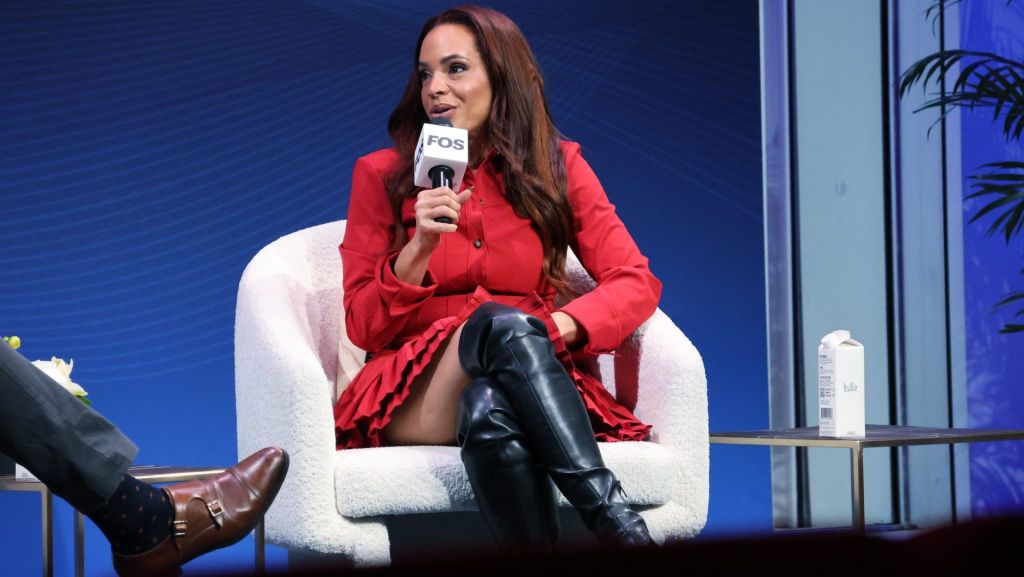
Elle Duncan will anchor Netflix’s studio coverage of Packers-Rams for the NFL’s first Thanksgiving Eve telecast on Wednesday night.
She spoke to Front Office Sports about the attractive suite of games the league gave the streaming platform, listening to feedback to improve broadcasts, working with new analysts Clay Matthews and Nick Foles, and what her life transition has been like in working far fewer TV dates after leaving ESPN.
This interview has been lightly edited for brevity and clarity.
Front Office Sports: Netflix has gotten a really attractive package of NFL games. Packers-Rams on Wednesday, the 49ers-Rams game, the Christmas doubleheader. What does that say about how the league feels about the platform?
Elle Duncan: I think it’s an imperfect science. Let’s be honest. There’s some networks right now that thought when the season started they were getting really good games [in various windows], but then the season dictates whether they end up being good.
But I think upfront, we knew that these games would be really good because they’d have impact. What we hope the NFL’s telling us is that they not only trust us in these really big moments, but I think more than anything giving us these sort of marquee events—things that have never been done before—is a way of signaling that our partnership with the league is strong. [Thanksgiving Eve] is a new tentpole moment for the league and this partnership with a global streaming network is also a new thing for them.
We are so excited that the games have impact—especially the one we’re doing this week.
FOS: Netflix’s coverage for MLB Opening Night was panned in some places, but then the reviews were much better for 49ers-Rams in terms of presenting it as a traditional sports broadcast. What type of work, energy, and effort went into adapting to the criticism and presenting more traditionally?
ED: Listen: We are building this plane as we fly. We’ve been really clear about that. We also receive member feedback. We want our members to be happy.
Legacy media, and even Amazon Prime, have the chance to present games every week. When you do something consistently, you’re able to apply that feedback instantly. We had to wait three months after Opening Day to apply some of that feedback to the Home Run Derby, which I think was widely regarded. It ended up being an incredible Derby, mostly because the players were amazing and the competition was great, but I think we [rose to the occasion].
Yes, we’re Netflix, and there’s a flywheel, and there’s going to be a certain aura that Netflix brings to any event. But I do think there is real intentionality in looking at each individual event, on its own, and saying, “Let’s respect what this event means.” For example, Field of Dreams, let’s respect the spectacle and nostalgia of it, and lean in. This was different than Opening Day, which was a little bit more celebratory, fun, and funky.
Yes, we had Bert Kreischer, and WWE stars, and so I think for us it’s really about what the event deserves and calls for. For Rams-Niners, we really leaned into the “Australia” of it all—the atmosphere, and the appetite for the NFL all the way on the other side of the world. We’re listening, we’re applying feedback, especially when it’s tangible. But, we’re gonna be Netflix. That’s what happened. It’s just listening, and having another crack at these events.
FOS: There have been some changes at the top of Netflix with Peter Rice coming in. Has that changed your workflow at all?
ED: Not at all. I had an opportunity to meet Peter a couple years ago when we were both at Disney, but I haven’t had the chance to interface with him yet. I imagine he has some bigger fish to fry! But it’s been all business as usual for me.
FOS: What has it been like to work with people like Clay Matthews and Nick Foles, who had Super Bowl championship careers but are really just getting started as broadcasters?
ED: They’re the best teammates. I mean that genuinely because they’re so eager. They over-prepped in a way that gave me so many heartfelt feelings for them. They were preparing as though they were going to be on the field calling the plays themselves.
They have taken the same approach in their pro careers as they have to being broadcasters. They recognize that they’re new to this, and they’re somewhat green, and I’m so proud of the effort. I’m so proud of them doing something untraditional for their first run as broadcasters, being on the other side of the world, and they just went all in.
I think the sort of deep sigh of relief after everything was done in Australia … and I was just reminding them that they’ve forgotten more about football than most people will ever know. Lean on your experience, be anecdotal … I’m so excited to finally get another crack at working with them again because it’s been a couple months.
FOS: As you look forward to the Women’s World Cup, what are you most excited about?
ED: Brazil, first of all. It seems so crazy to me that a country so synonymous with soccer—football—and is really a fabric of their DNA, hasn’t had a [Women’s] World Cup. That idea. The storylines are amazing, especially when you look at the U.S. team.
As much noise as the men’s team made this year, I think it’s because there’s no expectation of them. They shocked the world with how well they played. It’s the total opposite for the women’s team. They have all the expectation in the world. There’s a ton of parity worldwide—England, Spain—but the thing about the women’s game, and I try to apply this to the WNBA as well, is sharing stories.
The more you fall in love with these women and learn their journeys to Brazil, the more you continue to be fans and tune in. And that’s all we want is continued growth.
FOS: In your career transition, you were working about 250 dates a year for ESPN between SportsCenter and College GameDay. Now with Netflix and WNBA on USA Network, it’s about 40–50. What has that been like for your day-to-day life? Do you have so much time that you don’t know what to do with it, or is it unbelievable to have all these gaps to basically do whatever you want?
ED: I’ve been busier than I anticipated I’d be. Yes, on the surface I only do about 50 dates a year on TV, but in this industry there is a full other part of this industry that has nothing to do with being on-air—that’s being an ambassador for the company, I’m an ambassador for some brands, I do speaking engagements, and I do a lot of charity work.
The cool thing has been—at ESPN it was these really long stretches of a lot of work, and then maybe you’d have a small stretch where you could sort of chill and just do four or five days a week on SportsCenter.
The difference is, I’m really, really busy for small stretches, and then I’ll have a couple of weeks. Since the WNBA Finals, I’ve been home for two-and-a-half weeks. That’s been great! I’ve hosted four different charity events. I think I’m getting better at organizing my time—the idea that I have the time to pick up a hobby or something is laughable, but I’m not sort of surviving and advancing every day anymore, and that’s been game-changing.