Want more from Front Office Sports
in your search results?
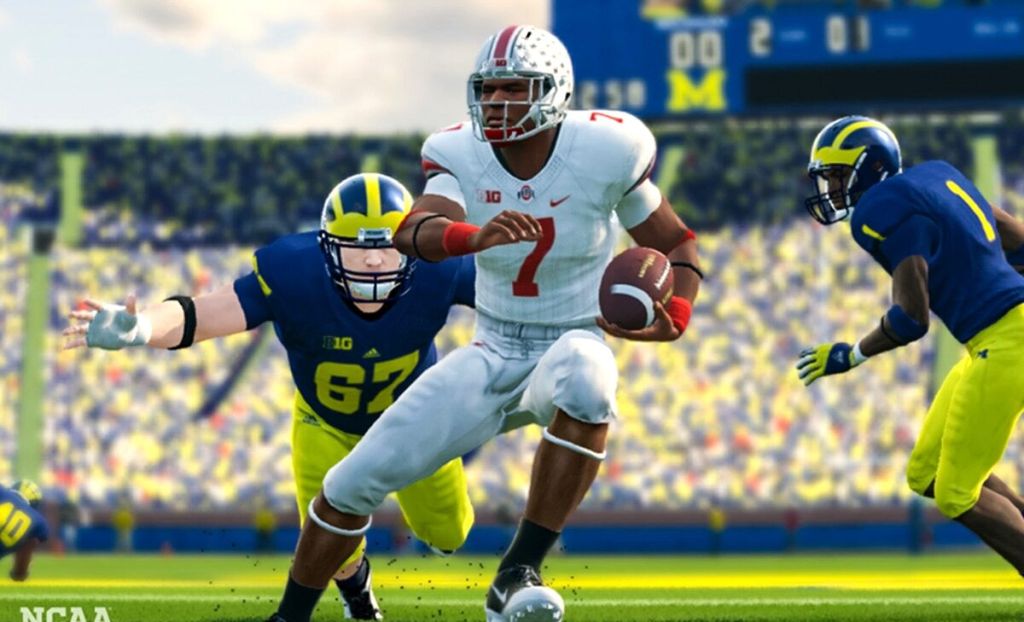
EA Sports’ college video game franchises are far more than cult classics.
A decade ago, its college basketball game was the conduit through which advocates sued for one of the most pivotal athlete compensation reforms in NCAA history: name, image, and likeness rights.
Now, the 2024 iteration of EA Sports College Football — which will include athletes and pay them for the use of their NILs — has become embroiled in controversy. Over the past two weeks, EA has been criticized over athlete payments and been served a bonafide lawsuit over who gets to negotiate on athletes’ behalf.
Once again, a video game is at the center of athlete compensation reforms. It could help answer two of the NCAA’s biggest questions: How much do athletes deserve to be paid? And who gets to represent them?
In the end, EA Sports could be the vehicle by which athletes obtain not only NIL rights, but also better representation. The controversy itself is being driven, as usual, by conflicting business interests that claim to represent athletes but are jockeying for their cut of the profits.
“This is a defining issue for how we think about the future of college sports, and how we think about the future of college football,” Jason Stahl, executive director of college athlete advocacy group the College Football Players Association, told Front Office Sports.
EA Sports declined to comment on this story.
How It All Began
EA Sports’ NCAA football and basketball games first entered the market in 1998 and quickly developed a huge following. EA, which had struck a licensing deal with the NCAA, released annual editions featuring real-life players.
The problem: The players weren’t paid.
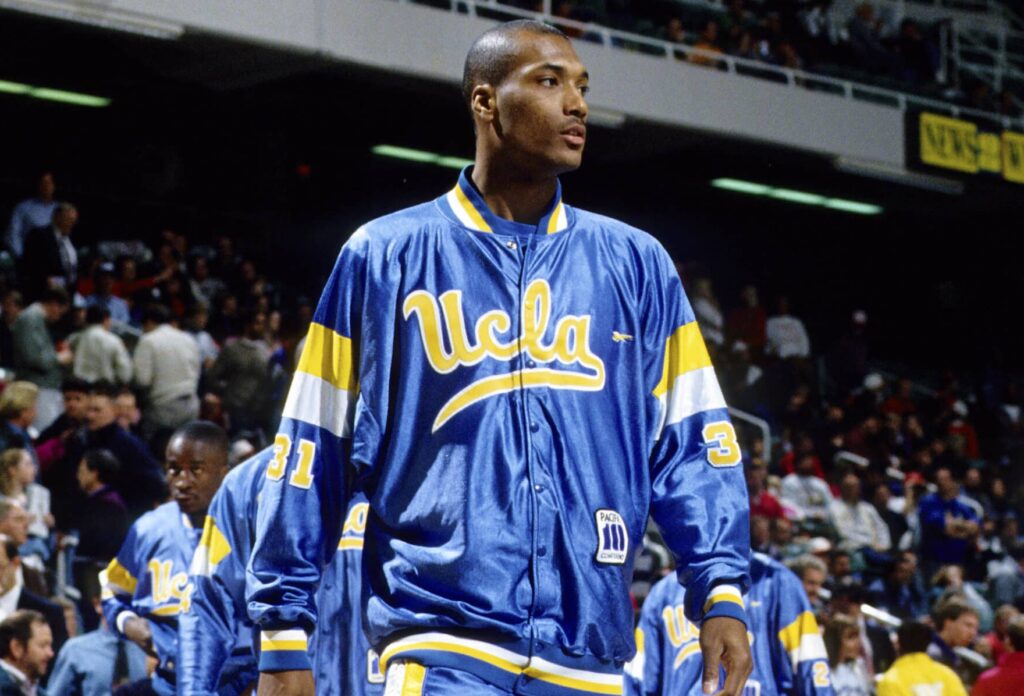
In 2009, former UCLA basketball player Ed O’Bannon — with the help of athlete advocates behind multiple lawsuits — decided to sue the NCAA and EA for refusing to compensate him for the use of his NIL. (One of those advocates, National College Players Association executive director Ramogi Huma, did not respond to an FOS interview request for this story.)
The case’s 2013 decision ruled it was illegal for EA to produce a game using players without compensating them. But the NCAA still refused to amend its NIL rules and “withdrew its support” for the games, EA said in a 2013 press release.
“We have been stuck in the middle of a dispute between the NCAA and student-athletes who seek compensation for playing college football,” GM of EA Sports American Football Cam Weber said at the time. “This is as profoundly disappointing to the people who make this game as I expect it will be for the millions who enjoy playing it each year.”
When the NCAA announced in 2020 that it would amend its rules to allow for NIL, fans immediately wondered whether EA Sports’ NCAA basketball and football games would come back.
In February 2021, EA Sports confirmed the return of a college football game. The brand would work with Collegiate Licensing Company, an arm of college sports marketing firm Learfield, to include the intellectual property of schools.
All they needed to do was offer NIL deals for players.
‘Fair’ Market Value
For players who may not make the pros, EA Sports College Football offers the opportunity to make lifelong earnings through royalties. As long as the game is sold, they’ll get paid.
Based on current reports, however, the players are getting shafted.
The official opt-in period hasn’t begun yet. When it does, EA will reportedly offer a one-time payment of about $500 per player and no royalties, according to On3 — despite the fact that the entire video game industry pays royalties. The schools, though, will receive up to 10% of revenue. The deal was facilitated by a third-party group licensing company called OneTeam Partners.
For a previous story, an EA sports representative noted to FOS that the reports were simply “speculation,” but declined to confirm or deny the reported terms.
Supporters of the deal — and Twitter pundits — have asked how anyone could know the industry standard for a game that hasn’t existed for a decade and for players who have never previously been compensated.
The answer lies not in the amount of money athletes are making, but the structure of the deal, according to its opponents. Every video game involving players sends out royalty payments — that’s where the money is. Whether it be Madden or NBA 2K, players can expect five figures every time they get a check.
Stahl and the CFBPA were the first to criticize the deal. Ultimately, Stahl wants to create a Power 5 football player’s union that can negotiate for themselves — and believes players need to recognize their collective power.
“You will continue to have people speaking for you and being relegated to the kiddie table,” he told FOS in a previous story. “That will continue to happen until you act as a collective.”
Then, other NIL agencies began to come out against the deal.
OneTeam’s top competitor, The Brandr Group, raised public “concerns.” CEO Wesley Haynes called it “a fraction of maybe what fair market value would be.” A prominent college football agency, Athlete Advantage, followed a week later.
This isn’t the first time a OneTeam Partners group licensing deal has been criticized: In 2022, agents and lawyers trashed a deal for Fanatics jerseys. But OneTeam told FOS in a statement that it remains “fully confident in our approach to get athletes in the game.”
The statement ended: “OneTeam works on behalf of tens of thousands of athletes across professional and collegiate sports, and we will always sit clearly on their side.”
Who Gets Control?
It’s no surprise that athletes got an unfair deal.
Unlike professionals, college athletes don’t have a formal union — so there’s no one to negotiate group licensing deals on their behalf. The situation has created a vacuum multiple companies have tried to fill. They negotiate “on behalf of players” by creating deals athletes can opt into.
OneTeam Partners is one of the companies that previously expressed to FOS that unions were completely unnecessary for group licensing deals. The Brandr Group is similar (once part of OneTeam Partners, it severed its relationship for an undisclosed reason). It signs deals with schools to negotiate group licensing deals on behalf of them and their athletes, 54 of which will be in the game.
The Brandr Group wanted to negotiate the EA Sports College Football deal — but now that EA has chosen OneTeam, it has decided to sue.
On Tuesday, the group filed a federal lawsuit against EA (for which OneTeam could be added as a defendant) alleging that EA ignored its right to negotiate the deal on behalf of athletes at these 54 schools.
Court documents first obtained by FOS allege EA and The Brandr Group had an informal agreement to work together on the deal, but after two years of conversations, EA chose to cut The Brandr Group out altogether and work with OneTeam Partners instead.
“Our primary concern is advocating for student-athletes, ensuring they have a voice and are justly represented in all matters pertaining to the use of their NIL,” The Brandr Group said. “We believe that student-athletes are not receiving fair market value for their NIL rights and that the contractual rights asked for may limit other NIL gaming opportunities. We have no further comment at this time.”
It was at this point that Athlete Advantage also came out against the terms of the deal, telling On3 that they supported The Brandr Group in its “fight” for fair compensation.
But despite what the statements suggest, the lawsuit isn’t about fair compensation at all — it’s about who has jurisdiction to negotiate a deal on behalf of players. And it’s likely going to poke holes in everyone’s argument over who has the power to “represent the athletes’ interests.”
The Brandr Group’s contracts with schools may not be valid in the first place, one expert industry source told FOS. Since schools are not athletes’ employers, they don’t have the right to choose athletes’ representation without their permission. “Who are the schools to tell the athletes who their exclusive partner is?” the source said. “The school doesn’t control the players’ NIL.”
And given the criticism of how OneTeam Partners has handled multiple group licensing deals, athletes could be wary of them in the future.
Perhaps athletes can only trust themselves to negotiate a fair deal.
“It’s not just about a video game,” Stahl said. “It’s about how we view human beings. Do we view them as individuals who have dignity and self-worth and family and friends? It’s very clear to me, particularly in this industry, that a lot of people don’t view college football players in the way I just said.”
Download the FOS App
The business of sports, in your pocket.



Scan the QR code to get the app now.