
Why World Wide Wob Walked Away From NBA Twitter
Want more from Front Office Sports
in your search results?
Driven by founders’ visions and ambitions, innovative, aimed at disrupting a status quo and reliant on capital investments and market adoption: these are the core characteristics of tech startups. They’re also the DNA of new leagues rapidly entering the global sports space.
The statistics for start-up success are sobering: About 90% fail. Yet even though new leagues resemble tech start-ups—and some have already folded—investors are bullish they can beat the poor odds, especially right now.
They believe these new leagues have characteristics that enable them to survive what most start-ups can’t. Instead of entering as new products in saturated markets and jostling to break through, many of these leagues are beginning with low to no competition. Plus, they believe that once they can hook fans, they will spend, just like they do with other established sports.
The economics for success, they tell Front Office Sports, are there. Many of these new sports leagues may be niche, and the failure rate is still daunting—yet money is pouring in and confidence is high.
“We’ve been leaning in to the philosophy that a good business is a good business,” says Harley Miller, CEO and managing partner of Left Lane Capital, a New York–based venture capital firm managing $2 billion in assets. “We are really intrigued when we look at the P&L of companies and assets like the UFC, which command 50% or 60% EBITDA [earnings before interest, taxes, depreciation, and amortization] margins, where the economics accrue disproportionately to the league level. That’s a really good and impressive company. And we’re looking at businesses that can mimic that economic setup in structure.”
In January, Left Lane announced a $15 million investment into Olympic snowboarder Shaun White’s Snow League, the first dedicated professional snowboarding league, set to debut in March in Aspen, Colo. Will Ventures, Ares Management Funds, David Blitzer’s Bolt Ventures, and Ryan Sports Ventures also participated in this funding round.
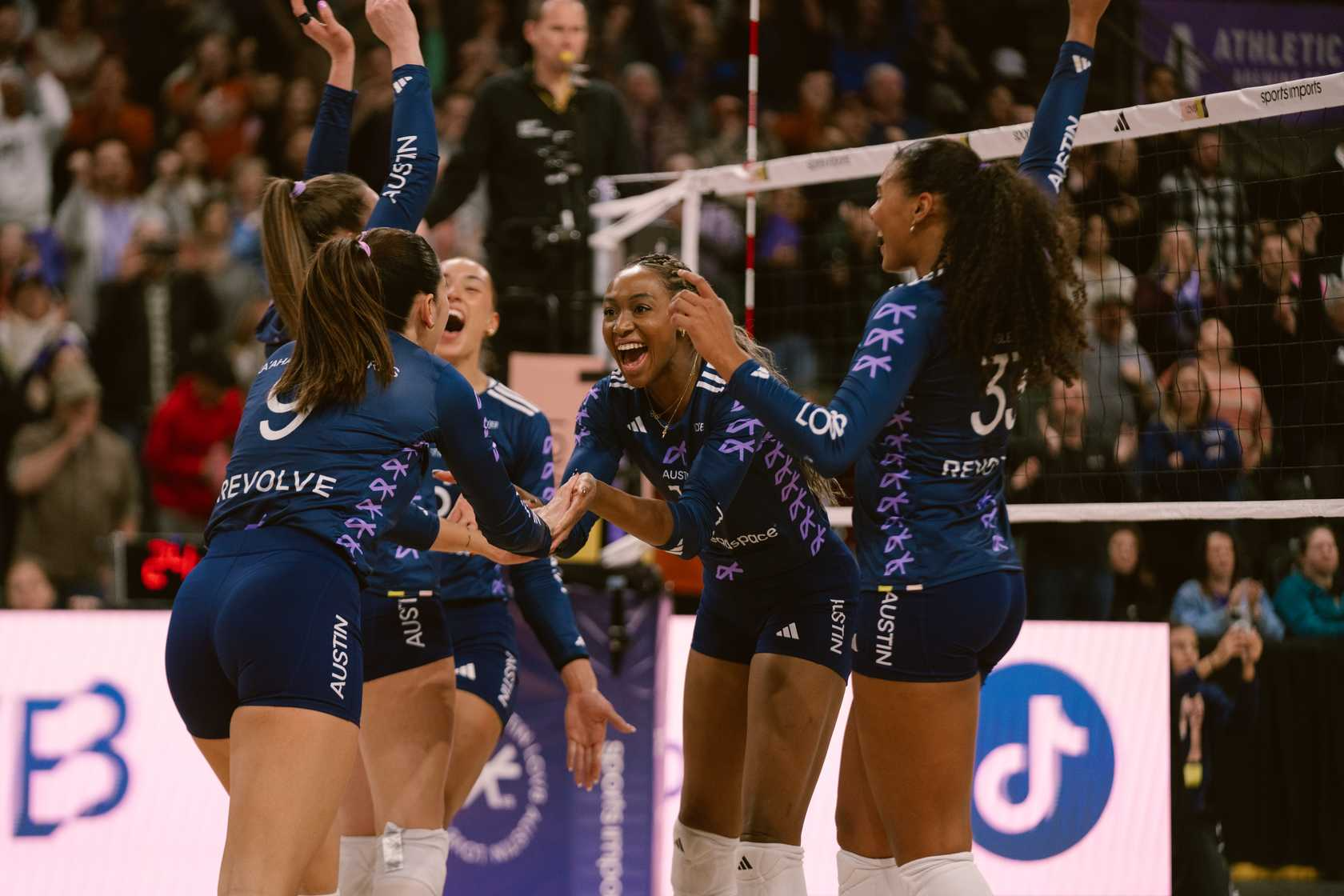
Many of Left Lane’s investments have flowed into sports where the competitive landscape is open. The firm led the Series B funding round for League One Volleyball (LOVB) in 2023, contributing significantly to the $35 million raised. It also participated in the league’s $100 million funding round, led by Atwater Capital and joined by Ares Management. The league kicked off in Austin in January, and has broadcast deals with ESPN and ESPN+.

There’s currently no other similarly formatted volleyball league to divide fans’ attention. Without an existing dominant league to disrupt, LOVB pro league showcases the best talent in the sport, including 17 Olympians from the Paris Games and former NCAA stars. They believe the hunger for the league is there to generate revenue: As the second-most popular sport for female participation in the U.S., volleyball has an established following. At the college level, the 2023 NCAA final between Nebraska and Omaha set a record for a women’s sporting event, drawing 92,003 fans in Lincoln, Neb.
“Investments in start-up sports leagues has historically been a very high-risk investment,” Jon Patricof, the cofounder and CEO of Athletes Unlimited (AU) told FOS. “I think that investors are responding very well to these innovative approaches.”
AU is one of the first companies to attempt to disrupt the women’s sports landscape in the U.S. Founded in 2020 by Patricof and Jonathan Soros, it is a network of four professional women’s sports leagues—softball, lacrosse, indoor volleyball, and basketball—with plans to launch an additional softball league in 2025.
The company raised $30 million in 2022 and has since secured a multiyear broadcast deal with ESPN and partnerships with top-tier brands like Nike, Gatorade, GEICO, and EY. “Sports have never been more culturally relevant, and with limited assets available, their value keeps growing,” says Patricof. “As media fragments, live sports have become even more important.”
Unlike most start-ups that need to begin from scratch enticing and retaining users, sports tap into an existing cultural phenomenon—a community of customers who are already used to shelling out dollars as a part of their fandom. Simply, if they can hook people, investors believe they can keep them and get them to spend.
Beyond volleyball, Left Lane led a €60 million ($62 million) investment in Spanish soccer star Gerard Piqué’s Kings League—a new, seven-a-side soccer competition—and backed Freestyle Chess with a $12 million investment for chess master Magnus Carlsen and entrepreneur Jan Henric Buettner.
Kings League, Miller says, stood out as an attractive investment because it managed to avoid the infamous “J curve” of losing money in the early years that many emerging leagues endure while acquiring new fans.

“It’s not designed to replace traditional football [soccer] but to complement it, especially for a younger audience,” he says. The same goes for Freestyle Chess. With its unconventional style of play and format, the new league aims to attract and engage with young chess fans.
“[Gen Z fans] are drawn to the drama, the lifestyle, the rivalries, and the personalities that make the story so compelling,” Freestyle Chess COO Thomas Harsch tells FOS. “Drive to Survive did an exceptional job of bringing those elements to the masses, and we aim to do the same with chess.”
Many of the investors in niche upstart leagues also have expectations calibrated. Instead of chasing the massive ambitions of many tech companies whose only goals are acquisition or IPO, most of the leagues are simply pursuing profitability that’s right-sized to their market.
Still, history suggests that survival is far from guaranteed. Not every upstart sports league is destined to become the next UFC—and most won’t, especially when competing against well-established, highly popular sports.
Spring football is a prime example. Professional American football leagues, which have tried to capture attention during the NFL’s offseason, have consistently struggled to gain traction. Challenges such as limited fan interest, difficulty attracting top-tier talent, and direct competition with the NFL have resulted in low viewership and repeated failures. UFL is finding footing in its second year with a more measured expansion strategy—but its success is still anyone’s guess.
As for pickleball, the game took suburban America by storm during the COVID-19 pandemic. But as a professional sport, sources that spoke to FOS on the condition of anonymity say the league is on uneven financial footing. Less than a year after the $75 million merger of Major League Pickleball and the PPA Tour—backed by sports icons including Tom Brady, as well as investors such as Anheuser-Busch and Tom Dundon, who poured money into the United Pickleball Association (UPA)—former pro player Jillian Braverman said the UPA needed a $10 million bridge loan by Jan. 15 to stay solvent.
Samin Odhwani, chief strategy officer of UPA, refutes Braverman’s viral post. He tells FOS she framed its financial situation incorrectly, noting that the league received the “bridge loan” in December 2024. “By the time she had tweeted, it was already funded,” he says. Odhwani also reinforces the league is in good standing, telling FOS it had $50 million in revenue in 2024, and projects revenue of $65 million in 2025. He says they operated at a loss in 2024 and will also have a full-year loss in 2025, but he expects the fourth quarter of 2025 to be profitable.
“It’s always risky to assume sports are fundamentally different from other industries,” says Ahmad Nassar, CEO of Winners Alliance and lead investor in Grand Slam Track, the new professional track and field league funded by the Olympic champion sprinter Michael Johnson. But Nassar believes they can be. For his part, he thinks a sport as popular as track and field can beat the odds, especially with star Johnson in the mix as well as other Olympians. Set to debut in April, the league has already secured more than $30 million in funding, positioning itself as a strong contender in the evolving sports landscape.
“Not every start-up is destined to become the next Google or Nvidia, just as not every league will rival the NFL or UFC,” Nassar explains. “But think about this: 50 years ago, if you had the chance to own not one, but ten NFL teams, who wouldn’t have seized that opportunity? That’s the kind of foresight fueling today’s investment in sports.”
Editor’s note: This story has was updated with additional comments from the United Pickleball Association.
Download the FOS App
The business of sports, in your pocket.



Scan the QR code to get the app now.