Want more from Front Office Sports
in your search results?
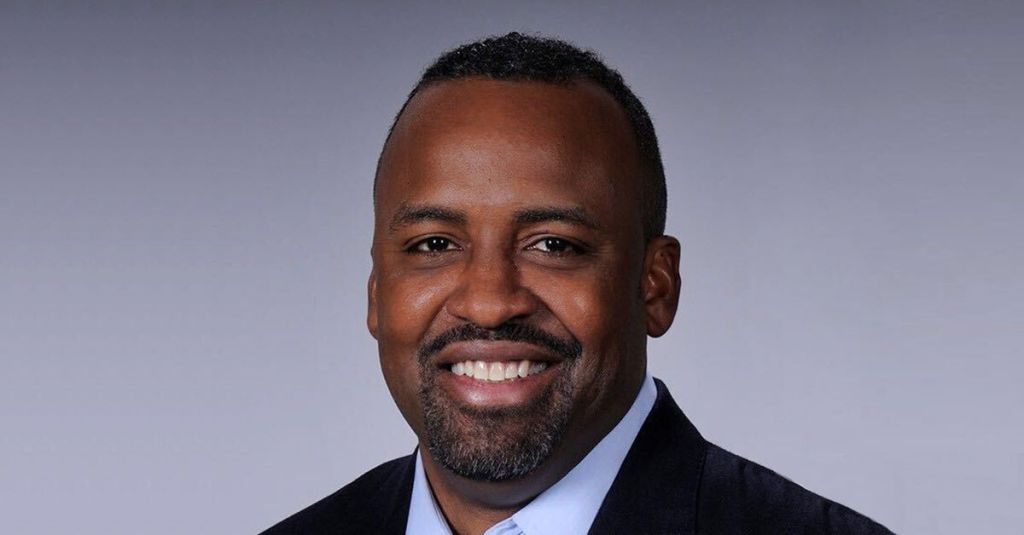
The NFL has hired Jonathan Beane as senior vice president and chief diversity and inclusion officer. The new hire comes after an offseason of the league taking steps to enhance diversity while also embracing calls for social and racial justice — something it previously shied away from.
Beane, who has previously held senior diversity roles at companies like 21st Century Fox and Time Warner and is on the board of directors at GLAAD, will begin his duties on Sept. 8. He will report to Dasha Smith, executive vice president and chief administrative officer at the NFL.
Beane is the first person to be hired by the NFL to fill the senior vice president and chief diversity and inclusion officer position. His noteworthy appointment comes alongside two at the team level — the Washington Football Team hired Julie Donaldson and Jason Wright to become the first woman to have a full-time role in an NFL team’s game-day radio booth and the first Black team president, respectively.
Front Office Sports spoke with Beane about his longtime affinity for football, how D&I in corporate America compares to the sports world, and what he wants to change in the NFL’s D&I efforts.
Front Office Sports: How did this opportunity with the NFL come about?
Jonathan Beane: I’ve been in this space for quite a while, and it’s really an area of passion. My foundation is in law and strategy, but I moved into this space because I just love it. I’ve been engaging with the NFL for over a year now about different opportunities. I had a conversation with Maryann Turcke, who is the chief operating officer of the NFL and a huge advocate of diversity and is very focused just on building a pipeline and looking for diverse talent throughout and outside of the organization.
[Note: Turcke recently moved to a new role as executive advisor to Commissioner Roger Goodell.]
I had already been talking to her about opportunities over a year ago, and then it just morphed into further discussions. A big part as well is when [NFL EVP and CAO] Dasha Smith was hired. Someone that I actually knew for quite a number of years; that also provided the opportunity to have further discussions as well.
FOS: Talking for a year while still working at Fox, what drew you to joining the league?
JB: First and foremost, I have been a huge fan since the age of four. This is a sport that I absolutely love. It’s a sport that I’ve played ever since I was a little kid. I also played college at Dartmouth, and so it is personally something that I love.
The other part was the opportunity to work with some really talented people at an iconic organization. If you actually look at the NFL, it’s not only the sport, but if you actually look at the leadership team, there’s been an incredible amount of success, especially during [Commissioner] Roger Goodell’s tenure. You want to talk about being a part of a winning organization? The NFL is certainly at the top of the list, so that opportunity was absolutely fantastic.
I alluded to it on the previous question as well: the opportunity to work with Dasha, somebody that I’ve known for 13 years and I have a great deal of respect for. The opportunity to work with her and to drive this work throughout the league was something really special to me.
Also, on more of a macro level, you’re talking about a sport that is the most popular sport in the United States and, in many regards, the challenges that the league is having are also the challenges that our society is having. They’re difficult and complex issues, and to be a part of the solution of that and the evolution of that and the development and progression of that is really, really exciting to me.

FOS: Many D&I experts have commented on sports just now starting to catch up to what corporate America has been able to do on this front. How do you observe the sports industry’s relationship with D&I and what lessons can you take from your past experiences and apply them to the NFL?
JB: I’m not 100% in agreement of the statement that corporations are far ahead of sports leagues. If you look at things like diverse slate, the Rooney Rule — that started at the NFL, it didn’t start at other companies. So in some regards, historically, a lot of this work originated out of places, outside of corporations, like sports teams.
The work that’s been done over the last five or 10 years in corporations — and the progressive way that they drove this work — was an effort where people would simply talk about race, ethnicity, and gender. Now we’re talking about sexual orientation, gender identity, disability, one’s experiences. The division of diversity has expanded greatly so, in that regard, I do believe that corporations have been doing some things that maybe the league hasn’t. But, I would say a lot of the initial work came out of sports teams.
Now there’s still obviously a lot of work that needs to be done, but the work that needs to be done in the league, it’s very similar to the work that needs to be done in corporations. I’ve worked in several different corporations and where are the challenges? There’s a lack of diversity at the board of directors. There’s a lack of diversity in the senior leadership team. There’s not a strong pipeline of talent. They’re working to get there, but the culture is not where they want it to be.
These are the same issues that we’re going to be dealing with at the NFL. We’re going to be dealing with that at the league office. We’re going to be dealing with that at the front office, with the clubs. We’re going to be dealing with that as we engage with players and all other stakeholders of the organization.
FOS: Before we get into the Rooney Rule, you enter into a league where there’s only four head coaches of color and two Black general managers. From where you sit, how can you and the NFL’s D&I leadership help improve team hiring practices?
JB: One, we have to do a better job of providing opportunities and access, and opportunity to diverse populations in general, especially women and people of color. That is in all areas that I said: the league, front office, clubs, and also on the field. That clearly needs to happen for us to do that.
The other thing too is we have to make sure that we understand where we are as a league. So what I mean by that is we’re in the process of collecting data. We have data for all 32 clubs. We have data for the league office. We have data for every critical area of our business, of our organization so we can now drill down and see where we’re doing well and where we’re not.
Right now, each club is putting together their own diversity action plan. The league is putting together its own plan. There’s accountability behind this, and there’s also a benchmark now.
We’re looking at where people are, and when a club is doing something really well or where the executive is doing something really well, we figure out what that is. We share that with the rest of the organization to ensure that other people can adopt that, so the idea is data, accountability, and putting together plans.
FOS: I believe there were five NFL head-coaching vacancies this offseason, and only one of them went to a non-white coach [Ron Rivera of the Washington Football Team]. What room for improvement do you see with the Rooney Rule and how teams are using it for their hiring practices?
JB: The Rooney Rule, when it was put into play in 2003, was really an innovative practice, which is now utilized by obviously the league and other sports teams — in addition to corporations and nonprofit as well. I really liked the fact that the league has really been looking at that very carefully — in addition to the anti-tampering rules that we have as well — to find ways for us to do a better job of ensuring that there is the access and opportunity to diverse talent, which we have plenty of, to have those opportunities for those roles.
With the recent changes that have occurred, especially in regards to head coaches, which you had mentioned, is the fact that now when we have a diverse slate, you have to interview at least two people of color and or women for those roles. I think it’s absolutely critical because the research actually shows that when you are doing diverse slates like that, and if you have at least two diverse candidates, the chances of having a hire that is diverse goes up exponentially.
I think that that is absolutely wonderful, and now we are also doing diverse slates for all other senior roles at the league, the club and also on the field. Offensive coordinator, defensive coordinator — all of those positions as well require a diverse slate, but with that, it’s at least one diverse candidate.
We just need to continually push ourselves, be innovative and continue on that broad process of ensuring that we are finding the best talent and that we are giving everybody a fair chance to get those roles. We believe that if the policies we have are followed, if the practices we have are followed, we’ll get the results that we want.
We also know: this is a marathon, it’s not a sprint, but we are looking for results.
FOS: With Jason Wright being appointed as the first Black team president with Washington, and with Julie Donaldson and her role in Washington, what impact do you think those hires have had with opening the door for more minority communities to hold leadership positions in the NFL?
JB: What gives me the most joy is they happen to be diverse candidates that got the position, but they were also the most qualified. It goes to the point that the pipeline that’s out there is very diverse. There’s lots of great people out there, and not only are they very good at what they do, but obviously in many cases, they’re the best at what they do. It’s an acknowledgement that the league is absolutely committed to this and to ensuring that the hiring process is as inclusive, fair, and equitable as possible.

FOS: When you join the NFL in September, what do you want to accomplish in your first year? How do you expect those goals and expectations to serve as a foundation for larger-scale changes further down the line?
JB: Right away, my big goals are enhanced culture. I think we’re moving in a great direction. I think the league is really in a good place in terms of the direction that we’re moving in. So continue to enhance the culture, provide an inclusive and welcoming environment for our employees and incredible experience for our fans, even in these difficult times.
From a diversity standpoint, I want to really focus on the pipeline at all levels, in all areas of the organization, on and off the field. Yes, we can talk about the frustration of not having the diversity that I think everybody is looking for in our organization, but also we have to make sure that we are finding that talent, that we are developing that talent and we are giving them the opportunity to compete. Finding that pipeline for all levels of the organization is critical as well.
Another thing that’s really, really important is: When people talk about diversity, they talk about people, of course, which is important. They talk about a culture, which is important as well, but there’s other aspects of diversity as well.
One is outreach. We have a lot of work that we’re going to do on the social justice front that we will be launching soon that we’re really, really excited about and will show our fanbase our commitment.
The other aspect is really making sure that we’re looking at the business side of things from a diversity perspective as well. What do I mean by that? Look at our vendors. Look at our marketing. How are we looking at our content and ensuring that we have a diverse lens when it comes to all of that, because there’s plenty of opportunity. Diversity touches everything and we will be looking at that and looking to really ameliorate all aspects of our organization and really have a diverse lens as we do this work.
Download the FOS App
The business of sports, in your pocket.



Scan the QR code to get the app now.