Want more from Front Office Sports
in your search results?
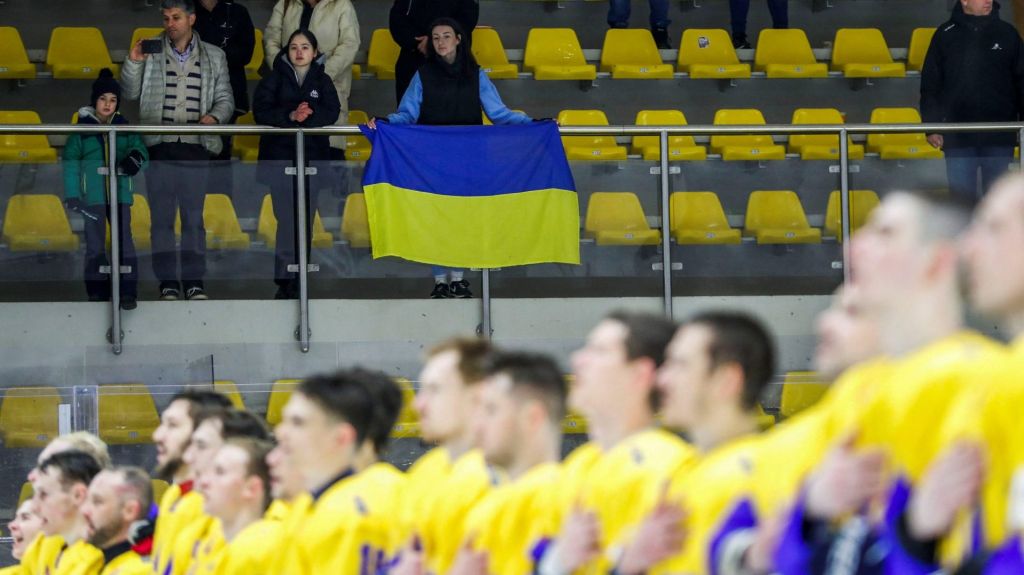
In October, the Court of Arbitration for Sport (CAS) ruled that Russia must be allowed back into international ice hockey competition after more than four years of exclusion by the International Ice Hockey Federation (IIHF) due to the country’s full-scale invasion of Ukraine in February 2022.
That decision has sparked a sprawling international battle over Russia’s participation in the sport. Canada has barred Russia’s U20 team from entering the country ahead of December’s men’s World Junior Championship, and Russia’s status for the senior men’s World Championship in Germany in May remains uncertain.
Front Office Sports spoke with Yuriy Kyrychenko, sports director of the Ice Hockey Federation of Ukraine. Kyrychenko criticized the IIHF, saying that while hockey’s global governing body publicly denounced the CAS ruling, it quietly took steps to reinstate Russia. He also commented on USA Hockey’s public silence, which he speculates might be due to pressure from the federal government.
This interview has been edited for length and clarity.
Front Office Sports: Were you surprised by the CAS decision?
Yuriy Kyrychenko: We were shocked, not just surprised, but shocked with the decision. For everybody it was a big surprise, including Russia, because I know they expected CAS to make some kind of decision, but for next season, not this season. We were shocked. Of course, we made a great amount of calls to our international partners, to the international federation, to other federations who support us.
FOS: CAS said that the IIHF didn’t have enough evidence to justify excluding Russia. What evidence do you think they failed to consider?
YK: The problem is the reason for excluding Russia from the competition is the security of players and supporters, not because of the war. This is the main strange thing in the decision of the IIHF, because it does not include the word “war.” So, Russia does not need to prove that the war is over and the situation is normal. They need to prove that it’s O.K. for their players to participate. This is the main problem.
FOS: What have your conversations with other federations and the IIHF been like?
YK: We talked to a lot of federations. We know the position of most of the top countries in ice hockey. That’s why we expected the situation which we have in the junior competition in Canada. From one side, it’s a decision of Canada’s government [to deny Russian players visas]. From the other side, it’s a decision of participating countries. We are on the same side.
The IIHF, from one side they made a good statement on paper, but in the results they made a lot of steps to bring Russian teams back. They informed Norway not to participate in the U20 World Championships. Everything was very strange because, for example, they sent information that they put Russia back in junior competitions, and put Norway to [second-tier] Division I on Saturday. And on Sunday, they sent another letter without any signature that said, let’s have a Zoom call to discuss the new schedule of the competition with new teams and a new format on Monday. It looks like the IIHF tried to make everything very silent and very clear, so as not to have so much time for other countries to prepare and to discuss it.
FOS: From the IIHF’s perspective, they would say, “Well, we just have to comply with the CAS ruling.” What would you have liked them to do?
YK: We know that there is a very good reason to exclude Russia again, and we are starting to push this process. Russia put Ukrainian teams, Ukrainian hockey schools in occupied territories in their competition, which of course is against the International Ice Hockey Federation rules. They tried to organize some competitions in occupied territories, they tried to put them in the Russian hockey system. It’s a strict reason to get them out of the competitions first of all, and then to check their status as a member of the IIHF. So nowadays, it’s our main goal to prove that and to receive a new reason for the ban.
FOS: Have you been in touch with the U.S. hockey federation, and what do you think their position is at this point?
YK: Officially, U.S. hockey does not say anything about it, but in some private conversations with us, they showed support for democratic countries. It’s the only top country which has said nothing about the situation. And the United States in April 2027 has the U18 World Junior competition scheduled, and they have said nothing about participation of Russians. Will they open the door to Russians or not?
They support us only during conversations, but we feel that somebody is pushing them a little bit. And you can see it in other federations and other sports in the U.S., that they’re not so against Russia in sports.
FOS: Do you think that’s because of President Trump?
YK: I think it could be because of Trump. Russian players still play in the NHL, and in some top junior competitions in the U.S. and Canada. But that’s players, not teams. And when they had the Four Nations a couple years ago, they did not invite Russia to that competition, only Finland and Sweden. So, that’s why I think that, mentally, they support Ukraine, but they might do this officially because of the position of the government of the country.
FOS: Several countries have said they won’t play Russia in a major tournament, but they also haven’t said they would boycott the entire tournament. Do you think it’s enough to refuse to play Russia?
YK: I hope that it’s just a first step for them. Canada’s steps were good, the Czech Republic, which hosts the U18 women’s tournament in January, had a good explanation. So I think it’s a good start. It could be like an avalanche.
But we also want to have strict rules that Russia is officially banned, not because of the position of a country, not because nobody wants to play against them, but because of rules. We understand that Russia will go to CAS after the end of the World Junior Championship, and there’s a lot of time until the end of the season and a lot of competitions during the season which they will try to be involved in.
FOS: In May, Ukraine is in the men’s World Championship for the first time since 2007. Some people have speculated that Russia could even take Ukraine’s place because you were the last team to qualify for the top division. Has the IIHF told you anything about that possibility?
YK: After the CAS decision and after they tried to take Norway out of the junior top division, I asked IIHF sport director Kim Pedersen and the IIHF’s main lawyer, Ashley Ehlert, if they want to do the same with us in May, and they just kept silent. So I know the answer to my question. Of course, the scenario could be the same, and we understand that if they participate in one of the championships, they will try to do the same in the top division in May. From my information in Russia, they also understand the very specific situation. They want not just to go to the World Championship, but to go in place of Ukraine.
Our dream is to make a new decision of a Russian ban and to avoid any problems for the future for us. Not because we’re participating, but because it’s right. As Dominik Hašek said, if the Russian national team plays in international competition, it means that everything is O.K. in the world, there are no problems, no war. And also, of course, we dreamed for 20 years to participate in the top division, we struggled for it, and we won our position on the ice rink, not somewhere in an office or on paper.
FOS: Germany is hosting that tournament. Have you heard anything from the German federation about whether it would allow Russian players into the country?
YK: The German government doesn’t want to see Russian players in the competition because they really understand the security problems. A lot of Ukrainians live in Germany now because of the war. And could you imagine what would happen if 1,000 Russian fans see on the street or somewhere around the ice rink 1,000 Ukrainian fans? It’s a big security challenge for everybody, and they would like to avoid such security issues. The German Federation has shown us their support and said they will do everything to avoid a Russian team in the championship.
A couple months ago, Franz Reindl—at that time he was an IIHF council member and now he is the new elected president of the IIHF— told me they will do everything to not put a Russian team in the World Championship in Germany. But a lot of Russians, they supported Franz Reindl during his elections.
[Reindl]’s personal position was, “We do not support the decision of CAS. We will think about what to do, but nothing concrete.” And for real steps, we only saw them trying to bring Russia back. I don’t want to say that Franz Reindl is a pro-Russia president, but some stories and some steps of the IIHF make me think about it.
FOS: How has the war affected Ukrainian hockey at every level, especially in the occupied territories?
YK: It’s been very influential. Before the start of the war, we had 27 ice hockey rinks in Ukraine and we also had a government program to build 20 new ice rinks in different regions. We opened the first ice rink of that program a couple months before the start of the war. We had very big plans for it, and also we talked about big arenas in Kyiv and Lviv, which would be a part of a future bid for the Winter Olympics in 2034.
Now we have a lot of occupied ice rinks, destroyed ice rinks, and only 11 are functioning now. We lost four teams that played in the occupied territories. We lost nine ice hockey schools. In each, there were between 200 and 400 kids, and more than 1,000 Ukrainian kids moved abroad, some of them to play abroad. Now we have a very good generation of ice hockey players, and we have very good results on the international level, better than years ago.
We should have been in the top division of the U18, U20 level a couple years ago, but we lost a lot of players, a lot of infrastructure, a lot of clubs. The war’s influence on ice hockey has been huge. We are still playing games, and we have a lot of interruptions. We have a lot of alarms, and we need to stop the game and go to the shelter. Some games take not two hours as usual, but six hours, eight hours. Some games we need to play tomorrow or months later. It’s not possible to compete in some regions because they are too close to a war zone. It’s very difficult to imagine.
FOS: Under what conditions do you think Russia should be allowed back?
YK: The end of the war is the main thing for sure. The second one is some kind of contribution, first of all to the Ukrainian side, and second of all to the international side. Because, for example, the IIHF also lost a lot of money because of the non-participation of Team Russia, because of sponsorship contracts.
The battle is not over. It’s just the start of this ice hockey war. Now the IIHF also understands that they need to think about their decision. And this battle will have influence on other sports. We realize that if they win here in ice hockey, they will do the same in other sports, and they will participate in the Olympics, in all international competitions without any problems, because they will have a good example in a big sport, one of the biggest in the world.
It’s a very tough situation, and they are trying to do everything to win. They are really serious, and we also are really serious. It’s just the first battle.
FOS reached out to the IIHF, USA Hockey, and the White House, none of which immediately responded to a request for comment.
Download the FOS App
The business of sports, in your pocket.



Scan the QR code to get the app now.