Want more from Front Office Sports
in your search results?
Mike Tirico is sounding the alarm about what is going to happen with teams in the bottom end of the Power Four college football and basketball conferences when donors start to wonder whether their returns are worthwhile.
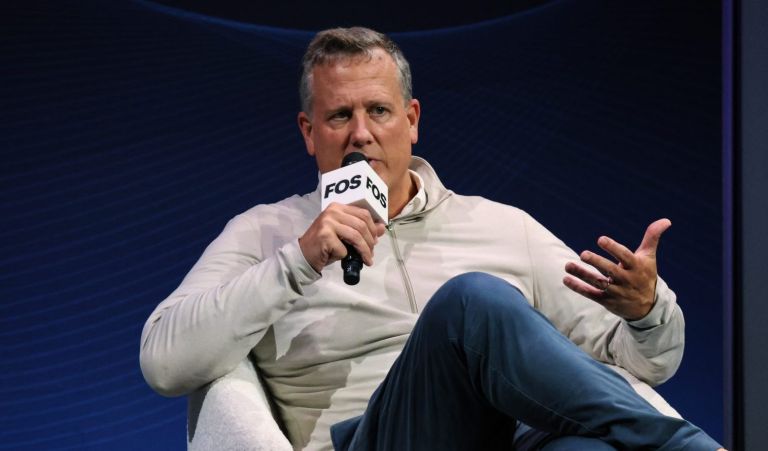
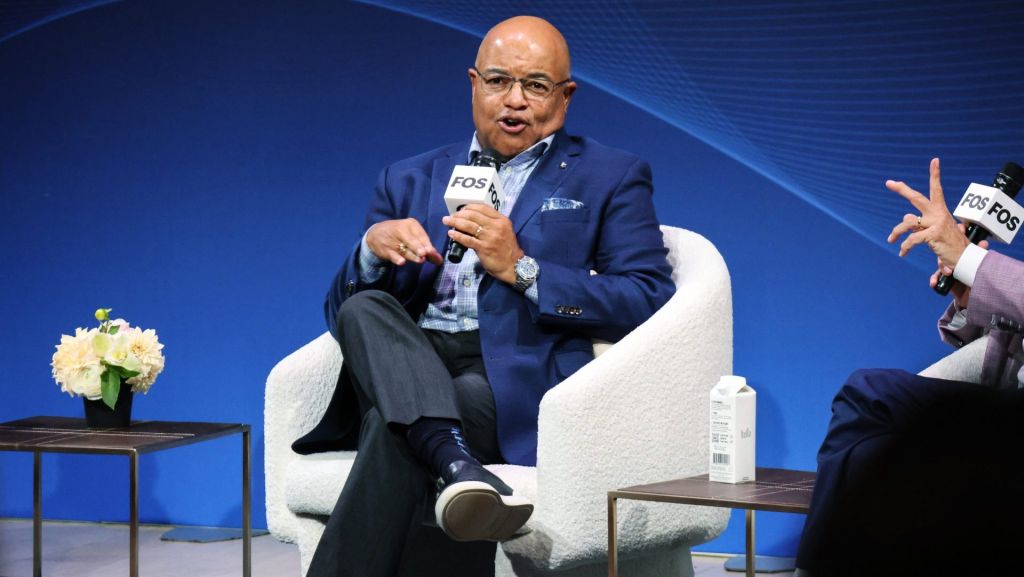
Tirico—NBC’s lead voice for the NFL, NBA, and the Olympics—appeared at Front Office Sports’s Tuned In summit in Manhattan on Tuesday, and was asked about the idea of donors subsidizing the rosters of football and basketball teams.
“A lot of donors have to pay to continue where college athletics is. I don’t begrudge the players making money—they should be making money—but you have to understand the higher scope of higher education, right now, is it’s challenged,” Tirico said.
Tirico pointed to the looming “enrollment decline” as demographics have shifted and there are going to be fewer 18-year-olds entering the college ecosystem in the next decade-plus.
“Colleges in general are having a harder time. There’s a trickle-down to college athletics,” Tirico said. “College athletics is obviously making money with the TV rights and boosters and all that, but let’s say you’re in a 20-team league and you’re going to finish, probably, 15-20th, like Purdue in football … Do you keep writing a check for $6-7-8 million as a donor to continue supporting a team that has a ceiling of finishing 14th or 15th?”
“So it’s challenged. I don’t think the current system is sustainable for 80-100 schools in the four or five big conferences,” Tirico continued. “Something’s gonna have to happen.”
Tirico referenced the Protect College Sports Act, supported by President Donald Trump and passed in the Senate, and said that it would provide “guardrails” for college sports. But he added: “We need more than guardrails—we need fulltime solutions, because I don’t think 65-80 schools in these big conferences can sustain this financial [cost] growth in college athletics going forward.”
He warned that college football and basketball support the rest of the “ecosystem” in college athletics and that those economics don’t work if the costs to sustain those two sports keep rising.
Fellow panelist, SiriusXM host Chris “Mad Dog” Russo, has a son, Tim Russo, who is an assistant coach for Northern Arizona’s men’s basketball team. The elder Russo mentioned the challenges that the team faces recruiting players in the current landscape.
“[Tim] loved a kid from Quinnipiac who was in the portal,” Russo said. “He’s 6’8, they needed a rebounder … Hofstra—Hofstra!—offered the kid $50,000. NAU didn’t get him. Perfect example. So I got a kid recruiting a kid, and they don’t have the $50,000 to recruit him to go to Northern Arizona, which is a hard place to recruit anyway, and he goes to Hofstra because the agent wants him to go there because it’s $50,000. That’s a very, very tricky situation for a coach on a lower-level Division I program.”
Russo mentioned that other programs in the Big Sky Conference are better capitalized and it leaves Northern Arizona in a potentially precarious situation this season.
Ultimately, Tirico acknowledged, college sports are becoming “professionalized.”
“They have a market value, and that’s great—that’s what makes America run. All of us feel the same way as we are employed in the industry. In the mission of these colleges and universities, many of which are public institutions. Where does it say that part of the mission is running a professional sports operation?” Tirico asked.
“So the presidents of these universities have to answer this question—should the kid on the field playing field hockey, football, women’s basketball, should that person be a part of our university community and going to classes and getting a degree the same way the students are? Or are we just renting the laundry? … That’s a question the presidents and the boards of these universities have to answer going forward. It’s college football. College basketball. Are the people playing going to college? When you’re transferring four times, in a five-year stretch—you find me a degree track that allows you to take classes in three different schools and apply them to the fourth where you get a degree.”