Want more from Front Office Sports
in your search results?
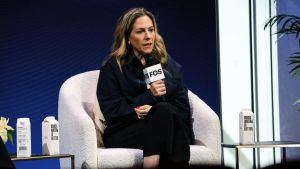
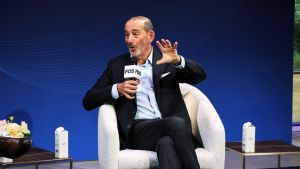
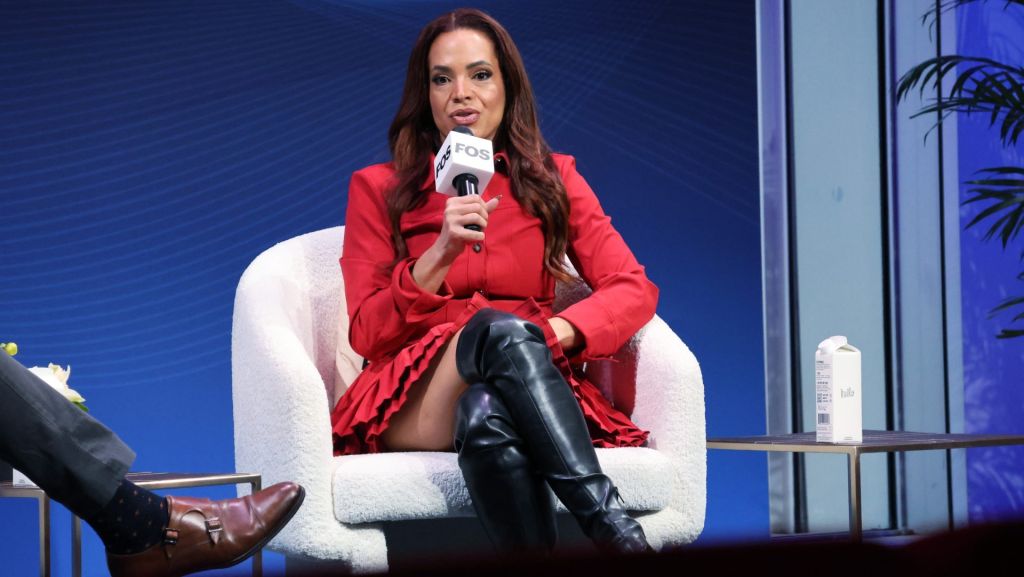
Netflix and USA Sports anchor Elle Duncan believes that the WNBA has become a hotbed for culture wars because the league has a “large faction of” Black and queer players.
“It feels like open season to dunk on Black women because we do not have protection. Because no one cares. Because we are low-hanging fruit,” Duncan told Baker Machado at Front Office Sports’s Tuned In summit on Tuesday. “Because it is very easy to dunk on us since we are, I would say, outside of transgender people, the most marginalized of the marginalized groups.”
Duncan is the lead studio host for USA Network’s WNBA coverage. She also covered the WNBA when she worked at ESPN, prior to leaving the company in December 2025 for Netflix and USA Network.
Duncan called covering the league “toxic as hell,” blaming “opportunists” who want to criticize Black and queer women, while uplifting “one person” who they “see in their own image.” Her sentiment has been a talking point in the WNBA since Caitlin Clark was drafted in 2024 and significantly boosted the league’s popularity, sparking several conversations related to how Clark is discussed in relation to Black and queer players.
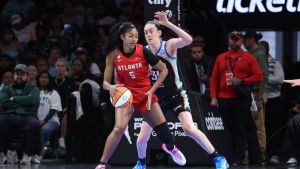
Since Clark joined the WNBA, several Black players have spoken about the racism they’ve received following on-court incidents with the Indiana Fever guard.
Following a playoff series between the Fever and the Connecticut Sun in 2024, former Connecticut Sun guard DiJonai Carrington shared an email she received with a racial slur and sexual assault threats, while her then-teammate Alyssa Thomas called out the Fever fans behind the “racial comments” she’s received. Thomas also said in June that she received “threats against her life” after receiving a one-game suspension for a foul on Clark.
“It’s twofold for them—so you get to lift this one person up, and you get to, ultimately, reduce everybody else that isn’t her to nothing,” Duncan said.
In the 2026 season, Clark’s Indiana Fever teammate Sophie Cunningham has been the primary lightning rod for WNBA culture wars. After saying in a July ESPN article that she wanted to protect “young girls in a locker room, or young girls in sport who shouldn’t have to go against biological men,” she sparked a widespread firestorm—which included the increased presence of advocates against transgender women in women’s sports at WNBA games, as well as former NBA players Enes Kanter Freedom and Royce White publicly declaring for the league’s draft and attending games.
Duncan said that the racism toward Black WNBA players is also directed toward members of the media like herself, and is a representation of what Black women face in society. She said she gets told that she’s a “DEI hire,” a sentiment which she believes minimizes her efforts in her work.
“It’s frustrating to talk about because I know this is going to get clipped. This is going to be me saying goodbye to my mentions for the next couple of days,” Duncan said. “But it’s going to be me lamenting that being a Black woman is so hard, and someone’s going to tweet at me that I work at Netflix and I’m fine and I don’t have any struggles in my life. And it’s just this constant cycle where we’re getting nowhere and no one is listening to anybody.”
While Duncan acknowledges the difficulties of engaging in a “toxic” WNBA social media landscape, she believes that fixing it comes with continued support for the league’s players to “get these bad-faith characters out of here.”
Choosing the next WNBA commissioner
Duncan also called for the WNBA’s next commissioner to help battle divisiveness, while simultaneously being a bridge between players and owners. She believes that current commissioner Cathy Engelbert, who is set to retire after the 2026 season, has not done a good job at the latter.
“The goal of the next commissioner should be twofold. The first thing is figuring out how we work on this divisiveness, how we wrestle the narrative back. The second thing would be connecting the players and owners,” Duncan said. “If there’s criticism of Cathy, it’s been that some commissioners are player-friendly, and some commissioners are very team-friendly, and maybe Cathy is neither.”
Duncan reinforces the point that has been made by several WNBA players. Reigning MVP A’ja Wilson said in July that her only relationship with Engelbert is when the commissioner hands her awards.
While Duncan believes that WNBA team owners would not want a former player as commissioner, she says that she wants someone with “at least a background in basketball” to be in charge of the league next.