Want more from Front Office Sports
in your search results?
The era of “Nopology” apologies is over. The public isn’t buying them any more. In fact, they tend to backfire. Just ask Stephen A. Smith.
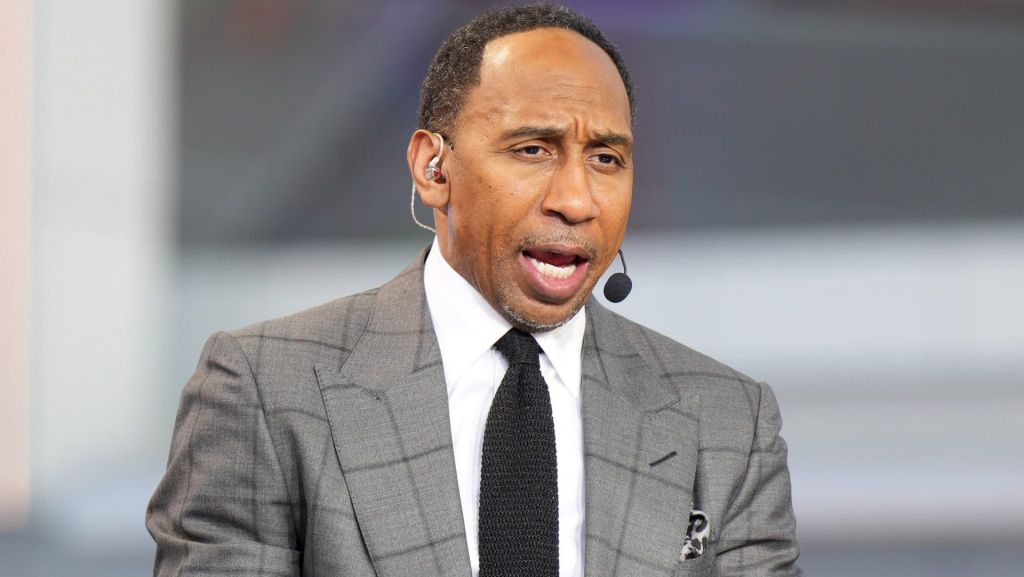
Smith tried to put out a simmering fire over his controversial Lane Johnson comments with a contrite statement on Thursday’s edition of First Take. His humble apology came one day after he made light of the Eagles tackle’s decision to retire only four games into the 2026 season to focus on his mental health.
Smith previously tried to explain those comments away on Wednesday’s episode of First Take and his SiriusXM program that afternoon. Although sincere, those awkward explanations came off as faux-pologies. They only seemed to make things worse. On Thursday, Smith opened First Take by admitting he had messed up.
“Here’s the reality of the situation: I was wrong. When you’re an adult, and you’re a man, you have to admit when you’re wrong,” Smith declared. “I was wrong to Lane Johnson. I was wrong to the Philadelphia Eagles. I messed up. Because I made light of the issue of mental health … It was not my intent. But it wasn’t made clear enough.”
No, ESPN brass didn’t force him to apologize, according to Smith. Instead, he credited friends and colleagues such as Charlamagne tha God, Fox Sports’s Jay Glazer and ESPN’s Michael Wilbon and Kimberley A. Martin for setting him straight. Best of all, he urged anybody with mental health issues to seek help, just as he did nearly a decade ago. He looked and sounded sincere to me. And good for Smith.
There are no ifs, ands, or buts with a true apology. It comes from a repentant heart. It comes when a person clearly admits what they did wrong, expresses remorse and takes full responsibility. There’s no pussyfooting around. There’s no blaming viewers for not understanding the nuances. There’s no attempt to change the subject or, worse, make yourself the real victim. At the end, there’s a promise to change and be better. Smith accomplished all of that on Thursday. He was smart to do so.
For too long, the American public has suffered all manner of non-apology apologies from public figures. They’re usually along the lines of “I’m sorry to anyone who was dumb enough not to understand my genius…”
Think Patriots coach Mike Vrabel’s vague admission to the press he was seeking “counseling” for something he did wrong this offseason, without admitting what that was or taking real responsibility. Or USA TODAY columnist Nancy Armour saying she “did not provide enough context” for her “inartful comparison” between Caitlin Clark fans and “white nationalists” who murdered Emmett Till.
Smith is one of the savviest operators in the sports media business. Given the number of enemies he has in the industry who’d love to knock him off his $20 million a year pedestal, I’m surprised he didn’t realize sooner he’d stepped on a rake.
After his initial comments on Wednesday’s episode, Martin—who was serving as a panelist—tried to steer Smith away from the abyss. But he didn’t take the hint. Yes, Smith said later on the show: “Let me be very, very clear and specific about what I’m saying, I would never make light of mental health issues.” But then Smith seemed to double down by repeating his point was more about the Eagles’ “chaotic” situation than Johnson’s state of mind. “Did I stutter? Are we clear now?” asked Smith.
You don’t joke around about mental health—especially in a sport where a new study found at least one in four former NFL players who died between 2016 and 2021 had the degenerative brain disease known as CTE.
With social media ablaze, Smith tried again on his eponymous SiriusXM afternoon show Wednesday. He spoke movingly of his own mental health issues following the death of his beloved mother in 2017.
“When my Mama passed away, God rest her soul. I spent two years with a level of misery I didn’t know existed. I actually sought and endured therapy, which rescued me,” Smith recalled. “To be honest with you, if it wasn’t for that and the existence of my daughters, I don’t even know if I’d be here. That’s how bad I was.”
Anybody who’s read Smith’s moving tribute to his mother in the memoir, “Straight Shooter: A Memoir of Second Chances and First Takes,” or heard him talk about her in interviews, would not doubt his sincerity. But here’s the problem: this week’s controversy was about Johnson’s mental health; not Smith’s own.
Smith also equivocated by saying he was “sorry” people “misconstrued” his comments. Words matter. Again, when you’re in Dutch with viewers, you don’t blame the audience. You blame yourself. Smith figured that out. On his third try at making a genuine apology, the master of debate finally made the right argument. We’ll see if it does the trick.
ESPN declined to comment on Smith.