Want more from Front Office Sports
in your search results?
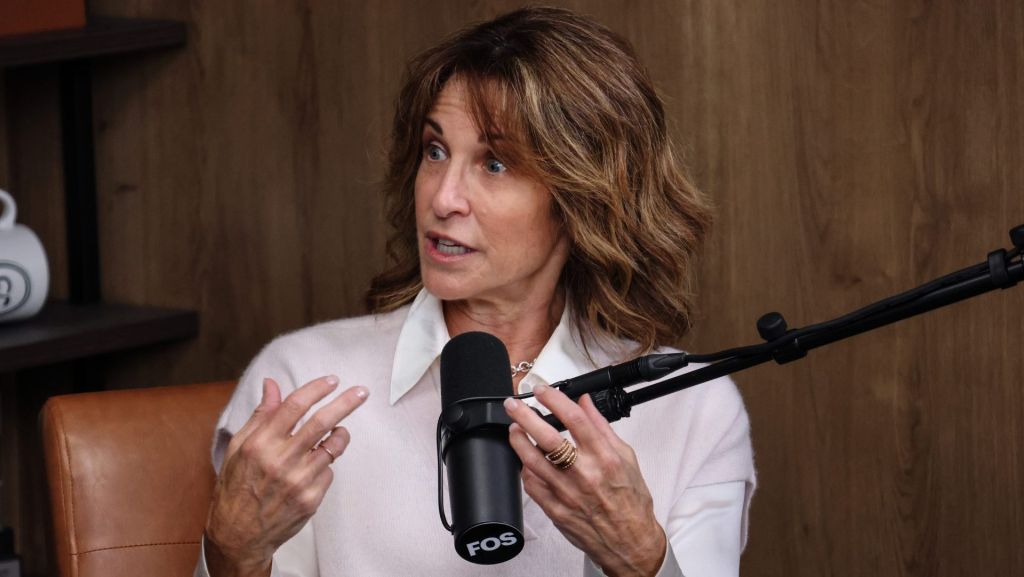
Suzy Kolber, the longtime ESPN anchor and reporter, has launched a new interview show called The Originals for Scripps Sports Network’s Fast Channel.
Kolber spent three decades at ESPN, where she did it all. She covered Disney’s last Super Bowl on ABC in 2006, was part of ESPN’s inaugural team for Monday Night Football, covered the NFL Draft, and hosted Monday Night Countdown from 2015 to 2023. But in June 2023, Kolber was laid off along with other 20 other on-air talents like Steve Young, Jeff Van Gundy and Max Kellerman.
Last week, Kolber spoke to Front Office Sports about her experience at ESPN and what she’s been up to since. This interview has been edited for length and clarity.
Front Office Sports: Tell us about your new show. How is it different, and who are you interviewing?
Suzy Kolber: It’s so funny how things come about in this business, and it’s like one of those you never know. After my layoff from ESPN, I had always had medical coverage from the same company for all these years, and now I’m on my own, everybody knows how expensive that is. I met with a local insurance agent. And the work was terrific, but a few days later he called me and he said, ‘This is totally out of the blue. I’m a podcast junkie. Knowing your background, your unconventional life, I have this idea. What if you talk to people who live their lives outside the box, who think differently from others and follow their passion to find success?’ And I said to him, ‘I love that idea. That’s great.’
Now, things don’t ever go this smoothly in the industry, but within days of that, I happened to make a connection with someone who had recently been hired by Scripps to find them original content for the launch of their new Fast channel. He happened to work out at the same gym as me, and the mutual trainer knew what I was doing, knew what he was doing, and connected us.
The next day we were on a Zoom. The day after that I was on with the vice president of Scripps. They loved this idea. They were looking for an interview show, and they were looking for original programming, and like that, all of a sudden we had a deal and we were off and running.
And I really was looking for something that could be a blueprint for people to follow a passion. You truly can find success and do something that you love. Is it risky? Sure. But I think the key to everything is being genuine, being passionate about something.
You know the cliche, ‘If you love it, you never work a day in your life.’ At the core of everything I’ve really done in life has sort of been this unconventional path. Why not talk to other people who have experienced the same thing and hopefully it sort of transcends sports and everybody can learn from it.
FOS: Scripps is very interesting. One, they’re a new player in sports TV. Second, they’re a big proponent of women’s sports. They’ve got a WNBA package. And third, they’re in business with you, a pioneer for female sports broadcasters.
SK: Yes, there were a lot of things that were appealing about the relationship, and I loved the idea that they were this champion of women’s sports. You mentioned the WNBA, but there’s women’s professional hockey, and there’s professional soccer, and there’s cheerleading, and you name it.
I mean, all the way down the list, and they really wanted to be a place where leagues could grow, young leagues could grow, and then especially for women’s leagues. So I really loved that whole aspect of it and trying to create some original programming about that, because the key to all of it is storytelling and getting to know the athletes.
FOS: Would you be interested in covering live sports for Scripps? It would be great for a new player like that to have somebody who was on camera for the NFL Draft, Monday Night Countdown, and a Super Bowl.
SK: We’ll see how things grow. Nothing is off the table.
When we first started the relationship, we kind of discussed a little bit of everything in that regard, and it will come down to what excites me now.
FOS: There’s still enormous affection for SportsCenter anchors like yourself, Neil Everett. Why?
SL: The nature of the business is so different and ESPN looks so different now, that people sort of pine for more traditional. Keith Olbermann and Dan Patrick doing SportsCenter and that kind of thing. So just like we love to thrift old clothes, or watch some of the old throwback shows on TV. My daughter and I have watched The Gilmore Girls over and over again.
There’s something about that connection to the past that people enjoy and some of the old originals at ESPN fall into that same category. It just feels comfortable.
FOS: When the layoffs happened, you had an inkling. You told Richard Deitsch on his podcast you knew something was afoot?
SK: When it comes to the layoffs, things just seem to get leaked. Why this is a thing, I don’t really understand the workings of that. So, in my case, it was a few weeks out, and Steve Young and I did become sort of the poster child for the coming layoffs. Our faces were appearing in the paper and there were articles being written. And I did feel like I was kind of left out, sort of twisting in the wind, waiting.
I asked one of my direct bosses, and there was no, ‘Absolutely you’re safe.’ It was, ‘I don’t know.’ Jimmy Pitaro is the president of the company. I put in a call to him, and he called me back, and I thought he was as honest as he could be, and he said, ‘There’s a whiteboard, and your name is on it. But I don’t really know right now.’
I felt satisfied with that conversation because I got to say a lot of things I wanted to say, which, you know, at least felt good. There’s nothing like the actual moment though, as much as you might think about it. I never took it for granted in my entire career just because of the nature of the business. So I always felt like I would be prepared, but in the actual moment you never are.
I do feel like a lot of us—I was there a total of 30 years—that a lot of people I think at ESPN, we get institutionalized by the place. Like, ‘This is what we know and what we love and we’re used to our lives evolving around this.’ Can I say though, that people put so much attention on the forward-facing people, but in fact, driving to the train from home today, I had a conversation with a woman producer who has been at ESPN and NFL Network. In this last round, she was really unexpectedly laid off. Brutally difficult, and I just want to acknowledge that for all of us that are forward-facing, there are so many people that are behind the scenes that have also been laid off too, and they’re working just as hard. They’re also pouring their hearts and souls into it. She’s having a difficult time.
When you’ve worked someplace that long it’s hard to process. I went through many stages of, honestly, of grief. I was used to working at a certain level all the time. And I do like to be busy. But then I was having nightmares at night. I sort of had to get through that. And I had to kind of learn how to sleep when I wasn’t completely exhausted. Because I’m doing a high-level job and I’m a single mom and I don’t think I realized quite how tired I was. My body clock had to figure things out. There’s a lot. I’m sure anybody who’s been laid off from their job, all the people out there, you know, and all kinds of businesses in the corporate world, know that feeling of having to completely readjust.
FOS: I’ve heard the expression, ‘You don’t work at ESPN, you marry it.’ It really becomes your life. You told Deitsch you didn’t have your own personal email. The only email you ever had was your ESPN. The only laptop you ever had was your ESPN laptop. That’s how wedded you were to ESPN?
SK: It’s so true. We always use the expression, ‘They get their pound of flesh.’ Especially in the days when ESPN was a little more of a stepchild in the industry, I think there was something that we were all inspired by, by that. It connected us that we’re going to work harder. ‘We’re 24/7. Those other networks are just on the weekends. We’e 24/7.’ We had to work really hard, but yet we did really feel like family. And that was kind of the joy in it. There was a certain soul about the place that you really love.
There is no doubt I was married to it. Stuart Scott and I used to joke, to your point exactly, he and I were hired for the launch of ESPN2. We connected on the phone before we had ever even met, sort of became instant friends over the phone, wound up in the same real estate office looking in the same town completely coincidentally to live, wound up living in the same town and then, when we wound up on the air together on ESPN2, we said, ‘TV husband and wife.’ You can’t really get more married to it. These were your people. This is your family, especially since you spend a lot of time on the road.
FOS: Journalists have gallows humor. I understand some laid-off ESPNers talk like college graduates about the year they were laid off. As in, ‘I’m the class of 2023.’
SK: There’s an old-timers site on Facebook. I can’t seem to click. There’s something about old-timers. They had quite a big reunion. Honestly, I wasn’t ready. I wasn’t ready to maybe see some of the executives who, by the way, aren’t there anymore. They were caught up in it as well.
FOS: You’ve said this business can be cruel and competitive, particularly for women. Your advice to young female sportscasters?
SK: I think more than anything is being genuine and doing it for the right reasons. ‘What’s your motivation?’ Lesley Visser used to say, ‘You can tell who does sports TV because they want to be on TV, or who loves sports.’ I never actually cared that much about the television part. It was just, ‘Oh, this is such a great way to be around sports all the time. I get to be around sports and it’s a job? Great.’
That was the motivation. And I think if you are willing to work harder than anybody else, because that’s really what it’s about, and you’re talented, you have to have some talent, there is a place for you. But I think most importantly is to be there for the right reasons. Why are you here? Are you truly passionate about sports?
And then you can’t have any other agenda except do your job. I mean, for me, that’s really what it was always about. It was the way I prepared, the respect I had for the athletes, the sports I was covering, the way I dressed, everything about it, I believe, made the statement of ‘I’m here for one reason, because I really want to do a good job and I love this.’
FOS: I want to end with your thoughts on the current state of ESPN. It seems like the middle class is being squeezed out. You have the people at the top making big sums of money. But you don’t have those SportsCenter anchors making a nice buck. What’s happening?
SK: I think it’s just because the industry has changed so much that it is all about direct-to-consumer and the digital era. While I do think there’s still some room left in the old traditional linear [business], there’s certainly positions available, but much, much, much less. So there’s just less room.
Obviously the trend is going toward people who already can create that digital relationship. They have followers in so many other ways that then you’re also looking for them on the linear platforms as well. I mean, it was apparent when I was there, like this shift is happening, and the middle class is going away, and we’re going to pour our money into live sports, and make sure that we have deals with the leagues. Because that’s really what’s drawing the most viewers in.
And then there’s a little bit of room left over for some super-marquee people. By the way, I’ll say in defense of the people that you say, ‘Well, we see these people all the time.’ For them to be seen all the time, they’re also working really hard. Yes, they’re making a lot of money, absolutely, but it’s not easy to be hosting this, this, this, and be at this sport and that event. It’s a lot of work, and they are earning it.
I mean, it’s just the nature of the business now, and I think maybe there’s less opportunities in the traditional sense. I do think out there though, there’s just more opportunities to sort of do your own thing, and so many other platforms, and you can create your own sites and your own personality. Every single team has a reporter. I think there’s places if you’re willing to go after it. There are plenty of opportunities.
FOS: Do you still watch ESPN?
SK: I watch a lot of live sports. I consume a ton of tennis majors. Obviously I’m watching Monday Night Football. I love college softball and the WNBA and the Little League World Series. So I’m watching a lot of that. But practically zero shoulder programming. Maybe that hits too close to home. Maybe it will always be a little painful. That’s the heartbreak.
FOS: How jazzed are you that your old colleagues finally got the Super Bowl?
SK: It’s something that our crew on Monday Night Countdown talked about all the time. We grinded on that show to try to make it really smart and really good. We sort of had these big dreams of, ‘Imagine what this will look like as the pregame to the Super Bowl and what we’ll do and how we’ll do it.’ Probably we were really naive in a sense. We knew kind of how far away it was. Are we really going to be in a position to be doing that? As someone who was there when ESPN was considered a little stepbrother in the industry, look at us now.